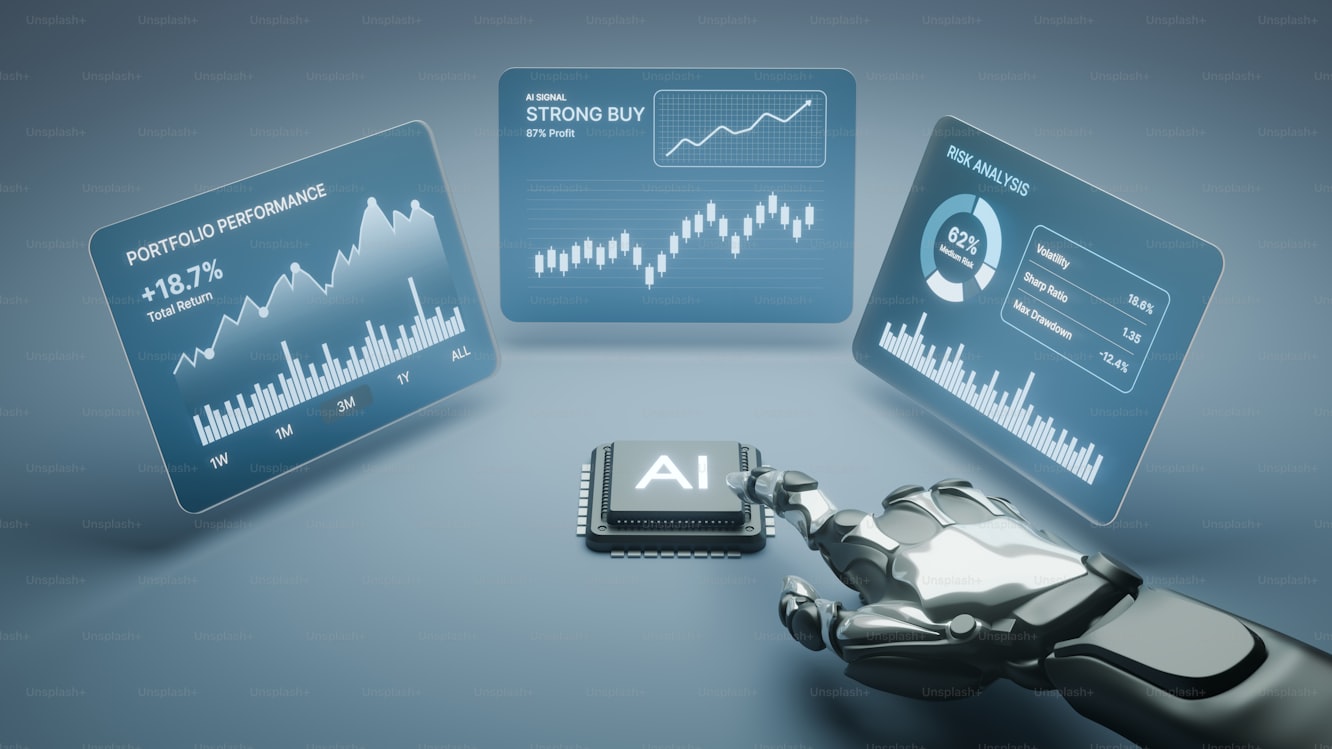
AI Automation Is A Smart Move For Your Business

Artificial Intelligence is no longer simply about answering questions or generating content. Its greatest strength lies in automation, enabling businesses to perform repetitive, time-consuming tasks faster, more accurately and at scale.
From customer service and finance to marketing and operations, AI is reshaping how organisations work by reducing operational friction, improving decision-making and allowing employees to focus on higher-value activities.
Today, businesses no longer compete solely on the quality of their products or financial strength. Increasingly, competitive advantage depends on speed, adaptability and operational efficiency, making AI automation one of the defining technologies of modern business.
What is AI automation?
AI automation combines artificial intelligence with workflow technology to perform tasks that previously required human intervention.
Unlike traditional automation, which follows fixed rules, AI can analyse information, recognise patterns, make predictions and improve its performance over time.
Platforms such as Make, Zapier and n8n allow organisations to connect applications, automate workflows and deploy AI across multiple business functions without requiring large software development teams.
The result is a business that works faster, smarter and more consistently.
Where AI automation delivers the biggest impact
Customer Support
AI-powered chatbots and virtual assistants can answer routine customer enquiries around the clock, including order tracking, password resets, appointment scheduling and frequently asked questions.
Complex issues are automatically escalated to human agents, allowing customer service teams to focus on cases that require empathy and critical thinking.
Sales and Lead Management
AI can qualify incoming leads, score prospects based on buying intent, schedule meetings through platforms like Calendly and even draft personalised follow-up emails.
Sales teams spend less time chasing cold leads and more time closing qualified opportunities.
Modern AI tools analyse campaign performance, identify audience behaviour, generate advertising copy, personalise customer experiences and recommend content strategies based on real-time data.
Instead of replacing marketers, AI enhances creativity by handling repetitive analysis and optimisation.
Finance and Accounting
AI simplifies invoice generation, expense categorisation, recurring billing, cash-flow monitoring and financial reporting.
By integrating accounting software with banking systems, organisations reduce manual errors while gaining faster financial insights.
Operations and Workflow Management
Routine administrative work, including document processing, scheduling, approvals and data entry, can be automated, eliminating bottlenecks that slow productivity.
Rather than asking employees to move information between multiple systems, AI allows information to flow automatically.
Why businesses are embracing AI automation
Many organisations do not suffer from a shortage of talent. They suffer from operational friction.
Highly skilled employees often spend valuable hours searching for information, copying data between software platforms, tracking approvals or performing repetitive administrative work.
AI removes these unnecessary tasks, allowing professionals to devote their expertise to innovation, strategy, customer relationships and business growth. Automation is therefore not simply about doing existing work faster. It is about redesigning how work is performed altogether.
The business benefits
Organisations adopting AI automation consistently experience measurable improvements across several areas:
– Lower operating costs through reduced manual labour and fewer errors.
– Higher productivity by freeing employees from repetitive work.
– Faster and more informed decision-making through real-time data analysis.
– Improved customer experiences through quicker response times and personalised interactions.
– Greater scalability, enabling businesses to grow without proportionally increasing staffing costs.
Automation provides speed and consistency, while AI transforms business data into actionable intelligence. Together, they create smarter organisations capable of responding rapidly to changing market conditions. Despite its remarkable capabilities, AI is not a substitute for human judgment, creativity or emotional intelligence.
Businesses that pursue automation solely to eliminate employees may achieve short-term savings but risk weakening their organisational culture, customer relationships and long-term resilience.
Trust, leadership, innovation and community remain deeply human qualities.
The most successful organisations will not be those that automate everything possible, but those that thoughtfully combine technological efficiency with human empathy and expertise.