
No respite anywhere, just blood, tears and uncertainty.
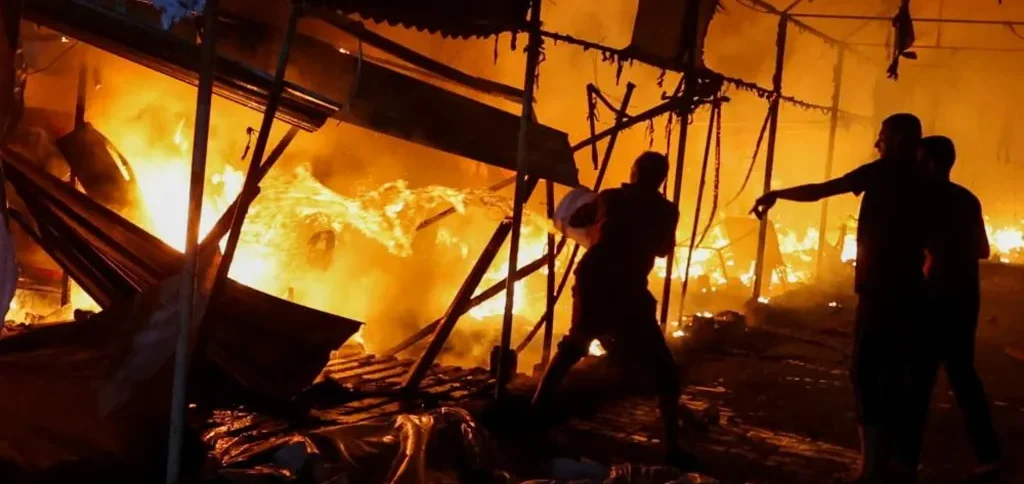
The recent escalation in Gaza paints a harrowing picture of lives devastated by war. Among the tragic stories is that of the al-Dalou family, whose anguish has captured the world’s attention. An Israeli strike on a tent in the al-Aqsa compound claimed the lives of three family members, including 19-year-old Sha’aban, who died trying to escape the flames. Images of him, trapped and burning, echoed across social media, symbolizing the relentless suffering in GazGaza.
According to a story observed on The BBC, Ahmed al-Dalou, Sha’aban’s father, survives with physical and emotional scars. His words reveal the torment of trying to save his son, Abdulrahman, from the inferno—a mission that failed as the boy succumbed to his injuries days later. Despite the dire circumstances, Sha’aban had once urged his father to remain calm, saying, “I am OK, Dad.” These words haunt Ahmed, who recalls the helplessness of watching his loved ones perish.
The al-Dalou family’s story is just one of many, each bearing witness to the agony that has befallen Gaza. The strikes, justified by Israel as targeting Hamas command centers, have often led to civilian casualties, prompting international outcry. The Israeli military acknowledged the incident and mentioned an ongoing review, while global leaders called for a more cautious approach to prevent civilian harm.
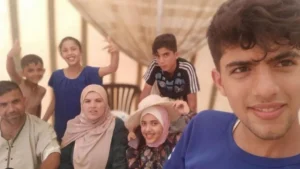
This conflict does not unfold in isolation; Gaza’s skies buzz with constant surveillance, a haunting reminder of the looming threat. The tragedy of war leaves many unseen wounds, from psychological trauma to the struggle for survival amid displacement, scarce resources, and destruction. Mohammed al-Dalou, the surviving brother, has his own painful memories. Unable to rescue his brother from the flames, he now clings to a bracelet—a memento from his mother, whose remains he identified by that distinct piece of jewelry.
The suffering in Gaza is compounded by limited access for international journalists, who rely on local reporters to uncover these stories. Videos from the al-Dalou family reveal the harsh realities of life in Gaza.
Sha’aban, once a bright student and social media-savvy youth, had even used his platform to urge blood donations, a call to alleviate the mounting crisis in hospitals overwhelmed by casualties.
Casualties of an Relentless War
War has stripped these families of more than just loved ones. It has destroyed livelihoods, forcing many, like the al-Dalou brothers, to set up makeshift stalls for basic survival. Now, even these efforts are lost, their dreams buried under rubble and ash. The international community watches, sometimes expressing concern, but the violence continues unabated.
The harrowing scenes of fire and destruction are not new, yet they remain heart-wrenching. The footage of Sha’aban, a young man with hopes and plans, now immortalized in his final moments, calls for urgent reflection. What kind of future can be built on such agony?
The al-Dalou family’s grief serves as a stark reminder of the human cost of conflict. As calls for ceasefire and peace intensify, one can only hope that stories like this will not be forgotten, and the world will act not just to mourn, but to prevent such suffering from happening again.
The agony in Gaza is a reflection of a deeper crisis—one where humanity’s shared conscience is being tested, and where silence, inaction, and indifference perpetuate the cycle of despair.