
Africa’s leaders have issued a stark warning: without serious funding, the continent will struggle to live above the devastating impacts of climate change.
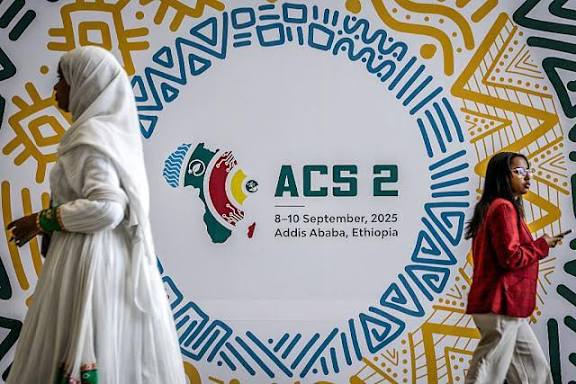
Meeting in Addis Ababa for the second Africa Climate Summit (ACS2), the African Union (AU) stressed that the continent requires more than $3 trillion by 2030 to meet its climate goals. Yet, between 2021 and 2022, Africa received a mere $30 billion, a fraction of what is needed.
In a draft declaration released at the close of the summit, leaders demanded stronger international commitments and urgent reforms to global climate financing. They called for mechanisms that are fair, accessible, and affordable, and insisted that funds must come mainly as grants rather than loans, to avoid worsening Africa’s debt crisis. Timely and equitable disbursement, they argued, is essential to give the continent a fighting chance.
Climate change, the declaration noted, is a “risk multiplier”* that deepens resource pressures, fuels insecurity, and undermines fragile peace in many regions. Leaders pushed for the swift adoption and operationalisation of the Common African Position on Climate Change, Peace and Security (CAP-CPS), a framework designed to unify the continent’s response to the climate-peace nexus.
But the AU also sought to reframe Africa’s role in the global climate debate. Rather than being seen only as a victim, leaders emphasised the continent’s untapped potential as a resource-endowed and proactive partner. With vast reserves of minerals critical for the energy transition and a growing renewable energy sector, Africa, they argued, can emerge as a global hub for low-carbon manufacturing and green intra-African trade.
The African Continental Free Trade Area (AfCFTA) was singled out as a driver of this “green-first” development pathway.
Still, the financial reality remains grim. Africa’s estimated needs $2.8 trillion by 2030, far exceed the international community’s ambitions.
The much-touted New Collective Quantified Goal (NCQG) of mobilising $300 billion annually until 2035, leaders said, falls “woefully short” of the continent’s requirements. They also lamented the meagre replenishments to the Green Climate Fund (GCF), the Adaptation Fund, and other UNFCCC financing mechanisms, while urging the speedy operationalisation of the long-promised Loss and Damage Fund.
The Addis summit brought together global leaders, UN agencies, intergovernmental organisations, Regional Economic Communities, the private sector, civil society, Indigenous Peoples, local communities, farmers, children, youth, women, and academia.
The broad participation highlighted the growing recognition that climate change is not just an environmental challenge but a development, security, and justice issue.