African Union Adopts New Education, Skills and Research Frameworks to Drive Continental Transformation

The decisions were reached at the 6th Ordinary Session of the AU Specialized Technical Committee on Education, Science and Technology (STC-EST 6), which concluded on November 6, 2026, in Addis Ababa, Ethiopia.
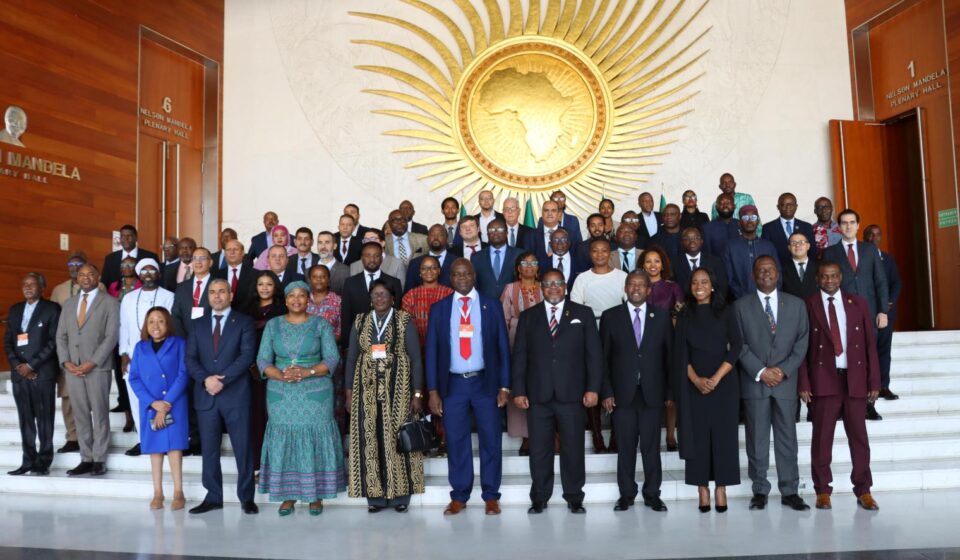
The ministerial meeting, preceded by an experts’ session held from November 2 to 4, brought together representatives of 32 AU member states, including ministers, senior government officials, technical experts, regional economic communities and international development partners.
The meeting was held under the theme, “Accelerating Africa’s Human Capital and Innovation: Resilient Education, Science, and Technology Systems for the AU Decade of Accelerated Action for Education Transformation and Skills Development (2025–2034).”
Speaking on behalf of the AU Commission Chairperson, the Commissioner for Education, Science, Technology and Innovation, Professor Gaspard Banyankimbona, said Africa’s development ambitions under Agenda 2063 depended on building inclusive and resilient education and innovation systems.
He called on member states to move beyond continental declarations by providing adequate funding and translating agreed priorities into national policies and programmes.
Banyankimbona identified five priority areas: improving foundational learning and teacher development; connecting skills and research to employment; establishing an integrated African higher education space; strengthening African scientific leadership; and securing sustainable domestic financing for education and innovation.
The outgoing bureau’s representative, Malawi’s Minister of Education, Bright Msaka, also reviewed institutional progress made between 2024 and 2026.
He highlighted efforts to operationalise the Continental Education Strategy for Africa (CESA 2026–2035), the Continental Technical and Vocational Education and Training Strategy (CTVET 2025–2034), the Science, Technology and Innovation Strategy for Africa (STISA-2034), and the African Education, Science, Technology and Innovation Fund.
Msaka also reaffirmed Malawi’s commitment to improving foundational literacy and numeracy, following the country’s hosting of the 3rd Africa Foundational Learning Exchange in Lilongwe in 2026.
New leadership and continental education framework
The session also established a new bureau to lead the technical committee for a two-year term, following consultations among regional representatives.
The proposed leadership structure allocates the chairmanship to Northern Africa, with consultations still ongoing. Tanzania will serve as first vice-chair, Sierra Leone as second vice-chair, the Democratic Republic of Congo as third vice-chair, while Malawi will take the position of rapporteur.
Among the major decisions adopted was the endorsement of implementation plans for CESA 2026–2035 and CTVET 2025–2034. The frameworks are expected to guide reforms in education and vocational training across member states.
Ministers also called on the AU Development Agency-NEPAD and national governments to align their policies with the strategies and expand the Africa Critical Skills Bank to address skills shortages across the continent.
Another major decision was the adoption of the African Continental Qualifications Framework, a 10-level reference system designed to improve the transparency and comparability of academic and professional qualifications.
The framework is expected to make it easier for qualifications obtained in one African country to be recognised in another, thereby supporting the mobility of students and skilled workers.
The committee also endorsed the establishment of the African Common Higher Education and Skills Area and approved the statutes of the Pan-African Quality Assurance Alliance for consideration by the AU’s policy organs.
To improve education monitoring, ministers endorsed 60 standardised indicators aligned with Sustainable Development Goal 4. The African Union Commission was asked to establish a continental digital reporting portal and CESA Policy Dashboard in collaboration with UNESCO’s Institute for Statistics and the Global Education Monitoring Report.
Gender equality and efforts to reverse brain drain
The meeting further endorsed the Bujumbura Declaration arising from the second Pan-African Conference on Girls’ Education and institutionalised the conference as a biennial AU platform.
It also adopted the Gender Framework for CESA 2026–2035, designed to strengthen the integration of gender equality into education policies, planning and budgets.
In another significant move, ministers endorsed the African Declaration on Reversing Brain Drain and Fostering Talent Retention.
The declaration seeks to address the continued loss of skilled professionals and researchers to other regions by encouraging African countries to create better research opportunities, employment conditions and professional development pathways.
Research, artificial intelligence and green innovation
Beyond education reforms, the committee approved strategic measures to strengthen Africa’s scientific capacity, research independence and participation in emerging technologies.
Ministers welcomed the implementation plan for STISA-2034 and urged member states to increase investment in research and development, with a target of allocating one per cent of their gross domestic product to the sector.
They also identified national Science Granting Councils, through the Science Granting Councils Initiative, as key institutions for implementing research and innovation priorities.
The committee further recommended the adoption of the African Declaration on Transformative Research Collaboration, which seeks to promote equitable partnerships in which African institutions play leading roles in setting research priorities and determining how findings are applied.
On artificial intelligence, ministers cleared five sectoral publications for adaptation by member states and called for greater parliamentary engagement, digital literacy and youth participation in emerging technology.
The meeting also encouraged participation in the Presidential Youth in AI and Robotics Competition as part of efforts to expand young Africans’ involvement in technological innovation.
The resolutions from STC-EST 6 provide a continental framework for addressing persistent challenges in education access, skills development, research funding and technological capacity.
Their impact, however, will depend largely on how effectively member states translate the commitments into national programmes, provide the required funding and establish institutions capable of delivering measurable results.