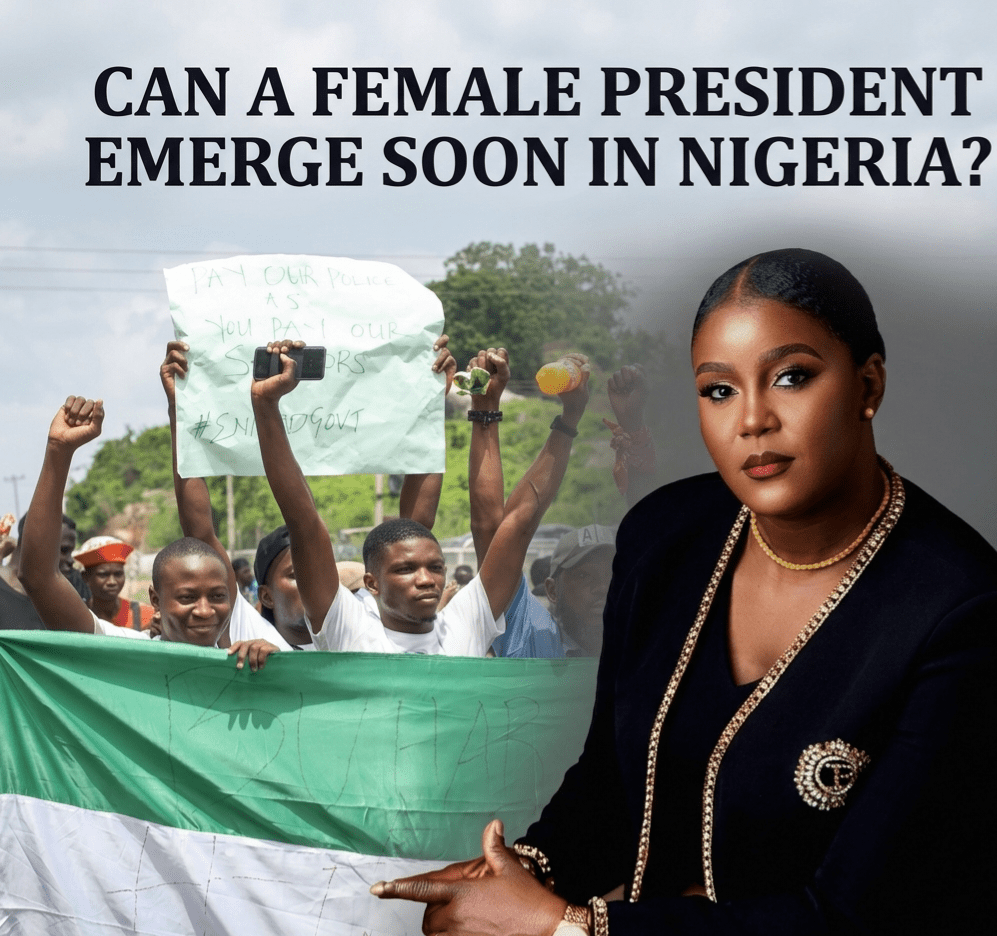
‘A Woman Can Lead Nigeria’: Atoyebi Calls for Greater Political Space for Women

A lot of Nigerians believe it will take decades if not a century to have a female president in Nigeria. This perspective is anchored on the metallic posture of a patriarchal society like Nigeria. It’s pretty hard to bend a socio-economic space traded by men.
However, some people believe there is a possibility if more women continue to push for stronger voices in governance and public life. Infact, advocates say the struggle for equality in the country’s political and socio-economic landscape remains sacrosanct.
For many women, every opportunity to participate in national conversations must be seized to challenge entrenched patriarchal systems and promote gender equality. Yet questions persist about the realities facing the average Nigerian woman: the barriers she confronts, her freedom to express her views, and the opportunities available to amplify her voice and influence change.
One of the advocates at the forefront of this conversation is Adenike Atoyebi, Executive Director of Fame Foundation. Through her work, Atoyebi has led initiatives focused on empowering women and girls, strengthening social responsibility, and promoting reforms that support inclusive governance.
In a recent conversation with The Guardian she shared her views on the possibility of a woman emerging as Nigeria’s president, the barriers women face in politics, and ongoing efforts to address gender-based violence and improve women’s representation in leadership.
Despite Nigeria’s largely male-dominated political culture, Atoyebi believes the emergence of a female president is not impossible.
“I do believe it is possible for Nigeria to elect a woman as president, even though our political culture has traditionally favoured men,” she said.
According to her, the growing presence of women in leadership roles across sectors, from ministerial appointments to heads of major institutions, demonstrates that women are capable of leading effectively and earning public trust.
She noted that attitudes toward gender equality are gradually evolving, with increasing recognition of the importance of women’s voices in decision-making processes.
“Changing attitudes takes time, but awareness about gender equality is growing,” she said, adding that civil society organisations and the media continue to push for broader participation of women in governance.
However, Atoyebi stressed that achieving such a milestone would require significant cultural, institutional and political changes that move society beyond traditional gender stereotypes.
She urged political parties to create practical pathways for women to rise through their structures by mentoring young female leaders and ensuring equitable access to political opportunities.
“Political parties should identify talented women early and expose them to campaigning, policymaking and negotiation,” she said.
Reflecting on her own journey, Atoyebi traced her passion for governance to her early career in journalism, when she reported stories about marginalised communities and vulnerable groups.
Those experiences, she explained, pushed her to move beyond reporting societal challenges to becoming actively involved in shaping solutions.
“Reporting on problems was important, but I also wanted to be part of creating solutions,” she said.
Her path eventually led to public service and advocacy, where she believes leadership is fundamentally about guiding people and creating opportunities for growth.
“What I enjoy most about leadership is guiding people, helping them grow and working together to achieve goals,” she noted.
Atoyebi, who has received executive education from Harvard University and University of Cambridge, also addressed what she described as a persistent misconception about women in leadership.
According to her, leadership is defined by vision, commitment and action rather than gender.
For young Nigerian women aspiring to leadership positions, she emphasised the importance of confidence and determination.
“Leadership is not about waiting for permission; it is about making the move, taking responsibility and showing what you can do,” she advised.
On the issue of political representation, Atoyebi pointed out that Nigeria currently records one of the lowest levels of female parliamentary participation globally, with women occupying less than five per cent of seats in the National Assembly.
She therefore supports proposals such as the Special Seats for Women Bill, describing it as a corrective policy designed to address historical imbalances in political participation.
She cited countries like Rwanda where constitutional quotas guarantee women representation in parliament, resulting in women occupying more than 60 per cent of legislative seats.
Assessing the current administration of Bola Ahmed Tinubu, Atoyebi acknowledged that women are beginning to assume more visible roles in government institutions, though Nigeria has yet to reach the 35 per cent representation target outlined in the National Gender Policy.
On gender-based violence, she recognised progress made through advocacy campaigns such as the 16 Days of Activism Against Gender-Based Violence and legislation like the Violence Against Persons (Prohibition) Act.
However, she emphasised that effective implementation of existing laws remains critical to protecting victims and preventing abuse.
One defining moment in her advocacy work, she recalled, was the #PayFalcons campaign in 2016 after Nigeria’s women’s national football team won the African Women’s Championship but had not received their allowances.
Within 48 hours of the campaign, the players were paid, an experience Atoyebi says demonstrated the power of collective action.
She also drew inspiration from Nigerian women who have achieved global leadership positions, including Amina Mohammed and Ngozi Okonjo-Iweala, saying their achievements reinforce the belief that Nigerian women can lead at the highest levels.
Looking ahead, Atoyebi hopes her work will be remembered for opening doors and creating opportunities for others.
“I would like to be remembered as someone who used her voice and work to create opportunities for others and make things better wherever she could,” she said.