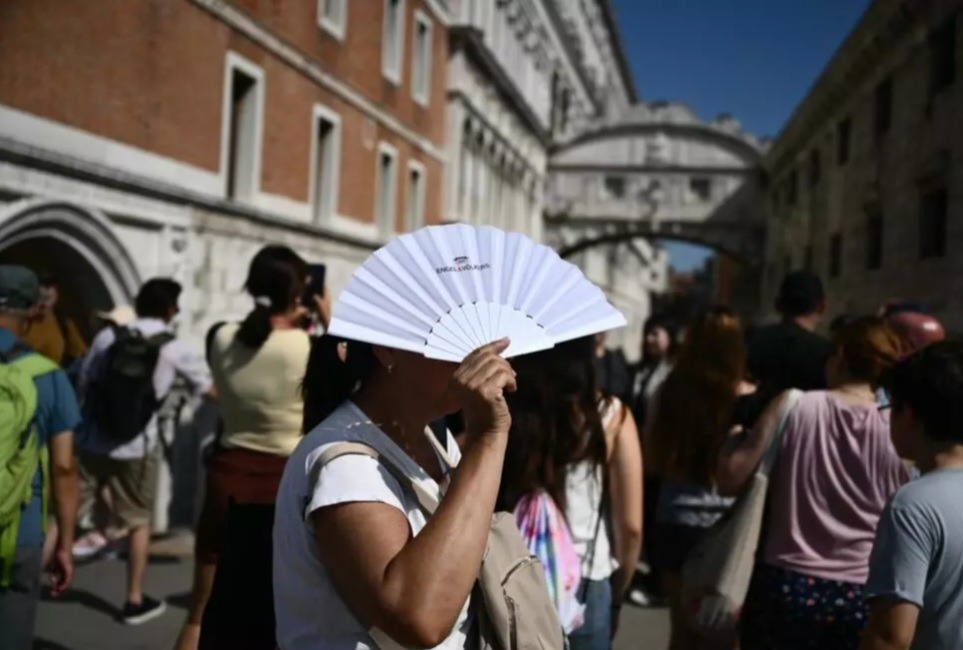

An intense early-summer heatwave has gripped southern Europe, with temperatures soaring to 46°C in El Granado, a Spanish town near the Portuguese border, as meteorologists warn of worsening extremes due to climate change.
Dozens of cities and towns across Spain reported highs exceeding 40°C, with neighbouring Portugal also experiencing scorching conditions, particularly in the southern Algarve region. On Spain’s popular holiday island of Mallorca, temperatures neared 35°C, while Rome braced for 37°C, sending tourists and pilgrims rushing to the city’s 2,500 fountains in search of relief.

The heat has been unrelenting even at night. In parts of southern Spain, overnight lows hovered above 30°C, a dangerous threshold. Experts say, that can severely impact human health, especially among vulnerable groups.
Meanwhile, locals have adapted with traditional coping methods: avoiding outdoor activity during peak sun, dressing lightly, and staying hydrated. However, the heat, paired with prolonged sunshine, is rapidly drying out soil and vegetation, significantly heightening the risk of wildfires.
According to Meteorologists, this kind of extreme weather is no longer an anomaly. Spain’s national weather agency, AEMET, reported that while only two heatwaves were recorded in June between 1975 and 2000, that number has jumped to nine between 2000 and 2024. This year, temperatures typical of August emerged as early as late May.
On the other hand, The World Meteorological Organization (WMO) and Copernicus, the EU’s climate agency, report that Europe has warmed at twice the global average since the 1980s, making it the fastest-warming continent. Scientists link this directly to human-caused climate change, driven largely by the burning of fossil fuels.
The consequences are already staggering. From hurricanes and droughts to floods and heatwaves, extreme weather events are becoming more frequent and more intense. Recall that in 2024, the hottest year ever recorded so far, global disasters linked to climate and weather reportedly cost over $300 billion.
As heatwaves become more frequent, earlier, and longer-lasting, experts stress the urgent need for climate adaptation strategies and a shift away from fossil fuels to avoid even more devastating consequences in the future.