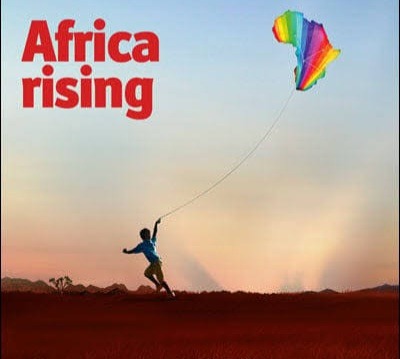

For centuries, Africa has been a continent defined by outsiders, sought after for its resources, manipulated for its strategic value, and too often dismissed as a passive player on the world stage. But the winds are shifting. Africa is scrambling in its long lost darkness to the tethers of light.
Today, Africa is not merely awakening, it is asserting itself in ways that are forcing the world to reconsider its role. The world must!
The days when foreign powers treated Africa as a prize to be plundered may not be fully behind us, but across the continent, a new narrative is unfolding. From the bustling tech hubs of Lagos and Nairobi to the political upheavals in the Sahel, Africa is refusing to be anyone’s afterthought—or anyone’s pawn.
This transformation is not sudden. For decades, Africa seemed to stumble under the weight of external exploitation and internal mismanagement. As global powers competed for influence, the continent’s vast resources; oil, gold, lithium, flowed out while little came back to uplift its people. Yet beneath the surface, a quiet revolution was brewing. And now, it is impossible to ignore.
By 2050, Africa will be home to a quarter of the world’s people, most of them under 25. In a world where aging populations are straining economies, Africa’s youth bulge is not just a demographic fact—it’s an economic force. Young Africans are increasingly rejecting the narratives imposed on them and carving out their place in global culture and commerce. Afrobeat rhythms pulse through international music charts. African entrepreneurs are building billion-dollar companies. And in fields like literature, Africans are earning the world’s most prestigious accolades.
The continent’s growing influence hasn’t gone unnoticed. For years, China led the charge to deepen ties with African nations, pouring billions into infrastructure projects. The United States, sensing Beijing’s rising clout, briefly intensified its diplomatic efforts. But as China recalibrates its global ambitions and U.S. attention drifts, Africa is pivoting to new partnerships.
Nations like Türkiye, India, and the UAE are stepping into the vacuum, offering African countries alternatives to the traditional Western sphere of influence.
Yet, this new era is not without its turmoil. Nowhere is the power struggle more visible than in West Africa, where military juntas in Mali, Burkina Faso, and Niger have upended long-standing alliances.
Their rejection of French security assistance, a backlash against what they describe as “neocolonial” interference—has fractured regional cooperation. In its place, these regimes are seeking alternative security partnerships, forging new alliances with Russia and others willing to fill the void.
The stakes couldn’t be higher. The Sahel remains a hotbed of violent extremism, where groups linked to al-Qaeda and the Islamic State exploit weak governance and economic desperation. Without effective regional coordination, the fight against these insurgencies risks unraveling, leaving millions more vulnerable. Yet, for many African leaders, the desire to reclaim sovereignty from Western hands outweighs these risks.
Even as political tensions rise, there are reasons for optimism. Across the continent, investments in education are bearing fruit. Countries like Ghana and Kenya have made strides in expanding access to quality schooling. In Rwanda, a commitment to technological innovation is transforming the nation into a beacon of digital progress. Leaders from Senegal to Ethiopia are articulating ambitious visions for economic self-sufficiency and continental integration.
Africa’s emerging assertiveness is more than just rhetoric, it’s a calculated rejection of the patterns that have long defined its relationship with the world. No longer content to be a playground for global powers, African nations are shaping their destinies on their own terms. They are choosing their partners, defining their policies, and demanding a seat at the table.
The rest of the world would be wise to pay attention. As Africa rises, it is not simply asking for respect—it is commanding it. For too long, the continent was treated as a vessel to be filled or an object to be possessed. But those days are fading into history. Africa is no one’s harlot anymore—and it’s only just begun to make that clear.