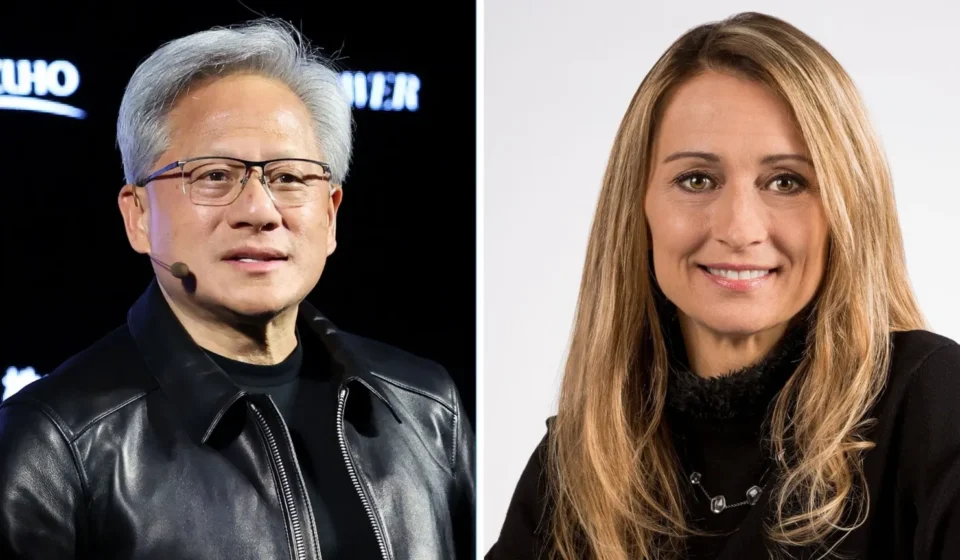

The company’s interim chief executive, Colette Kress, sought to reassure investors about its stability following Huang’s sudden departure last week, insisting that operations remained unaffected.
Speaking during the company’s first financial results briefing since the leadership change, Kress described the situation as “business as usual”, assuring investors that Nvidia’s management team, suppliers and business partners remained committed to its operations.
“We’ve got this,” she told investors.
The statement came hours after Huang expressed willingness to return to the company, saying he would be honoured to resume leadership if asked by the board.
However, Nvidia chairman Harvey Jones dismissed the possibility, stating that the board had no intention of reinstating the former chief executive.
Huang’s departure followed allegations involving extramarital relationships, including an alleged relationship with a suspected Chinese intelligence operative. The circumstances surrounding his exit have raised questions about the company’s leadership and the future direction of its operations.
Despite the uncertainty, Nvidia reported revenue of $115.8bn for the three months ended October 25, representing a substantial increase from the corresponding period last year.
Its net profit also doubled to $65bn, while revenue from its data centre business, a major driver of its artificial intelligence operations, climbed to $107bn.
The company projected that its growth would continue, forecasting a further 13 per cent increase in revenue in the following quarter.
The strong results helped ease immediate investor concerns, with Nvidia shares rising 4.8 per cent in after-hours trading.
Financial analysts had anticipated possible uncertainty over the company’s future performance following Huang’s exit, particularly given his central role in establishing Nvidia’s position in the global artificial intelligence industry.
Daniela Hathorn, a senior analyst at trading platform Capital.com, said the latest figures offered strong evidence that demand for AI infrastructure remained robust.
She noted, however, that the more significant long-term question was whether Nvidia could sustain the competitive advantage built under Huang’s leadership, particularly in its future product development, partnerships and investment decisions.
Kress maintained that the company’s growth momentum remained intact, adding that its leadership team had continued working seamlessly across departments and projects since the departure.
She also disclosed a change in Nvidia’s operations in China, saying the company was no longer shipping its Hopper data centre semiconductors to the country.
The Hopper architecture powers Nvidia’s advanced H200 processors, which had received approval for sale in China following lobbying efforts by Huang in Washington.
The processors had previously faced restrictions amid concerns that access to advanced semiconductor technology could strengthen China’s technology industry and military capabilities.
Kress did not provide further details about the decision to halt the shipments.
Meanwhile, Jones disclosed that Nvidia had engaged an executive search firm to identify a permanent replacement for Huang, with both internal and external candidates under consideration.
He said the board would not rush the process, given the strategic importance of the company’s operations and the national security implications surrounding advanced semiconductor technology.
According to Jones, the next chief executive would need to understand the complex relationship between technological innovation, global markets and national security.
Among investors calling for Huang’s possible return is Michael Monaghan of investment firm Founder ETFs. He told the BBC that he would prefer to see the outcome of a thorough investigation into the allegations against Huang before reaching a conclusion, rather than relying solely on reports circulating in the media.
For now, Nvidia’s financial performance appears to have provided some reassurance to investors, although questions remain over who will permanently lead the company and whether it can maintain its dominance in the rapidly expanding artificial intelligence market.