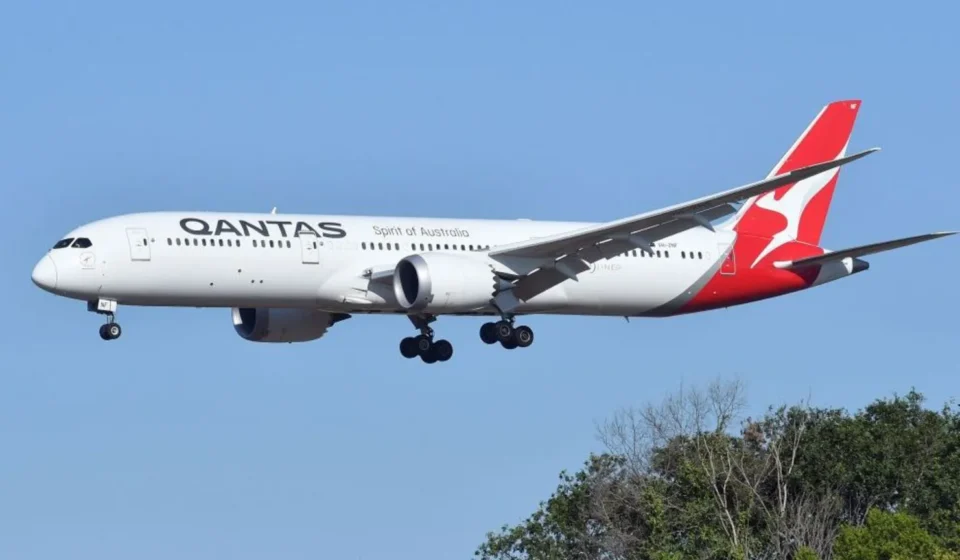

A Qantas aircraft has been grounded for deep cleaning after passengers reportedly complained of bedbug bites during a nearly 17-hour flight from Perth, Australia, to Rome, Italy, forcing the cancellation of its return service.
The airline cancelled Saturday’s Rome-to-Perth flight after the problem was identified on a small number of economy-class seats aboard the Boeing 787 Dreamliner.
According to the Sydney Morning Herald, passengers on Friday’s Perth-to-Rome service reported being bitten by insects during the long-haul journey. Some were reportedly given antihistamines to relieve itching, but supplies eventually ran out.
A Qantas spokesperson confirmed that the aircraft had been taken out of service to allow engineers and maintenance teams to carry out a thorough cleaning.
“We sincerely apologise to customers for the cancellation of Saturday’s Rome to Perth service, which allowed our engineers and maintenance teams to carry out a deep clean of the aircraft after an issue was identified on a small number of economy seats,” the spokesperson told the BBC.
The airline said all affected passengers were provided with accommodation and rebooked on alternative flights within 48 hours of their original departure.
The incident disrupted travel plans for passengers on the international route and renewed concerns about the difficulty of preventing bedbugs from spreading through frequently used transport systems.
Bedbugs are small, wingless parasites that feed on human blood and can hide in mattresses, clothing, upholstery and other fabric-covered surfaces.
Their bites can cause itching and skin irritation, although they are not generally known to transmit diseases to humans, according to the UK’s National Health Service.
The insects can be particularly difficult to eliminate because they hide in small crevices and may survive unnoticed until they find another opportunity to feed.
Effective treatment often involves washing bedding and clothing at high temperatures, using a hot tumble dryer and treating infested areas with appropriate pest-control methods. Items that cannot be washed may require specialist treatment, depending on the material and extent of the infestation.
For airlines, trains and hotels, controlling an infestation can be challenging because passengers and their belongings move continuously between locations, creating opportunities for the insects to spread.
The Qantas incident follows other reports of bedbugs disrupting public transport. Less than two weeks earlier, several Southeastern train services in England were reportedly cancelled after drivers discovered bedbugs in their train cabs.
British Airways also apologised in 2017 after a family travelling on an overnight flight from Vancouver, Canada, to London reported suffering multiple insect bites.
Although bedbug infestations are not necessarily a sign of poor hygiene, eliminating them can require extensive cleaning and specialised treatment.