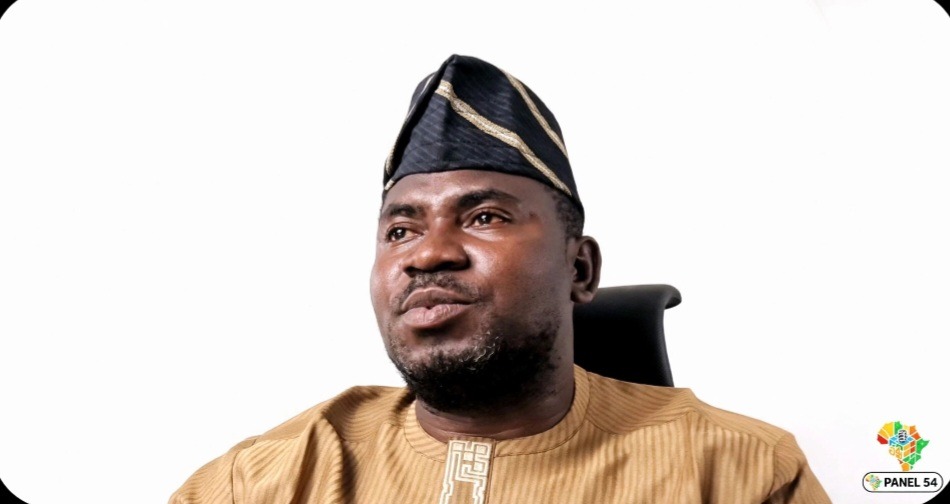

A retired Nigerian Army officer and security analyst, Lieutenant Siyaka Nasiru, has identified timely intelligence gathering, verification and deployment as critical factors in the success of security operations.
Nasiru, who spoke during an interview on Panel 54, said delays between the receipt of intelligence and its operational deployment could give terrorists and other criminal groups enough time to execute their plans before security agencies respond.

According to him, intelligence is only useful when security agencies have the capacity to quickly verify it and translate it into action.
“If enough time is not given to verify the intelligence and put it into execution, the process becomes too long. The adversary may have already executed or completed his mission before the security forces are able to forestall them,” he said.
Nasiru, who spent more than a decade in the Nigerian Army before retiring, said his military experience gave him a tactical understanding of security operations, while his work as a security analyst had enabled him to examine the broader strategic dimensions of Nigeria’s security challenges.
He explained that serving personnel often operate within a tactical framework, receiving orders and implementing them, while analysts outside the system are better positioned to examine how intelligence, leadership, logistics, communication and decision-making interact at the strategic level.
“When I was wearing the uniform, I was on the tactical side of security. Now I prefer to look at the strategic side. Where does failure occur at the strategic level, and where does success come from? I was not able to see some of these things when I was in the system because I was operating at the tactical level. You receive orders and implement them,” he said.
The retired officer said the distinction was important to understanding why military operations sometimes produce outcomes that may appear different from public expectations.
He noted that civilians often assess security operations mainly by their results, such as whether an attack occurred, whether a road was made safer or whether a kidnapping was prevented.
However, he said several processes must take place before an operation can be successfully executed, including intelligence gathering and assessment, logistics, leadership, communication, timing, availability of personnel and clear rules of engagement.
Nasiru stressed that commanders must also operate within the framework of national and international law before taking operational decisions.
He said these legal and operational considerations could affect how quickly security forces respond to a threat, particularly where civilian lives and property are at risk.
Nasiru also cautioned against treating all security operations in Nigeria as though they were the same.
He said military operations against terrorists and insurgents could resemble a form of regional warfare, particularly in areas where armed groups control or occupy territory and where civilian populations are limited.
He contrasted this with internal security operations, where security forces must contend with civilian populations and operate under different conditions and constraints.
According to him, this distinction is sometimes overlooked when Nigerians expect the military to simply deploy its superior firepower and eliminate terrorist groups.
“When we talk about national security and combating rebellion and terrorists, it is like a small regional war. But internal security is completely different,” he said.
Nasiru added that the complexity of Nigeria’s security environment made it difficult to apply a single approach to every threat.
He said the effectiveness of security operations depended not only on the strength of the armed forces but also on how effectively intelligence was collected, assessed, communicated and converted into timely action.
The retired officer also called for greater capacity building and improved equipment for other security agencies, including the Nigeria Police Force, Department of State Services and Nigeria Security and Civil Defence Corps.
He said strengthening these institutions would complement the military’s efforts and improve Nigeria’s ability to respond to contemporary internal security challenges.
His comments come amid continuing concerns over terrorism, kidnapping, organised crime and other security threats across different parts of Nigeria.