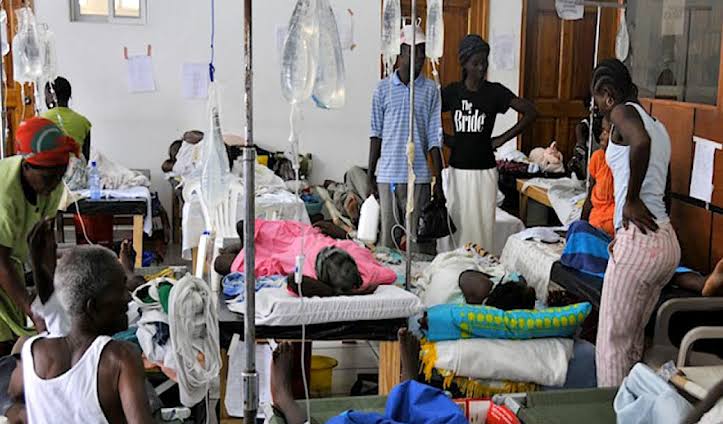

Arise Victor Oluwaseyifunmi in this piece takes stock of Nigeria’s healthcare crisis.
According to him – Nigeria’s healthcare crisis is often discussed in terms of dilapidated hospitals, inadequate medical personnel and the high cost of treatment. While these challenges are undeniable, they overshadow a more fundamental problem: our failure to prevent diseases before they become medical emergencies.
A healthcare system should not be judged solely by its ability to treat illness. It should also be measured by how effectively it prevents people from becoming ill in the first place. Unfortunately, prevention remains the weakest pillar of Nigeria’s health system.
The numbers tell a troubling story. According to the World Health Organization, nearly two-thirds of deaths in Nigeria result from communicable, maternal, perinatal and nutritional conditions, many of which are preventable through effective vaccination, disease surveillance, sanitation, health education and early intervention.
Lower respiratory infections, malaria, diarrhoeal diseases and tuberculosis continue to rank among the country’s leading causes of death. Cancer cases are also rising, while Nigeria still records one of the lowest life expectancies globally. These are not merely statistics; they represent lives that could have been saved through stronger preventive systems.
Yet public investment and policy attention continue to favour curative healthcare over preventive healthcare.
This imbalance extends beyond funding. It is also reflected in how our health institutions are organised.
Nigeria has established public health agencies and departments across federal, state and local governments. Their core responsibilities include disease surveillance, epidemiology, health promotion, emergency preparedness and population health management. These functions differ fundamentally from clinical medicine, which focuses on diagnosing and treating individual patients.
Both disciplines are indispensable, but they require different competencies.
Clinical medicine saves lives one patient at a time. Public health saves lives on a population scale by preventing outbreaks, reducing risk factors and promoting healthier communities.
If Nigeria has professionals specifically trained in epidemiology, disease surveillance, health promotion and health systems management, an important question deserves consideration: should preventive institutions be led primarily by professionals with specialised public health expertise?
This is not an argument against clinicians. Nigerian doctors remain overburdened, understaffed and indispensable to the country’s healthcare system. Rather, it is an argument for deploying the right expertise to the right responsibilities.
When clinicians are stretched between hospital duties and administrative leadership of preventive institutions, hospitals lose valuable clinical manpower while public health agencies may not fully leverage the specialised skills of trained public health professionals. The result is an overstretched workforce, longer waiting times, increasing burnout and weakened disease prevention efforts.
Recent disease outbreaks further brings to mind the importance of timely surveillance and public communication. During public health emergencies, information can be as important as medicine. Prompt risk communication enables communities to prepare, encourages early detection and strengthens public confidence in health authorities. Surveillance should not merely collect data; it should communicate risks clearly, consistently and without unnecessary delay.
Nigeria’s health challenges cannot be solved by building more hospitals alone. They require a deliberate shift toward prevention.
That means investing in stronger disease surveillance, expanding health promotion programmes, improving environmental sanitation, strengthening vaccination campaigns and ensuring that preventive institutions are equipped with the expertise needed to protect population health.
Most importantly, leadership appointments within the health sector should prioritise competence, relevant training and experience. Public health institutions should be led by professionals with demonstrated expertise in prevention and population health, whether they come from a public health or clinical background with advanced public health training.
The debate should never be about professional rivalry. It should be about achieving better health outcomes for Nigerians.
For too long, Nigeria has responded to diseases after they have spread rather than preventing them from occurring. The country’s mortality statistics leave little room for complacency.
Until prevention receives the same level of political commitment, institutional attention and financial investment as treatment, thousands of Nigerians will continue to die from diseases that should never have become fatal.
The cost of inaction is measured not only in healthcare spending, but in lives unnecessarily lost.