
Humans take a break even machines do, but this bird don’t.
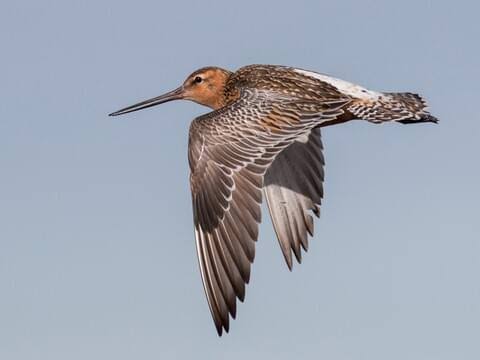
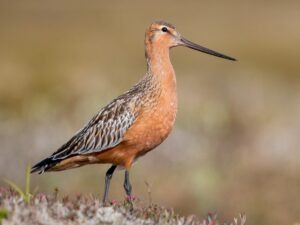
Among nature’s greatest endurance athletes is a bird that many people have never heard of, the Bar-tailed Godwit. Modest in appearance, with long legs and a slender bill, it does not possess the dramatic wingspan of an eagle or the colourful brilliance of tropical birds. Yet hidden behind its unassuming appearance is one of the most extraordinary feats in the natural world.
Imagine boarding a flight from Alaska to Australia and remaining in the air continuously for more than a week, no food, no water stops, no sleep in the conventional sense, and no place to rest. For humans, such a journey would be impossible. For the Bar-tailed Godwit, it is routine.
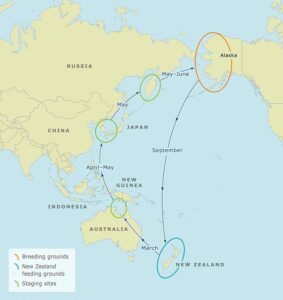
One individual stunned researchers by flying more than 13,500 kilometres from Alaska to Tasmania in just 11 days, making it the longest uninterrupted journey ever recorded for a land bird. The feat reinforced what ornithologists had long suspected: these birds are among Earth’s greatest long-distance travellers.
What makes the Godwit particularly remarkable is that it does not simply endure these journeys; it physically transforms itself to survive them.
Before migration begins, the bird enters an intense preparation phase. It rapidly increases its body weight by consuming huge quantities of food, storing fat reserves that can account for more than half of its body weight among the highest fat levels ever recorded in birds. While it gains fuel, other changes happen internally. Its heart and flight muscles become larger and stronger, preparing for prolonged exertion.
At the same time, parts of the body that will not be needed during flight temporarily shrink. Digestive organs become smaller because the bird will not be eating while crossing oceans. Nature, in effect, redesigns the Godwit into a flying machine optimized for efficiency.
Scientists spent years suspecting the bird’s abilities but lacked evidence until satellite tracking technology provided answers. In 2007, researchers from the Pacific Shorebird Migration Project fitted Godwits with transmitters and followed their movements across vast oceans.
The discoveries were astonishing. During their northward migration from New Zealand, the birds travel more than 10,000 kilometres to the Yellow Sea between China and the Korean Peninsula without stopping. From there they continue toward Alaska for breeding.
Then comes perhaps the most demanding stage of all: the return journey. Leaving Alaska around late August, they launch themselves into the sky and head across the Pacific Ocean directly toward New Zealand and southeastern Australia. Strong tailwinds assist them, allowing average speeds of roughly 56 kilometres per hour.
Some individuals have become legends among researchers. A female nicknamed “E7” once completed an 11,680-kilometre journey in just over eight days. Her record was later surpassed by others, including a juvenile bird only five months old that managed the astonishing 13,500-kilometre journey to Tasmania.
Across a typical lifespan, a Bar-tailed Godwit may travel more than 460,000 kilometres, a distance greater than the gap between Earth and the Moon.
Yet their talents go beyond endurance. The birds also demonstrate surprisingly strategic parenting behaviour. During nesting season, they often choose breeding sites close to more aggressive bird species. These neighbouring birds actively harass predators, creating a form of shared defense system. Godwits then join these aerial attacks, helping chase away threats such as gulls, ravens and predatory birds.
Their longevity adds another layer to the story. The oldest recorded Bar-tailed Godwit lived at least 36 years.
For a creature weighing only a few hundred grams, the Bar-tailed Godwit challenges assumptions about size and strength. It may not roar like a lion or tower like an elephant, but every year it performs one of nature’s most astonishing acts, crossing oceans through determination, adaptation and endurance.