
Long before audiences take their seats in cinemas next July, Christopher Nolan’s The Odyssey is already navigating rough waters. The film, less than 50 days from release, has become one of the most discussed and disputed projects in contemporary cinema, proving once again that with Nolan, controversy often arrives before the opening credits.
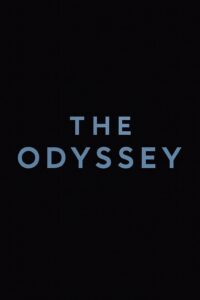
The acclaimed filmmaker has built a reputation for creating works that refuse to sit quietly within the boundaries of conventional storytelling. From the mind-bending dimensions of Interstellar to the fractured realities of Inception and Tenet, Nolan has often invited audiences into worlds where debate is part of the experience itself. Yet this time, the arguments surrounding The Odyssey are not centred on plot twists or scientific theories. Instead, they revolve around casting choices, audience expectations, cultural interpretations and an enduring question: who owns mythology?
The adaptation of Homer’s ancient epic has attracted significant attention from the moment it was announced. Expectations were naturally immense. Homer’s Odyssey is not merely another story; it is one of civilization’s foundational texts, a tale of war, loyalty, temptation, grief and a difficult journey home. Any filmmaker daring enough to reinterpret it enters territory protected by scholars, literature enthusiasts and passionate audiences who often have their own deeply personal relationship with the material.
The film’s star power only amplified the anticipation. Matt Damon leads the project as Odysseus, joined by a cast that includes Tom Holland as Telemachus and Anne Hathaway as Penelope, alongside Robert Pattinson, Charlize Theron and Zendaya. The line-up immediately generated excitement. It also generated scrutiny.
Recent discussion intensified after the release of promotional material that revealed aspects of the film’s tone and performances. Online reactions quickly spilled into arguments about accents, authenticity and whether audiences have become conditioned to associate ancient worlds with specific cultural templates.
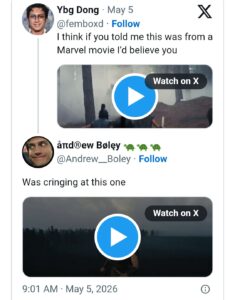
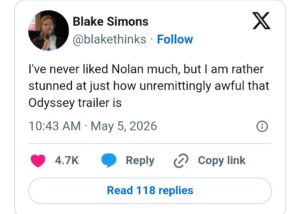
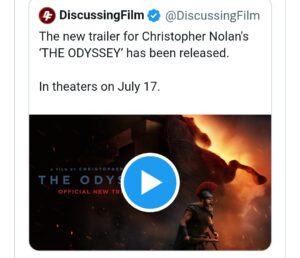
For many viewers, historical or mythological settings seem almost inseparable from British accents. Decades of cinema and television have quietly shaped that expectation.
Epic dramas, medieval fantasies and historical adaptations have repeatedly employed British speech patterns, creating an unspoken rule that audiences often accept without questioning.
The irony, however, is difficult to ignore. Ancient Greece did not sound British. Nor did it sound American. Any modern accent placed into that world is ultimately an approximation, a creative decision rather than an exercise in historical reconstruction. Yet cinema frequently builds its own traditions, and over time those traditions become accepted as truth.
It is not the first time Nolan has encountered resistance to creative choices. Across his career, his films have often triggered debates about complexity, narrative ambition and artistic interpretation. But social media has transformed those discussions into something larger and more combustible. What might once have been a disagreement among critics now unfolds in real time before millions of viewers, with opinions accelerating into trending topics within hours.
The director has also faced criticism over particular casting decisions, with some commentators questioning whether modern reinterpretations of classical stories should strictly follow long-established visual expectations. Others argue that mythology itself has always evolved through reinvention.
That argument carries historical weight. Ancient stories survived precisely because they were retold. Myths travelled across borders and generations, changing shape as they moved from oral traditions into written texts, from stage performances into films. Every era has effectively rewritten inherited legends according to its own fears, values and imagination.
Nolan himself appears to lean toward that philosophy. Defending the inclusion of rapper Travis Scott in the project, the filmmaker explained that he saw a connection between oral poetry and rap traditions. The reasoning may have surprised some critics, but it also reflects a broader attempt to connect ancient storytelling with contemporary cultural expression.
Whether audiences ultimately embrace such interpretations remains uncertain.
What has become increasingly clear, however, is that much of the noise surrounding The Odyssey reveals as much about modern audiences as it does about the film itself. In an era of rapid reactions and digital outrage, public conversations around cinema often begin long before anyone has seen the finished work. Trailers become battlegrounds. Casting announcements become ideological debates. Speculation sometimes acquires the weight of established fact.
There is also a deeper contradiction at play. Many of the loudest voices arguing over the “correct” adaptation of Homer’s work often approach these ancient texts through assumptions built by previous films rather than through the source material itself. Popular culture, over time, creates its own mythology around mythology.
For Nolan, that may be the ultimate challenge. Adapting The Odyssey was never going to be a straightforward journey. Homer’s hero spent years battling storms, monsters and impossible odds before reaching home. Nolan’s version appears to be encountering its own obstacles before the voyage has even begun.
While it might be one of Nolan’s grueling work and one that has put Matt Damon through his paces, the subjective value of the movie could be its highest point or lowest moments.
This feature film adaptation is coming to theatres soon, with its release date set for 16 July.