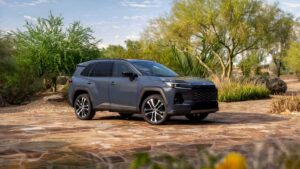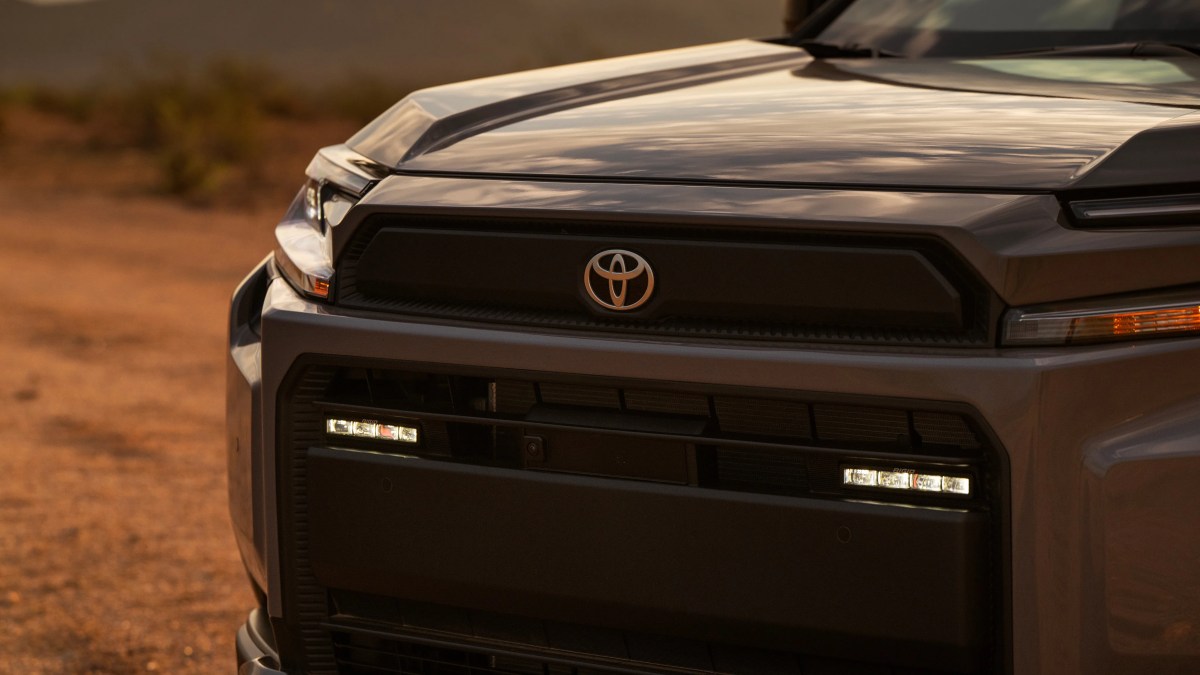

Toyota appears to be edging closer to one of the auto industry’s most talked-about possibilities: a compact pickup built around the hugely successful Toyota RAV4 platform.
Recent comments from Tetsuo Ogawa suggest that the Japanese automaker is seriously considering a smaller, more affordable pickup derived from the RAV4 rather than a traditional truck architecture like the Toyota Tacoma.
The idea is gaining traction because it targets a different category of buyer altogether.
Instead of competing directly with rugged body-on-frame trucks designed for serious towing and off-road capability, a RAV4-based pickup would likely focus on urban practicality, fuel efficiency, affordability and light-duty utility, the same formula that helped the Ford Maverick become one of the automotive market’s biggest success stories.
Ford’s experience offers a strong case study. The Maverick demonstrated that many buyers do not necessarily need a large truck capable of hauling heavy construction equipment or towing large trailers. For many consumers, particularly younger buyers and city dwellers, a vehicle with SUV comfort and a functional cargo bed offers sufficient versatility.
Toyota’s reported plan to use the RAV4’s TNGA-K platform could provide several advantages. Unlike body-on-frame designs, where the vehicle body sits separately on a ladder-style chassis, unibody construction integrates both into a single structure. This usually translates into a smoother ride, improved fuel economy, lighter overall weight and easier handling in urban environments.
It also reduces manufacturing complexity and development costs.
Those benefits matter in a market where buyers increasingly want vehicles that function as daily drivers first and utility machines second.
A RAV4-based pickup equipped with hybrid technology could potentially offer impressive fuel efficiency while keeping pricing within the upper-$20,000 range, making it attractive to first-time truck buyers.
But there are unavoidable compromises. Unibody trucks traditionally cannot match body-on-frame vehicles in towing capacity, payload capability or long-term durability under heavy work conditions.
The current RAV4 can tow up to about 3,500 pounds in certain configurations, enough for small trailers, personal watercraft or recreational gear, but far below what even entry-level Tacoma models can handle.
Payload limitations also raise practical questions. Compact truck beds on unibody platforms typically tolerate less abuse than conventional truck designs, which may discourage buyers who regularly carry heavy equipment or materials.
Still, Toyota may not need to build another Tacoma. The stronger opportunity may be creating a truck for people who never considered buying one before: urban professionals, small business owners, outdoor enthusiasts and families seeking a blend of utility and comfort.
If Toyota positions the vehicle correctly, it may not simply be competing against traditional pickups; it could be expanding the entire market for $20,000 or less!
Too heavy?