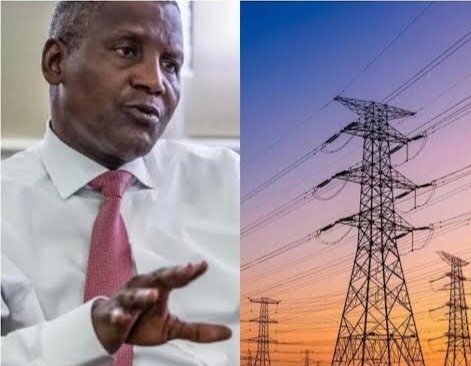

For decades, Nigeria has struggled to generate even 6,000 megawatts of stable electricity despite repeated reforms, ambitious policy targets, and billions of dollars invested in the sector. Now, billionaire industrialist Aliko Dangote is positioning himself at the centre of what could become one of the country’s most ambitious private-sector energy interventions yet.
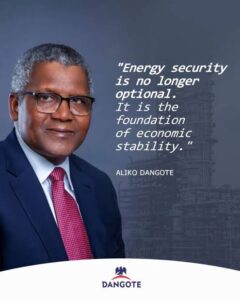
Dangote, whose conglomerate has built massive industrial operations spanning cement, fertiliser, petrochemicals and refining, is now setting its sights on transforming Nigeria’s fragile electricity landscape with plans linked to a broader push toward 20,000 megawatts of power generation.
Nigeria currently has an installed electricity generation capacity of roughly 13,000MW. However, experts say a large portion of that capacity remains inaccessible due to aging infrastructure, gas supply shortages, transmission bottlenecks, and operational inefficiencies. In practical terms, the country’s reliable power supply still fluctuates between 4,000MW and 6,000MW, far below the needs of Africa’s most populous nation.
Although the national grid has shown signs of improvement in recent months, reportedly reaching 5,800MW in early 2026 without major system collapses, energy stakeholders argue that the country remains significantly underpowered for its population and industrial ambitions.
The proposed target of 20,000MW would represent more than a threefold increase in Nigeria’s current dependable electricity supply and could dramatically alter the country’s manufacturing, technology, and investment environment if achieved.
Speaking during an interview with Makhtar Diop of the International Finance Corporation, Dangote described energy access as one of Africa’s most urgent development challenges. He noted that sustainable economic growth across the continent would depend heavily on reliable electricity, industrial raw materials, fertiliser production, and locally refined petroleum products.
According to Dangote, the growing financial strength of the firm, driven largely by the success of the Dangote Petroleum Refinery, is creating room for more aggressive expansion into critical infrastructure sectors, including power generation.
The refinery, which recently reached its full processing capacity of 650,000 barrels per day, has significantly boosted the conglomerate’s cash flow and investment capacity. Dangote said this improved financial flexibility now allows the company to undertake larger-scale industrial projects and potentially raise additional capital for expansion.
Yet, there are warning that Nigeria’s electricity crisis extends far beyond generation alone. Government estimates suggest the country requires more than $100 billion in combined public and private investment to achieve reliable, round-the-clock power supply nationwide.
The breakdown includes roughly $30 billion to add 20,000MW of generation capacity, $20 billion for transmission infrastructure, and an additional $47 billion for distribution upgrades and gas supply systems.
Underneath this goal are structural issues continue to hinder progress, including weak grid infrastructure, liquidity challenges in the power market, regulatory uncertainties, and chronic underinvestment.
Speaking on the broader investment challenge, Temitope Kolade of Andersen, noted that unlocking large-scale capital would require deeper reforms, stronger policy consistency, and improved investor confidence.
As Nigeria grapples with rising energy demand and persistent blackouts, Dangote’s growing interest in the sector is likely to intensify conversations about the role of private capital in solving one of the country’s most enduring development problems.