
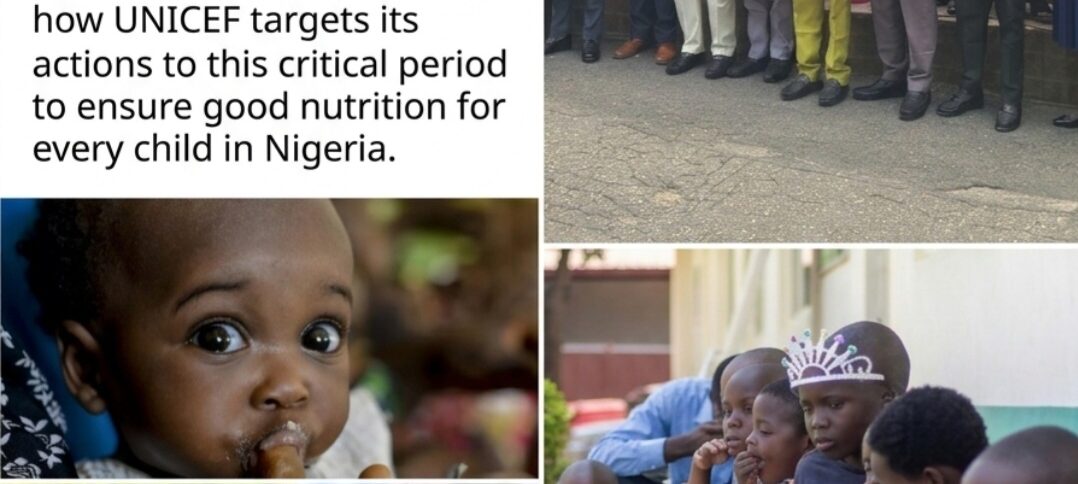

State governments across Nigeria’s South-West region have been urged to make firm financial commitments to nutrition-focused initiatives, particularly the N774 programme, as stakeholders warn that malnutrition continues to pose a serious threat to child development and human capital growth.
This call formed the central focus of a high-level meeting on integrated multisectoral nutrition programming held on Wednesday in Ibadan, Oyo State. The meeting was organised by the Oyo State Ministry of Budget and Economic Planning in collaboration with the United Nations Children’s Fund (UNICEF).
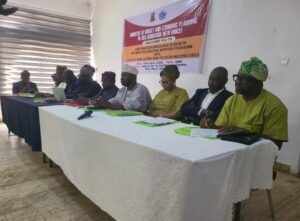
The one day high-level event brought together permanent secretaries, executive secretaries of primary healthcare boards, and nutrition specialists from Oyo, Ogun, Ondo, Osun, Ekiti, and Lagos states. Discussions centred on the implementation of the N774 initiative, Oyo State’s progress, and pathways for other states to adopt and sustain the programme.
Speaking at the meeting, UNICEF Programme Manager, Lagos Field Office, Mohammed Okorie, revealed that the South-West region records an average stunting rate of 21 per cent among children, stressing the urgent need for coordinated interventions.
He warned that failure to address malnutrition early could have lifelong consequences.
“The consequence of not taking nutrition seriously is that a child can be deprived of vital intellectual capabilities, and unfortunately, these are not reversible,” Okorie said.
“To get it right, we must focus on the first 1,000 days of life, starting with exclusive breastfeeding and proper complementary feeding practices.”
Okorie described stunting as a major developmental challenge, noting that it permanently affects cognitive ability and productivity. He added that the Federal Government’s N774 initiative was designed to strengthen coordination across all 774 local government areas in Nigeria.
“Government has taken proactive steps by inaugurating structures that enhance coordination, multisectoral planning, budgeting, and peer review mechanisms across federal, state, and local levels,” he said.
He also highlighted the Child Nutrition Fund as a critical financing mechanism that states must leverage. According to him, UNICEF matches state funding dedicated to nutrition interventions, effectively doubling available resources.
“For instance, if a state commits N100 million to nutrition commodities, UNICEF matches it to make N200 million. This is a low-hanging fruit that no state can afford to ignore,” he added.
Earlier, Oyo State Commissioner for Budget and Economic Planning, represented by the Permanent Secretary, Mr Tunji Ayanleke, commended UNICEF for its sustained support in advancing nutrition funding and programming.
He emphasised the importance of multisectoral collaboration in sustaining gains across the state’s 33 local government areas, noting that nutrition outcomes are closely tied to effective planning and budgeting.
Stakeholders at the meeting also stressed the role of legislation and governance in strengthening nutrition frameworks. An Oyo State lawmaker, Dr. Abiodun Babalola, said lawmakers must ensure that policies and budgets reflect the urgency of addressing malnutrition.
“As legislators, we have a critical role to play in ensuring that laws and budgetary provisions support improved nutrition for children and adults,” he said. “It is not enough to push for legislation; we must also ensure the financial backing needed for implementation.”
Similarly, a local government stakeholder from Ogun State, Folasade Adeyemo, described the N774 initiative as a strategic intervention capable of reducing financial barriers that limit access to adequate nutrition, especially among low-income families.
“Without proper nutrition, there cannot be good health. A child cannot function effectively, and that is why nutrition must be tackled headlong,” she said.
Adeyemo called on local government authorities to take ownership of the initiative, noting that its success depends on active participation at the grassroots level.
“This initiative cuts across all 774 local governments in Nigeria. We are ready to partner not just in words but in implementation, because nutrition is directly linked to economic development,” she stated.
She further stressed that improved nutrition would significantly enhance human capital outcomes in the region.
“If we get nutrition right, there will be a turnaround in performance because it directly impacts human capital development. Statistics already show that about 21 per cent of children in the South-West are malnourished,” she said.
Participants at the meeting agreed that tackling malnutrition requires sustained investment, stronger institutional frameworks, and a focus on the critical first 1,000 days of a child’s life.
They warned that without deliberate action, stunting would continue to undermine children’s productivity and the region’s long-term economic prospects, urging duty bearers at all levels to prioritise nutrition as a key development agenda.