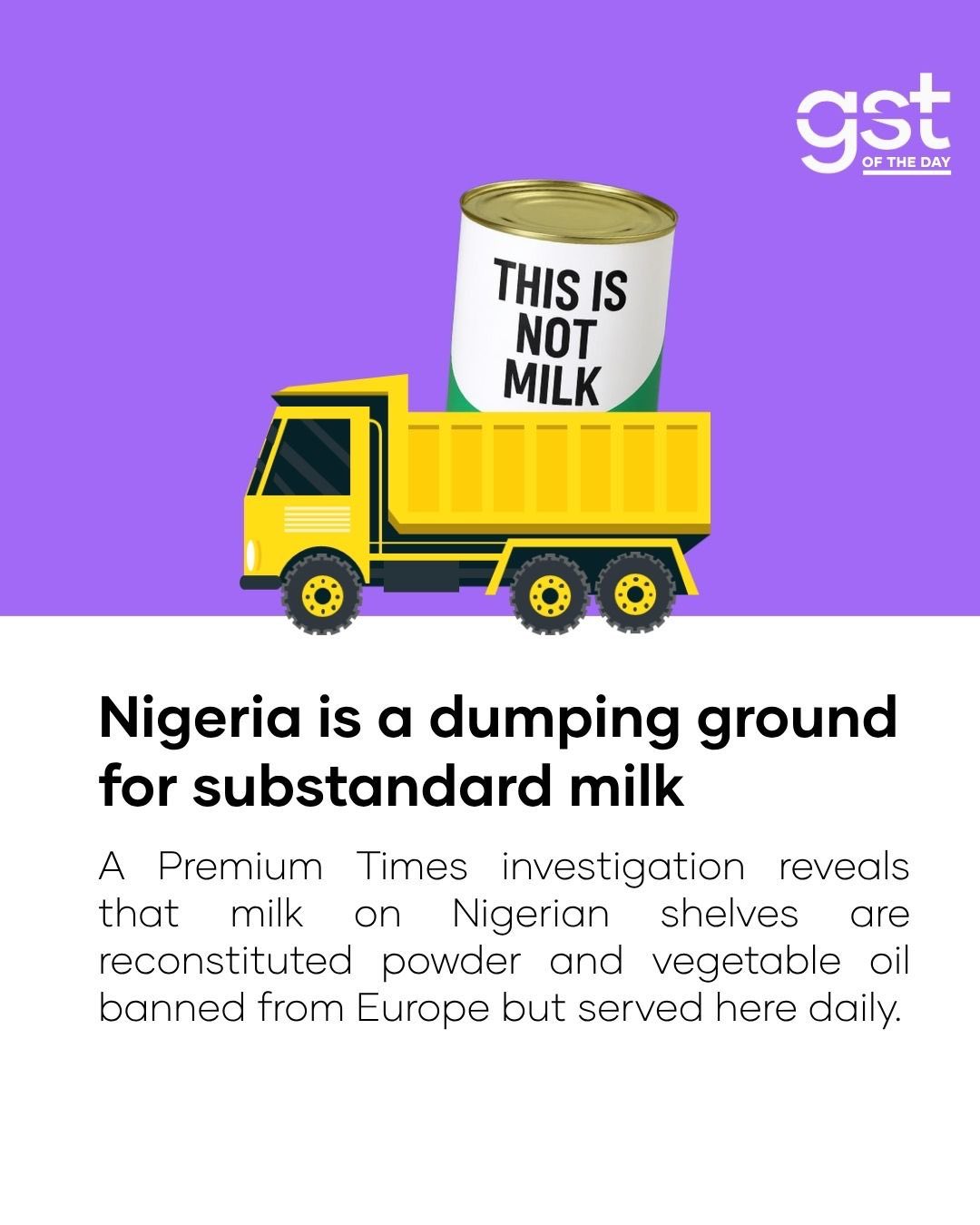

A couple of posts on X has jolted many Nigerians into the real composition of what they ingest as “milk”.
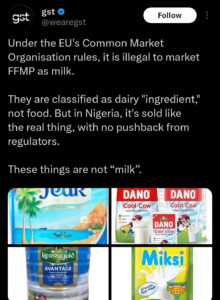
This has generated a growing debate over the widespread consumption of what many believe to be milk, but is increasingly revealed to be fat-filled milk powder (FFMP), a substitute dairy product that experts say is reshaping the country’s food system and undermining local agriculture.
FFMP is a processed dairy ingredient made by blending skimmed milk powder with vegetable fats such as palm or coconut oil. The process replaces natural milk fat, often extracted for higher-value products like butter with cheaper alternatives, resulting in a product that mimics the taste and texture of full cream milk at a significantly lower cost.
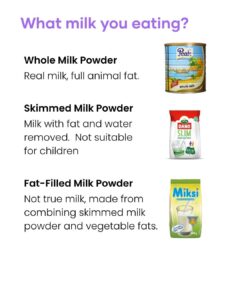 Across Nigeria’s markets, from Lagos to Kano, Aba and Abuja, investigations suggest that many consumers are unaware of the distinction. FFMP is frequently branded, advertised, and sold as milk, blurring the line between authentic dairy and substitute products.
This practice stands in contrast to regulations in the European Union, where FFMP cannot legally be labelled or marketed as milk. Instead, it is classified strictly as a dairy ingredient due to the addition of non-dairy fats. Yet, large volumes of the same product are exported to African markets, where regulatory enforcement is often weaker.
Unfortunately, trade data shows that European countries including Ireland, Netherlands, Germany and France are major exporters of FFMP, with Irish firms such as Lakeland Dairies, Tirlán and Ornua leading shipments to West Africa.
The pricing advantage of FFMP, driven partly by European subsidies and relatively low import tariffs, has made it far cheaper than locally produced milk. Analysts warn this imbalance is pushing Nigerian dairy farmers out of business, as imported substitutes undercut domestic production costs.
Beyond the economic implications, concerns are also mounting over consumer awareness. Market surveys indicate that even traders often lack clear understanding of the difference between FFMP and full cream milk, contributing to widespread misinformation.
It is apparent that Nigeria risks becoming a dumping ground for lower-cost substitute products that would face stricter labelling and regulatory scrutiny elsewhere. They point to the absence of strong enforcement mechanisms and consumer education as key gaps allowing the trend to persist.
While FFMP is not inherently unsafe and remains widely used globally in food processing, experts insist transparency is critical. Consumers, they argue, deserve clear labelling and accurate information to make informed choices about what they consume.
Again in an X post by @weargst, it says:
“Under the EU’s Common Market Organisation rules, it is illegal to market FFMP as milk.
They are classified as dairy “ingredient,” not food. But in Nigeria, it’s sold like the real thing, with no pushback from regulators.
These things are not “milk”.
For how long will Nigeria be a dumping gepund for substitute products?