In a development that apparently runs foul of international norms, the United States has captured Venezuelan President Nicolás Maduro, sparking a deeply polarized global response that pits Washington and a handful of allies against widespread condemnation from Latin America, Europe, and major world powers.
President Donald Trump announced on Saturday that U.S. military forces had taken Maduro and his wife into custody, transporting them to New York to face long-standing U.S. indictments on narcoterrorism and weapons charges. The bold military operation, effectively a regime change action, has thrown international relations into turmoil.
So far, the assessment of this situation has been extreme in all aspects.
British Prime Minister, Keir Starmer, offered the operation a tepid, pragmatic endorsement, stating his government would “shed no tears” for Maduro’s departure. This isolated support was quickly drowned out by a furious chorus of opposition.
Meanwhile, major geopolitical rivals led the charge. China stated it was “deeply shocked and strongly condemns” what it called the “use of force against a sovereign country.” Russia on the other hand, denounced the incursion as “an act of armed aggression” and a blatant violation of the UN Charter.
The strongest rebukes, however, came from across Latin America, a region with a long, painful history of U.S. intervention. Brazilian President Luiz Inácio Lula da Silva called the action “unacceptable” and a grave violation of international law, warning it represented “the first step toward a world of violence, chaos, and instability.”
Colombian President Gustavo Petro termed it an “assault on the sovereignty” of the entire region. Chilean President Gabriel Boric expressed “concern and condemnation,” urging a peaceful solution.
Uruguay officially rejected military intervention, while Cuban President Miguel Díaz-Canel accused the U.S. of a “criminal attack”, a sentiment echoed by Iran, which condemned the “flagrant violation of national sovereignty.”
US Justifies It’s Action
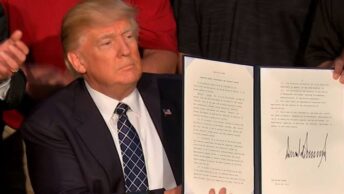
In his announcement, President Trump framed the capture as a necessary step to restore democracy and hold a corrupt leader accountable.
He outlined that the U.S. would temporarily “run” Venezuela to oversee a “safe, proper and judicious transition” of power, a statement that has raised further alarms about prolonged U.S. occupation and political engineering.
Secretary of State Marco Rubio suggested the operation could signal a broader regional policy, taking aim at Cuba as a “disaster” run by leaders who supported Maduro.
To provide even less fortitude, The United Nations expressed profound alarm. Secretary-General António Guterres stated he was “deeply concerned that the rules of international law have not been respected” and called the strikes a “dangerous precedent.” He urged all Venezuelan actors to pursue inclusive dialogue.
Within Venezuela, the political future is chaotic. While the U.S.-recognized interim government has hailed the move, current officials loyal to Maduro’s United Socialist Party have urged calm. Interior Minister Diosdado Cabello called on citizens to trust the nation’s leadership and military, urging the world to “speak out about this attack.”
The unprecedented capture of a sitting head of state by a foreign military has triggered one of the most severe diplomatic crises of the 21st century. It sets the stage for a volatile chapter in hemispheric relations, tests the crumbling pillars of postwar international law, and leaves Venezuela’s immediate future hanging in the balance between foreign control and potential civil strife.