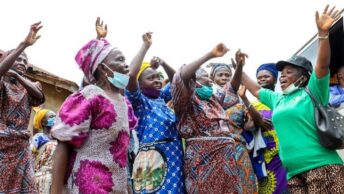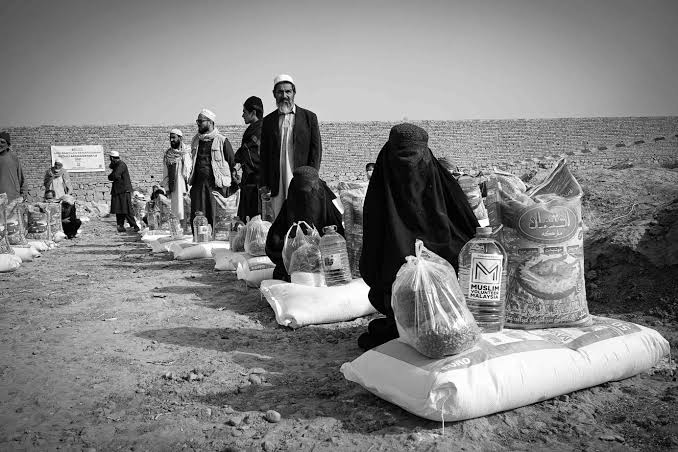

Over two decades ago after the deadly bombing of the UN headquarters in Baghdad that inspired World Humanitarian Day, the risks to civilians and aid workers have only multiplied. Conflicts are raging across continents, from Gaza to Sudan to Myanmar, while those delivering life-saving assistance are increasingly under attack.
The United Nations says at least 390 humanitarian workers were killed in 2024 alone, a record high, that brings to mind the deadly environments in which they serve.
“Humanitarian workers are the last lifeline for over 300 million people caught in conflict or disaster,” UN Secretary-General António Guterres said in his 2025 World Humanitarian Day message.
“Yet funding for that lifeline is drying up. International law is clear: humanitarians must be respected and protected. They can never be targeted.”
In Nigeria, that drying pipeline of aid is already being felt. The United Nations Children’s Fund (UNICEF) has raised the alarm over a massive funding shortfall following recent cuts by the United States government. Of the $255 million required for humanitarian operations in 2025, UNICEF has received only $95 million, leaving a $160 million gap, or 67% of its needs unmet.
UNICEF’s Chief of Field Office in Maiduguri, Francis Butichi who spoke during the commemoration of World Humanitarian Day in Borno State, the epicentre of Nigeria’s displacement crisis said: “We are all aware of the global funding cut that has threatened humanitarian operations across the world.”
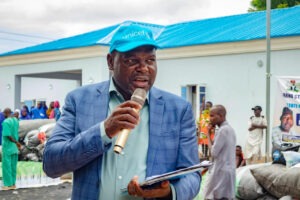
“The impact is profoundly crushing at the local level, where conflict, climate change and disease outbreaks are recurrent.”
Despite these challenges, UNICEF says it has still managed to reach over 1.3 million people with healthcare services, treat 340,000 children suffering from severe acute malnutrition, provide safe water for 185,000 people, and enroll half a million displaced children in schools in Nigeria’s North-East. But the organisation warns that these gains cannot be sustained without urgent action.
Butichi called on Nigerians; individuals, communities, businesses, and governments, to step in by supporting local humanitarian efforts through donations, volunteering and advocacy. He also urged donors and the private sector to channel resources to local governments and civil society organisations delivering life-saving services.
For many of the displaced families in Nigeria’s IDP camps, humanitarian aid is the difference between survival and despair. Yet with conflicts intensifying, floods destroying homes, and health facilities stretched thin, the gap between needs and resources is widening fast.
As Guterres put it, World Humanitarian Day is not just a memorial but a call to action.
“Today, as on every day of the year, we strongly call for a general mobilisation to defend international humanitarian law and civilian populations,” he said.
The question remains: with global crises multiplying and resources dwindling, who will step up to ensure that lifeline is not severed?