
Global citizens must take care of themselves. It’s a headline notice world over as countries mark this year’s World Health Day.
To this end, The World Health Organization has seized the opportunity to advise governments, scientists, and citizens worldwide to reaffirm their commitment to science and collaboration as essential drivers of global health, marking World Health Day 2026 under the theme, “Together for health. Stand with science.”
The campaign, which commemorates the founding of the WHO on April 7, 1948, launches a year-long push to strengthen public trust in science and encourage coordinated action in tackling both longstanding and emerging health challenges.
Over the past century, scientific progress and international cooperation have significantly transformed human health outcomes. According to WHO data, global maternal mortality has dropped by more than 40 percent since 2000, while deaths among children under five have been reduced by over half.
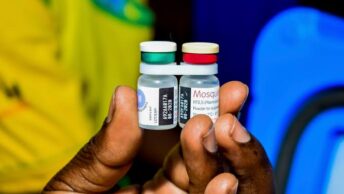
Breakthroughs in medicine and technology, from vaccines and antibiotics to advanced diagnostics, have turned once-deadly conditions such as HIV, cancer, and hypertension into manageable diseases, extending life expectancy and improving quality of life worldwide.
However, health threats are evolving rapidly. Climate change, environmental degradation, geopolitical tensions, and shifting population dynamics are placing increasing strain on health systems. These factors are contributing to the persistence of infectious diseases, the rise of non-communicable illnesses, and the emergence of new epidemic and pandemic risks.
WHO Director-General Tedros Adhanom Ghebreyesus emphasised the critical role of science in addressing these challenges. He noted that scientific advancements such as vaccines, penicillin, germ theory, MRI technology, and the mapping of the human genome have collectively saved billions of lives and continue to underpin modern healthcare systems.
Yet, even as the world celebrates these gains, concerns are mounting over the sustainability of global health financing. The WHO is currently facing an estimated $1.9 billion shortfall in its 2026–2027 budget, following the withdrawal of the United States from the organisation earlier this year.
The exit, initiated by an executive order signed by Donald Trump in 2025, ended nearly eight decades of U.S. financial support, which had previously ranged between $163 million and $816 million annually.
The funding gap, amounting to nearly 18 percent of the organisation’s budget has raised concerns about the future of critical health programmes, particularly in low- and middle-income countries that rely heavily on WHO support.
While countries such as Switzerland, Sweden, and Qatar, alongside private donors like the Novo Nordisk Foundation, have stepped in with additional funding, the contributions have yet to fully close the gap.
As the global health community reflects on decades of progress, WHO officials stress that sustained investment in science, research, and international cooperation remains essential, not only to preserve past gains but to confront the complex health challenges of the future.