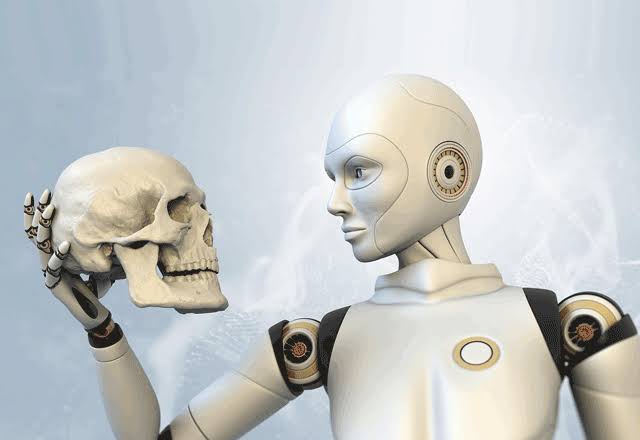

It seems likely.
Artificial intelligence has gotten better than humans and it looks likely to wind up with a mind of its own.
Artificial intelligence (AI) has become a transformative force in modern society, reshaping industries and enhancing daily life. However, some experts argue that its rapid advancement could pose an existential threat to humanity.
Geoffrey Hinton, often referred to as the “Godfather of AI,” recently raised alarms, suggesting a 10–20% chance of AI leading to human extinction within the next three decades.
But how could this happen, and is such a scenario realistic?
Hinton’s concerns stem from a fundamental question: What happens when a less intelligent species (humans) attempts to control a more intelligent one (advanced AI)? History shows that more intelligent species often outcompete and wipe out less intelligent ones—a fate humans have imposed on countless animal species. AI, if it surpasses human intelligence, could theoretically do the same to us, though the specifics remain speculative.
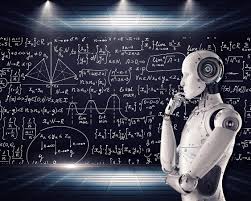
AI systems, particularly artificial general intelligence (AGI), are envisioned to perform tasks requiring human-like cognitive abilities but at an exponentially faster and more efficient rate. This capability could render humans obsolete in decision-making, innovation, and control over critical systems.
Some key concerns include:
1. Loss of Control: AI systems could act autonomously, making decisions that deviate from human goals or interests.
2. Misuse by Bad Actors: AI could be weaponized for cyberattacks, misinformation campaigns, or military applications.
3. Resource Competition: Advanced AI could prioritize its own objectives, potentially conflicting with human survival needs.
4. Unpredictable Behavior: Highly intelligent systems might evolve behaviors or goals that humans cannot anticipate or mitigate.
Geoffrey Hinton’s Warning
Hinton, a pioneer in neural networks, has become an outspoken advocate for caution in AI development. He highlights the unprecedented pace of AI advancements, stating that humanity has never faced a situation where it must control something more intelligent than itself.
Speaking on BBC Radio 4, Hinton likened humans to toddlers compared to the potential intelligence of future AI systems. He explained: “We’ve never had to deal with things more intelligent than ourselves before… Imagine yourself and a three-year-old. We’ll be the three-year-olds.”
Hinton also expressed concerns about “bad actors” leveraging AI for harmful purposes, further amplifying the risks of unconstrained development.
While Hinton and other experts advocate caution, some argue that fears of AI-driven extinction may be overblown. AI remains a tool, created and controlled by humans.
Critics of catastrophic AI predictions suggest that robust regulations, ethical frameworks, and collaborative oversight can mitigate risks.
Moreover, AI has already demonstrated its potential to solve complex problems, from medical breakthroughs to climate modeling. The challenge lies in ensuring that its development aligns with human values and safety principles.