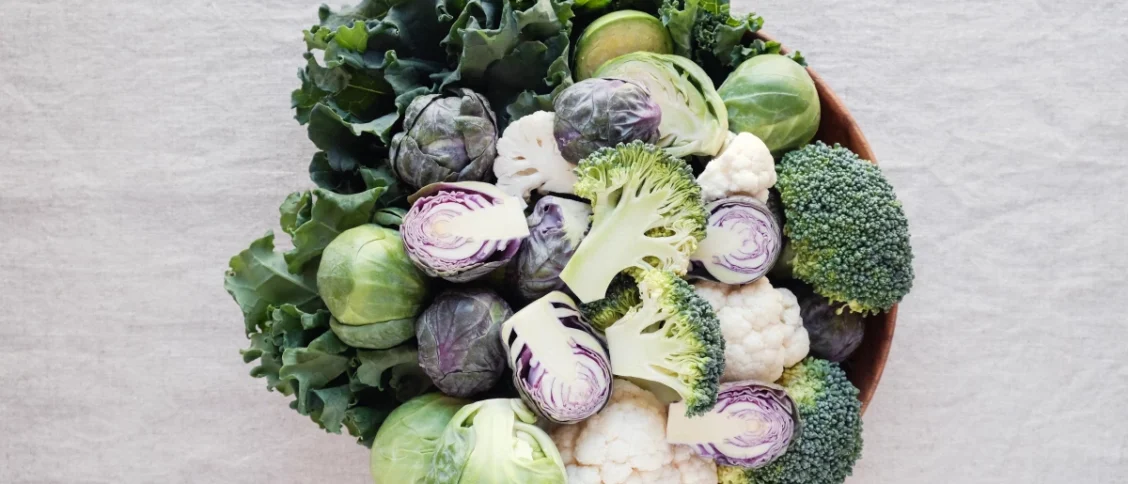

Why are vegetables so important to our daily diet?
Cruciferous vegetables like broccoli, cabbage, kale, and cauliflower are gaining fresh attention in the scientific world. Not only do they help blunt spikes in blood sugar, a particularly important benefit for people with type 2 diabetes or those at risk of developing the condition but they’ve also been repeatedly shown to protect against some of the most deadly diseases of our time.
Studies link them to lower risks of high blood pressure, colon cancer, and improved overall metabolic health.
A recent study underscored just how powerful these vegetables can be. Researchers found that consuming as little as 20 to 40 grams of cruciferous vegetables a day, the equivalent of just a few forkfuls, reduced the risk of colon cancer by 20 percent. With colon cancer claiming nearly a million lives every year across the globe, this simple dietary habit could be a life-saving intervention.
It is findings like these that fuel debates about just how many fruits and vegetables we really need. Celebrity chef Jamie Oliver recently set tongues wagging when he dismissed the long-standing “five-a-day” guideline as “a lie.” In an interview with The Times, Oliver insisted that the real health gains come at seven, eight, or even 11 portions of fruit and vegetables daily. His comments may have sounded provocative, but nutrition science appears to back him up.
The truth is that the five-a-day benchmark was never meant to represent the gold standard for health. Instead, it was a compromise between what research showed was beneficial and what public health experts believed was achievable for most people. A vast meta-analysis covering more than 2 million participants found that while five daily portions do lower the risk of chronic illnesses like cardiovascular disease and cancer, the most striking benefits appear when people consume closer to ten portions daily.
For instance, Japan has long embraced this higher target, encouraging citizens to eat ten or more servings of fruit and vegetables every day.
Similarly, Mediterranean cultures, famed for their diets rich in fresh produce, beans, and legumes, provide a living example of how plant-based abundance translates into lower rates of heart disease and longer life expectancy. These patterns are echoed in Japanese studies, which show that higher intakes of produce are consistently linked to lower overall mortality.
The World Health Organization provides a practical framework for what counts as a portion: about 80 grams, or a small handful. That might be a single apple, two broccoli spears, three heaped tablespoons of peas, or half a tin of beans. When broken down this way, aiming for eight to eleven portions daily becomes less daunting.
A bowl of cereal with berries, a banana in your porridge, or spinach folded into an omelette takes care of breakfast. Lunch could mean salad tucked into a sandwich, beans stirred into soup, or extra vegetables wrapped into a tortilla. Dinner then provides even more opportunities for variety and color.
Beyond physical health, new evidence suggests that piling more fruits and vegetables onto your plate could even improve the quality of your sleep. Researchers have discovered links between higher produce consumption and better rest at night, meaning the benefits of eating well extend into the hours when your body restores and repairs itself.