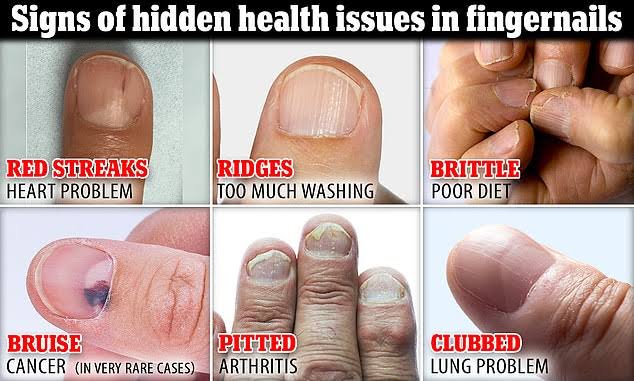

Your nails do more than enhance your hands and feet, they are silent indicators of your overall health.
While occasional white spots or brittle edges may seem harmless, subtle changes in color, texture, or shape could signal underlying health issues ranging from nutritional deficiencies to chronic diseases.
N:B These indicators do not in any way stand as an established health guideline but rather suggestive based on observations taken over time.
The Anatomy of Your Nails
Nails are extensions of the skin, composed of keratin—a tough protein that protects fingertips and toes from injury. The lunula, the crescent-shaped white area at the base of the nail, serves as the nail’s growth center. Below it, the cuticle acts as a barrier, preventing bacteria and fungi from invading.
While most nail changes are harmless, doctors often use them as diagnostic clues. According to a general practitioner and neuroscience lecturer, Dr. Dan Baumgardt:
“Nails can offer valuable insight into a patient’s health, from dermatological conditions to systemic diseases.”
When Nail Changes Signal a Health Issue
1. Clubbing – A Warning Sign for Serious Illness
If your nails curve downward and your fingertips appear swollen (a condition known as clubbing), it may indicate low oxygen levels in your blood. Clubbing is often linked to:
– Lung cancer
– Heart infections
– Liver cirrhosis
– Celiac disease
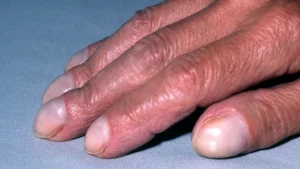
Although clubbing is rare, doctors take it seriously, often recommending an urgent chest X-ray to rule out lung disease.
2. White Spots – Not Just a Calcium Myth
Contrary to popular belief, leukonychia—those small white flecks on your nails—is usually not a sign of calcium or zinc deficiency. Instead, they are more likely caused by:
– Minor trauma (e.g., frequent manicures, nail-biting)
– Fungal infections
– Heavy metal poisoning (lead or arsenic exposure)
– Chronic illnesses like kidney or liver disease
If the entire nail turns white, it could indicate low protein levels, often associated with cirrhosis or severe malnutrition.
3. Blue Nails – A Sign of Oxygen Deprivation
If your nails develop a bluish tint, it may signal low oxygen levels in the blood, which can be linked to:
– Heart disease
– Lung conditions like emphysema
Seeking immediate medical attention is crucial if you notice this change.
4. Black or Dark Lines – A Potential Skin Cancer Alert
Dark streaks under the nail may result from trauma, but they could also indicate subungual melanoma, a rare yet aggressive form of skin cancer. If a dark line appears and doesn’t fade, it’s best to consult a doctor.
5. Splinter Hemorrhages – A Clue to Heart Infections
Tiny red streaks under the nail, resembling splinters, could be signs of vasculitis (blood vessel inflammation) or infective endocarditis (a heart valve infection). This symptom warrants medical evaluation.
Common Nail Problems and What They Mean
Fungal Infections – Yellow or Thickened Nails
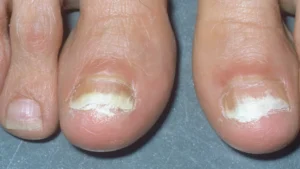
A white or yellowish discoloration, especially on toenails, often signals a fungal infection. Over-the-counter treatments may help in mild cases, but severe infections require prescription antifungal medication.
Brittle or Spoon-Shaped Nails – A Sign of Nutritional Deficiencies
– Koilonychia, or “spoon nails,” where the nails curve inward, is often linked to iron deficiency anemia or celiac disease.
– Brittle nails may indicate hypothyroidism or a vitamin B7 (biotin) deficiency.
Horizontal Ridges – A Sign of Stress or Illness
Beau’s lines, deep horizontal ridges across the nails, may appear after severe illness, trauma, or zinc deficiency. They can also signal conditions like diabetes or peripheral vascular disease.
Peeling Nails – A Lifestyle Issue
If your nails peel easily, it’s likely due to excessive water exposure, nail polish use, or frequent manicures rather than a medical concern.
Why Your Nails Matter
Doctors often start their physical exams by inspecting a patient’s nails. Your nails are an extension of your skin, and they provide key diagnostic clues.
While most nail changes are harmless, persistent discoloration, ridges, or texture changes should not be ignored. If you notice unusual shifts in your nails, consult a healthcare provider. Your nails could be trying to tell you something important about your health.