

As humanity prepares for its next great leap returning to the Moon and eventually venturing to Mars an uncomfortable but necessary question looms: what happens if someone dies out there?
Since the dawn of human space exploration over six decades ago, only 20 astronauts and cosmonauts have lost their lives in space-related missions.
From the tragic Apollo 1 launch pad fire in 1967 to the Challenger (1986) and Columbia (2003) space shuttle disasters, spaceflight has proven to be both inspiring and unforgiving…
But no human has yet died on the Moon or another celestial body a reality NASA and its global counterparts must be prepared to face as lunar missions and commercial spaceflight ramp up.
If an astronaut were to perish on the Moon, the lack of atmosphere, extreme temperature fluctuations (ranging from 127°C during the day to -173°C at night), and cosmic radiation would begin to slowly break down the body. Unlike Earth, where microbes and environmental factors assist decomposition, the Moon’s vacuum and harsh conditions would preserve much of the remains, possibly leaving bones intact for millions of years, a cold monument in space history.
Should an astronaut die while on the lunar surface, NASA has strict protocols in place. If feasible, the body would be brought back to Earth quickly. With the Moon just three days away, preservation wouldn’t be a priority the focus would be ensuring the survival and safe return of the remaining crew.
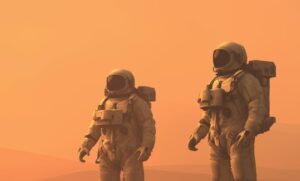
If a tragedy occurs during a Mars mission roughly 300 million miles from Earth returning immediately wouldn’t be an option. A body might have to be stored in a specialized containment system for years until the mission concludes. Cremation would demand too much energy, and burial could pose contamination risks to the Martian environment, potentially compromising future research.
The Dangers of Unprotected Exposure
The consequences of stepping outside on the Moon or Mars without a spacesuit are immediate and fatal. Both environments lack breathable oxygen and sufficient atmospheric pressure. An unprotected astronaut would suffocate as blood and bodily fluids boil in the vacuum, a scenario as dramatic as it is deadly.
As space travel moves from science fiction to routine reality, questions about death beyond Earth are no longer hypothetical. Whether due to accidents, health complications, or mission failure, the possibility is real.
And with NASA aiming for a crewed Moon landing by 2025 and Mars missions in the following decade, the policies guiding space fatalities will be tested like never before.