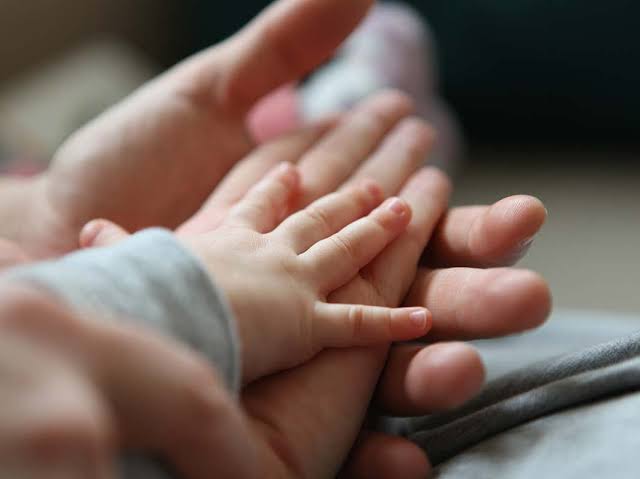

It’s a scientific breakthrough in the fight against Mitochondrial Disease with eight babies all born through this process. The method, pioneered by UK scientists, combined the egg and sperm from a mum and dad with a second egg from a donor woman. The eight babies were born in the UK using genetic material from three individuals.
The pioneering births mark the first time the UK has confirmed that its trailblazing mitochondrial donation technique has resulted in healthy babies born free from devastating, often fatal, mitochondrial disorders. These rare diseases, which affect around one in every 5,000 children, are typically passed from mother to child and starve the body’s cells of energy, affecting organs like the brain, heart, and liver.
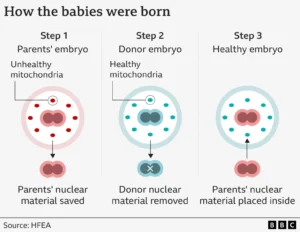
The innovators reportedly combined the DNA of three people: a mother, a father, and a donor woman. The mother and father contribute the nuclear DNA which carries the majority of a person’s genes while a tiny portion, approximately 0.1%, comes from the donor’s mitochondria, which are the microscopic powerhouses inside cells that provide energy. This minimal contribution helps replace faulty mitochondria with healthy ones, potentially saving lives.
The births were facilitated by specialists at the Newcastle Fertility Centre, one of the few licensed centres in the world authorized to carry out mitochondrial donation treatment.
While the identities of the families remain confidential, anonymous statements have been shared on their behalf, describing the overwhelming relief and joy after previously enduring the tragedy of losing children to mitochondrial disease.
The journey to this point has not been without its challenges, scientific, ethical, and political. Mitochondrial DNA, though a minuscule part of the overall genome, is distinct and inherited solely from the mother. Its manipulation led to intense debate during the early stages of the procedure’s development.
Yet in 2015, following a significant parliamentary vote, the UK became the first country in the world to legalize the creation of “three-person babies” through mitochondrial replacement therapy.
The technique involves transferring the nuclear DNA from the mother’s egg into a donor egg that has had its own nuclear DNA removed but retains the healthy mitochondria. The fertilized egg then contains genetic material from all three individuals — two women and one man — and is implanted into the mother.
Initial results from monitoring the health of the eight babies born so far are promising. In five cases, there was no detectable trace of faulty mitochondria. In the remaining three, low levels of defective mitochondria ranging between 5% and 20%, were found in blood and urine samples. This is well below the 80% threshold generally believed to trigger disease, but researchers say ongoing monitoring is needed to understand why this carryover occurred and whether it could increase over time or impact long-term health.
Despite such uncertainties, experts consider the development a monumental stride in reproductive medicine. It offers hope to families who once faced a stark choice between passing on debilitating conditions or forgoing biological parenthood altogether.
The team at Newcastle estimates that 20 to 30 families per year in the UK could benefit from this procedure. For them, mitochondrial donation is not merely a scientific advancement, it is a doorway to healthier futures and the end of a genetic nightmare that has haunted generations.