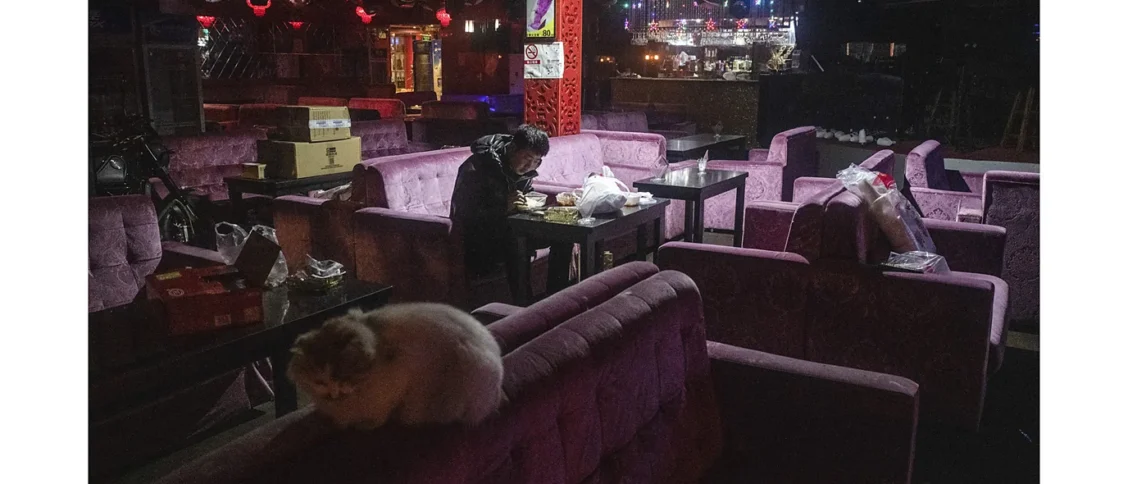

In the final days of January 2020, China’s megacities pulsed with movement as millions traveled to reunite with family for the Lunar New Year. It was an annual ritual, a time of celebration and connection. But this time, the festive exodus carried an invisible threat.
By the time these travelers attempted to return home, the world had changed. What had started as whispers of an unusual pneumonia in Wuhan had spiraled into a full-blown crisis. Borders shut, cities froze, and uncertainty gripped the world.
Amid this unfolding drama, French photographer Gilles Sabrié was in Beijing, capturing the eerie transformation of a city on the brink. Commissioned by The New York Times, he wandered through a metropolis drained of its usual energy. Wuhan had already been sealed off, but Beijing, though not yet in lockdown, felt ghostly.
“There were very, very few people anywhere,” Sabrié recalled. “Most restaurants were closed. Everybody was worried that the disease would spread to Beijing.”
As seen in BBC.com, the result was a dystopian portrait of a world unknowingly teetering on the edge. The empty streets, the shuttered businesses, the muted sense of fear—his images became a stark visual prologue to the global lockdowns that followed.
Looking back, Sabrié’s work serves as a haunting reminder of those early, uncertain days when life as we knew it was about to change forever.