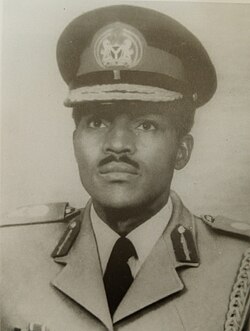

When news broke of the death of Nigeria’s former President, Muhammadu Buhari, in a London hospital at the age of 82, the country was once again confronted with the complex legacy of a man whose life straddled military rule and democratic governance. To some, he was an incorruptible patriot who symbolised discipline and moral uprightness. To others, he was an aloof authoritarian whose tenure failed to deliver on key promises.
Either way, Muhammadu Buhari’s story is a one of paradoxes, perseverance, and power.
Humble Beginnings in Daura
Born on December 17, 1942, in Daura, Katsina State, Buhari was the 23rd child of his Fulani father, Mallam Hardo Adamu, and Kanuri mother, Zulaihat. He lost his father at the age of four and was raised by his mother in a modest, devout household.
Young Buhari developed a keen interest in service early on. After attending Katsina Provincial Secondary School, he joined the Nigerian military in 1961, a decision that would set him on a path to national prominence.
A Soldier’s Ascent
Buhari trained in elite institutions, including the Mons Officer Cadet School in the UK and the US Army War College. His military career advanced rapidly. By the mid-1970s, he had held major positions such as Military Governor of the then North-Eastern State, a Federal Commissioner for Petroleum Resources and even chaired the Nigerian National Petroleum Corporation (NNPC).
His reputation for discipline and incorruptibility grew, traits that would later define his public image.
The Authoritarian Patriot (1983–1985)
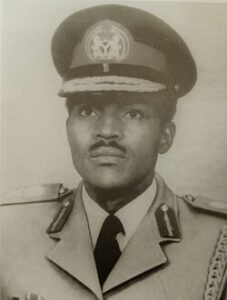
In December 1983, following widespread disillusionment with the civilian government of Shehu Shagari, Buhari led a military coup and became Nigeria’s Head of State. His short-lived regime, though lasting just 20 months, left a lasting impression.
Under his infamous “War Against Indiscipline”, Nigerians were subjected to a stern moral code: public queueing was enforced, littering was criminalised, and civil servants were monitored for punctuality. Yet this war was often brutal and one-sided.
Journalists were detained, critics silenced, and civil rights trampled. Musical legend Fela Anikulapo Kuti was jailed under suspicious charges. Retroactive laws were enacted, and public executions resumed. Buhari’s rule bore the hallmarks of a dictatorship draped in moral rhetoric.
Still, even his fiercest opponents acknowledged his personal honesty and refusal to enrich himself.
A Democratic Return: The Long, Tortuous Road to the Presidency
Buhari returned to civilian life after being overthrown in a 1985 coup led by General Ibrahim Babangida. But unlike most ex-military rulers, he re-entered politics with fervour.
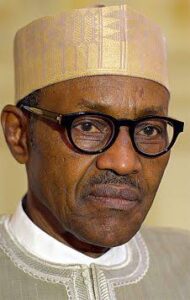
He ran for president three times (2003, 2007, and 2011), each time unsuccessfully, before finally clinching victory in 2015 under the All Progressives Congress (APC) banner. His win shed a historic moment, the first time an opposition candidate defeated a sitting president in Nigeria.
Buhari’s campaign promised three things: fighting corruption, defeating terrorism, and reviving the economy. But like they say; his personal integrity couldn’t annihilate a systemic problem.
A Presidency of Hope and Disillusionment
The early days of Buhari’s presidency were met with optimism. But soon, the cracks began to show.
The economy fell into recession in 2016, largely due to crashing oil prices and sluggish policy responses. His anti-corruption campaign, though vigorous at first, was criticised for targeting opposition figures disproportionately.
Insecurity, which Buhari had vowed to eradicate, worsened. Boko Haram, bandits, herdsmen, and separatist movements created a cocktail of violence across the nation.
A controversial border closure and import bans, particularly on rice, drove up food prices. The #EndSARS movement in 2020 revealed deep public anger over police brutality, with Buhari’s administration accused of failing to respond humanely to the protests.
Buhari’s slow governance style earned him the nickname “Baba Go Slow.” His frequent trips abroad for medical treatment, often without detailed explanations, fueled rumours and resentment.
The Controversial Exit
Toward the end of his second term, Buhari introduced a contentious currency redesign policy that led to severe cash shortages just weeks before the 2023 general elections. Many believed the move was intended to frustrate vote-buying, but it disproportionately affected ordinary Nigerians.
Ironically, the policy was viewed by some as a covert attempt to undermine Bola Ahmed Tinubu, the APC’s presidential candidate. Yet, Tinubu eventually emerged victorious.
In other words Buhari left office with a legacy more complicated than conclusive. He claimed to have restored integrity to public office, but critics argue his rule was marked by economic hardship, missed opportunities, and opaque governance.
A Final Chapter Abroad
In retirement, Buhari lived quietly in his hometown of Daura before being flown to London for medical care. He passed away after a brief illness, surrounded by his family.
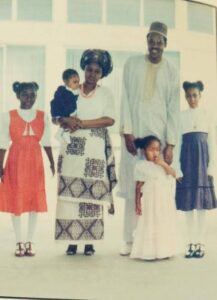
He is survived by his wife, Aisha Buhari, and ten children.
In the end, Muhammadu Buhari was both admired and admonished. He remains one of Nigeria’s most recognisable leaders, remembered for his Spartan lifestyle, rigid ideals, and iron-clad belief in discipline. But he also leaves behind a trail of unmet expectations, deep divisions, and a nation still yearning for transformation despite a barrel filled with promises.