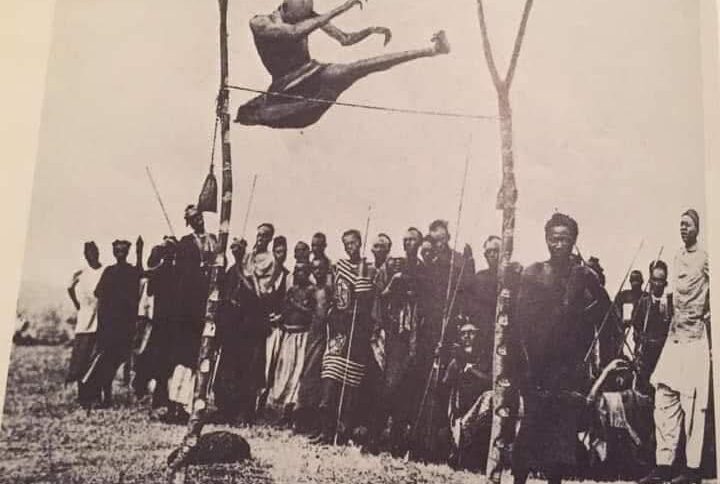

In ancient Africa, long before football and basketball became the dominant sports, indigenous games were integral to community life, serving as tests of strength, agility, and enendurance Unfortunately, these traditional sports have largely faded with time. Today, they have been overshadowed by modern athletics and globalized entertainment.
Among them, gusimbuka urukiramende, an extraordinary form of high jump once revered in Rwanda, stands as a symbol of Africa’s rich but neglected sporting history.
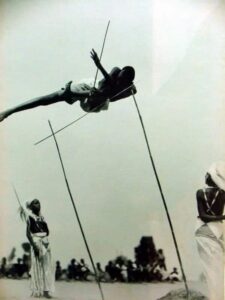
Unlike the high jump seen in today’s Olympic Games, Rwanda’s version was not bound by formal regulations but was an esteemed marker of physical prowess. It was more than a competition—it was a rite of passage. Men would leap over barriers exceeding six feet six inches, demonstrating their strength and agility in front of enthralled spectators.
The sport played a significant role in Rwandan royal ceremonies, communal festivals, and even wedding celebrations, where men showcased their athleticism as a sign of honor and prestige.
Beyond royal courts, gusimbuka urukiramende was a popular pastime in villages. Children and young herders would fashion makeshift high jumps using wooden poles, competing in friendly rivalries. These games were not just for amusement; they reinforced resilience, discipline, and community bonds. Young boys tending cattle would take breaks to challenge one another, leaping over increasingly higher obstacles until the sun set, marking the end of their play.
However, like many traditional African sports, gusimbuka urukiramende gradually declined due to colonial influence and the rise of Western sports. Football, basketball, and athletics became the dominant forms of recreation, often at the expense of indigenous games. The erosion of these traditions has left a void, disconnecting younger generations from a fundamental aspect of their heritage.
Now, there is a growing movement to revive these forgotten sports. Cultural historians, sports researchers, and local organizations are advocating for their restoration, pointing out their historical value and potential role in shaping Africa’s sporting future.
In Rwanda, initiatives to reintroduce gusimbuka urukiramende in schools and community programs are gaining traction, with hopes that younger generations will embrace this unique aspect of their heritage.