
For most of the world’s 1.8 billion Muslims, the question of when Ramadan begins will be settled not by algorithms, not by calendars printed months in advance, but by something far more ancient and uncertain: a small sliver of light, visible for only a few minutes, on a specific evening, to whoever happens to be looking west at exactly the right moment.
The Islamic calendar follows the phases of the moon, the lunar cycle that has governed humanity’s sense of time since long before anyone imagined Gregorian reforms. As a result, the holy month falls approximately ten days earlier each year in the standard international calendar. For 2026, astronomers predict Ramadan will begin around 19 February across Nigeria and most of Africa, with the celebratory days of Eid al-Fitr estimated to start around 20 March.
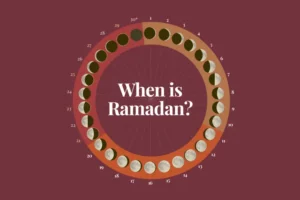
But predictions are not certainties. The difference of a single day hinges on something remarkably small: whether the crescent moon sets after the sun on the evening of 17 February, and whether anyone sees it.
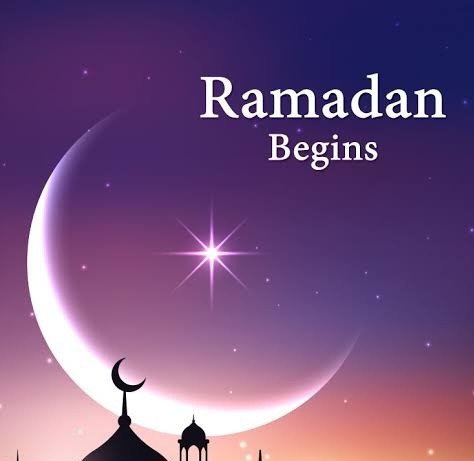
The process follows a pattern repeated across Muslim-majority nations for fourteen centuries. On the night of 17 February, the 29th day of the month of Shaban in the Hijri calendar, moon sighters will gather at locations with clear western horizons. They will face the setting sun and wait. If the crescent is spotted, a thin curve of light, visible for perhaps twenty minutes before it follows the sun below the horizon then the month of Ramadan begins the following morning, 18 February. Fasting commences at dawn.
If the crescent is not sighted, Shaban completes its full thirty days. The first day of fasting becomes 19 February.
The margin is that small. The difference between Wednesday and Thursday, between beginning the month of reflection and restraint on one day or the next, rests entirely on whether the sky cooperates, whether clouds obscure the view, whether the human eye catches what the calculations predict should be there.
Saudi Arabia, home to the holy cities of Mecca and Medina, follows a formal process. Testimonies of those who have spotted the moon are recorded and verified. The Supreme Court reviews the evidence and issues a declaration. Other Muslim-majority nations pursue similar methods, though practices vary. Some rely on traditional local sightings, sending trusted observers to elevated positions. Others use astronomical calculations to determine lunar phases in advance, supplementing or sometimes supplanting the eyewitness tradition.
The variation means Ramadan can begin on different days in different countries. A sighting in Saudi Arabia may establish the start date for Muslims across the Middle East and beyond, while communities in South Asia or North Africa wait for their own confirmed sightings. The unity of the ummah, the global Muslim community, coexists with this local variation, a reminder that the faith has always accommodated the practical realities of geography and observation.
For the moon to be visible at all, specific conditions must align. The crescent must set after the sun, allowing the sky to darken enough that the thin sliver becomes distinguishable against the fading light. It must be high enough above the horizon, the atmosphere clear enough, the observer’s eyes sharp enough. For centuries, these conditions meant that communities relied on the most trusted among them, men known for their eyesight and their honesty, to climb hills and scan the horizon and report what they saw.
Modern astronomy can predict with precision when the moon should be visible. But prediction is not sighting. The tradition insists on the witnessed crescent, the human confirmation that the new month has truly begun. In an age of satellites and atomic clocks, Ramadan still starts when someone looks up and sees.
There is something striking about this persistence. The world has transformed around the lunar calendar. We measure time in nanoseconds, coordinate it across continents, synchronise it to the vibrations of atoms. Yet for the start of Ramadan, all this technology yields to a man standing on a hill, looking west, waiting for a sliver of light.
The astronomers calculate. The authorities deliberate. The witnesses watch. And on the evening of 17 February, somewhere in Saudi Arabia, somewhere in Nigeria, somewhere across the vast geography of the Muslim world, someone may see what everyone is waiting for. Or the sky may remain empty, and the wait extends one more day.
It is about small margins. A few minutes of visibility. A break in the clouds. A pair of eyes looking in the right direction at the right moment. The entire Islamic calendar, the rhythm of holy months and celebrations that structures the lives of nearly two billion people, turns on observations this delicate.
Ramadan 2026 will begin on either 18 or 19 February. The dates are printed, the plans made, the preparations underway.