
A poem, at its finest, should ignite something deep within—an emotion, an image, a thought that lingers like the scent of rain on dry earth. But what happens when poetry falters? When instead of striking chords, it stumbles into awkward phrasing, forced rhymes, and pretentious grandiosity?
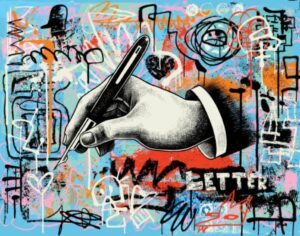
The Demand on a Writer
Poetry, unlike prose, doesn’t allow for passive consumption. It demands something of its reader engagement, interpretation, surrender. A well-crafted poem pulls you in, leaving traces in your mind long after the words have left the page. But a bad poem? That’s another beast entirely.
Rolawe D.F’s cryptic lines—
“Chaotic cataract in five seasons
If there were shouts,
Who would we see
The control is all within”
This serves as a perfect example of poetry’s dual nature that hit a fall. A compelling verse can feel like an enigma worth deciphering, but a poorly constructed one can just as easily leave the reader lost, grappling with meaning that never quite materializes.
The Weight of Words
A bad poem is not simply one that is disliked. It is one that disregards the very essence of poetry—form, rhythm, purpose. It’s easy to blame personal taste, but certain hallmarks of failure are universal: clumsy metaphors, artificial archaism, hollow grandiosity, and an excess of emotion that lacks true depth.
Joseph Charles MacKenzie’s “Inaugural Poem for Donald J. Trump” is a case in point. Laden with faux-Scottish phrasing and self-important proclamations, the poem stumbles under the weight of its own ambition. It attempts to borrow from classical verse but forgets that context and authenticity are vital. MacKenzie’s lines—
“Come out for the Domhnall, ye brave men and proud
The scion of Torquil and best of MacLeod!”
This sound more like a misplaced medieval battle cry than a relevant poetic tribute. It’s not just the outdated language that makes it jarring; it’s the sense that the words are performative rather than profound.
The Burden of Bad Poetry
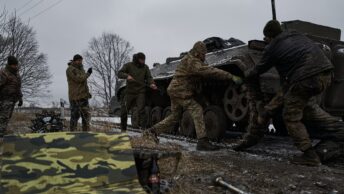
Ironically, bad poetry still serves a purpose. It highlights, by contrast, what makes poetry powerful in the first place. Critics dissect its missteps, poets learn from its failures, and readers develop a sharper sense of literary appreciation. Even historically significant movements, such as the Vietnam-era poetry of protest, produced a mix of brilliance and mediocrity. Poets sought to resist war, to bear witness, to make words a form of defiance. In the process, many stumbled, yet their urgency was real, their attempts necessary.
A poet once reflected:
“We will never know whether all that we wrote shortened that nightmare by one hour, saved a single life or the leaves on one tree,”
The value of poetry isn’t always in perfection, but in the act of creation itself. And perhaps that is why, despite the risk of failure, poets continue to write.
A badly written poem may come with a sting, but even in failure, it reminds us of poetry’s ultimate power—to move, to challenge, and to persist.
Rolawe D.F