
The fight against global warming is entering a volatile new chapter. The old “rules-based order” failed to deliver effective action, experts argue, forcing nations and communities to forge resilience from the ground up and from the coast inward.
Amid this uncertainty, a dual narrative of hope is now being rooted in local soil, the other in the vast, underutilized potential of the ocean.
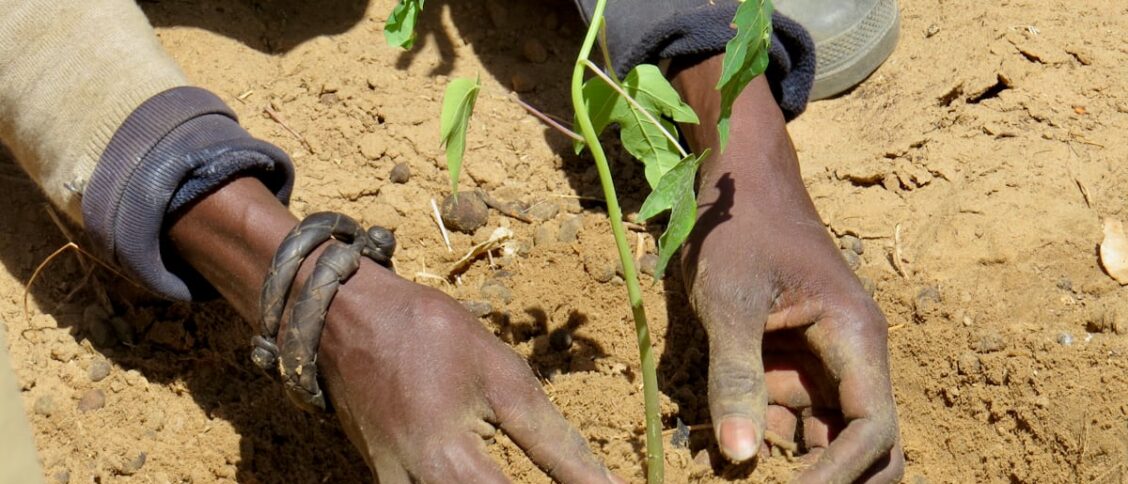
In Nigeria’s Nasarawa State, the act of planting a tree has become a necessity, as espoused by Dr. Margaret Elayo, Commissioner for Environment and Natural Resources, who recently oversaw the planting of 100 trees at Dunama College Secondary School in Lafia. This is a symbolic start to a broader greening campaign aimed at mitigating climate impacts.
“This initiative aligns with the President’s and global efforts to increase green cover,” she stated, framing reforestation as both a local necessity and a nod to international imperatives.

But while inland nations plant trees, coastal and island nations are sounding a more urgent alarm: the ocean is climate action’s greatest untapped ally.
Ahead of major UN climate and biodiversity conferences in 2026, there is a concerted global push to integrate ocean-based solutions into national plans. Remarkably too, measures ready for implementation, from protecting mangroves and restoring seagrass meadows to scaling offshore renewable energy, could deliver up to 35% of the annual greenhouse gas cuts needed by 2050.
Pacific island nations, facing existential threats from sea-level rise, are leading the charge. An Ocean Task Force launched at COP 30 is pressuring countries to explicitly include marine ecosystems in their climate pledges. Progress is tangible: 78% of national climate plans now reference the ocean, a significant rise from just years ago.
Yet understanding coastal resilience is critical. Nearly half the world’s population lives near coastlines, where megacities and financial hubs intersect with vulnerable ecosystems. Mangroves, coral reefs, and seagrass beds act as natural barriers against storms, erosion, and flooding, but they are under siege from warming waters, acidification, and pollution.
“Coastal resilience is not a niche topic,” argues a recent policy brief from the Ocean & Climate Platform. “It is where climate adaptation meets human survival.”
The challenge now is not just to acknowledge the ocean’s role, but to fund it, govern it, and weave it into the fabric of community-led adaptation. In Nasarawa, the solution is a sapling. In the Pacific, it’s a mangrove. In boardrooms and at future COPs, the test will be whether the world can move beyond broken frameworks and build a new politics of climate action that works.