
At this year’s Oscars, ‘Sinners’ is dominating the “Lead Pack” with 16 nods, but the real story is in the surprises and snubs, a cinematic clash between spectacle and sentiment, where a quiet Norwegian drama and a blistering vampire epic is defining the tension of modern Hollywood.
The first words spoken at the dawn of this Oscar season were a surprise. “Elle Fanning, for Sentimental Value,” announced hosts Danielle Brooks and Lewis Pullman, kicking off the nominations not with a thunderous blockbuster but with the gentle, piercing heartbeat of a Norwegian family drama. In that moment, the tone was set for a morning of delicious shock, historic achievement, and a revealing cultural snapshot.
This year’s Academy Awards, to be hosted on March 15th by the wry Conan O’Brien, is not a coronation of a foregone conclusion, but a compelling, complex battle between scale and intimacy, between the immortal monster and the mortal heart.
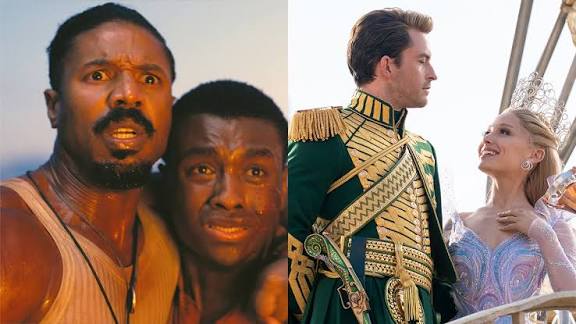
The headlines, of course, belong to the blood-red sweep of Ryan Coogler’s Sinners. The visionary vampire horror epic, set against the backdrop of the Mississippi Delta blues, didn’t just lead the pack, it shattered it, earning a record-breaking 16 nominations.
It ties or surpasses the technical achievement of Titanic and the melodic romance of La La Land, but does so with a gritty, Afro-Gothic ferocity that has redefined genre prestige. From Best Picture and Director nods for Coogler to acting nominations for Michael B. Jordan’s tormented immortal and Wunmi Mosaku’s formidable matriarch, the film is a colossus. Its presence in categories from Cinematography and Sound to Costume Design and Visual Effects confirms it as a total cinematic universe, meticulously built and fearlessly executed.
But to view this season solely through Sinners’ crimson lens is to miss the profound, quieter revolution happening alongside it.
In another stunning display of strength, Joachim Trier’s Sentimental Value, a delicate, time-hopping drama about a family grappling with memory and loss, emerged as a powerhouse in its own right with nine nominations. It challenges Sinners not with spectacle, but with emotional precision. Its trio of acting nods, for the luminous Renate Reinsve, the surprising Elle Fanning, and the stalwart Stellan Skarsgård, alongside Original Screenplay and Director for Trier, signals the Academy’s enduring appetite for human-scale storytelling executed at the highest level. The race, in many ways, is now a fascinating dialectic: Coogler’s operatic, historical horror versus Trier’s intimate, Nordic melancholy.
The surprises rippled far beyond Fanning’s first-category stunner. The directors’ branch delivered its customary shock, omitting Greta Gerwig (for the acclaimed Little Amélie or the Character of Rain) and Denis Villeneuve (for the sci-fi behemoth Avatar: Fire and Ash), while elevating Josh Safdie for the frenetic, biographical comedy Marty Supreme and Chloé Zhao for the lyrical literary adaptation Hamnet.
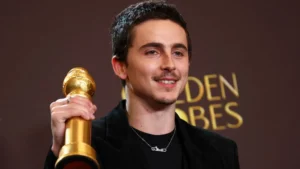
The acting categories were a minefield of snubs. The much-predicted lead actor run for KPop Demon Hunters star Chase Infiniti evaporated, as did Paul Mescal’s hoped-for nod for The Secret Agent. In their place, welcome shocks: Wagner Moura recognized for his soulful turn in that same film, and Ethan Hawke pulling a lone, magnificent nomination for the small-scale drama Blue Moon.
Perhaps the most telling category is Best Picture itself. The ten-film slate is a perfect microcosm of Hollywood’s current identity crisis and its hopeful synthesis.
Here, the technical audacity of Christopher Nolan’s F1 races alongside the Shakespearean passion of Zhao’s Hamnet. The rock-and-roll excess of Safdie’s Marty Supreme (with Timothée Chalamet scoring a deserved Best Actor nod) shares space with the austere beauty of Kelly Reichardt’s Train Dreams. It is a list that honors the crowd-pleasing ( One Battle After Another, with its 13 nominations, is pure Oscar-bait epic filmmaking) while reserving a seat for the challenging and the strange (the existential thriller Bugonia, powered by Emma Stone’s unearthly lead performance).
The international landscape reflects a world in poignant dialogue. Alongside Sentimental Value, the harrowing, Gaza-set documentary The Voice of Hind Rajab and the Iranian prison drama Sirât speak to art born of urgent reality.
The animated field, meanwhile, sees Disney/Pixar’s Elio and Zootopia 2 challenged by the stunning European artistry of Little Amélie and the global sensation KPop Demon Hunters, a film that also sneaked into Original Song.
What does it all mean? This is an Oscar year that refuses a simple narrative. It is a year where a film can earn a historic number of nominations without a single writing nod (all of Sinners’ 16 are in below-the-line and directing/acting categories, its screenplay missing the cut), revealing a celebration of directorial vision and craft over narrative.
It is a year where the UK’s hopes rest not on knights of the realm, but on Delroy Lindo and Wunmi Mosaku in an American vampire film, and on Jessie Buckley carrying Hamnet with a fierce, Best Actress-anchoring performance.
The stage is set for a ceremony of genuine dramatic tension. Can Sinners convert its tidal wave of nominations into a Best Picture win, or will the Academy ultimately embrace the Sentimental Value of human connection? Will the directors reward Coogler’ sheer monumental achievement or Trier’s nuanced mastery? In a night hosted by a comedian known for his sharp, meta-commentary, Hollywood will not just be celebrating itself, but debating its own essence: Is the future of film in the overwhelming, immersive experience, or in the quiet, devastating close-up?