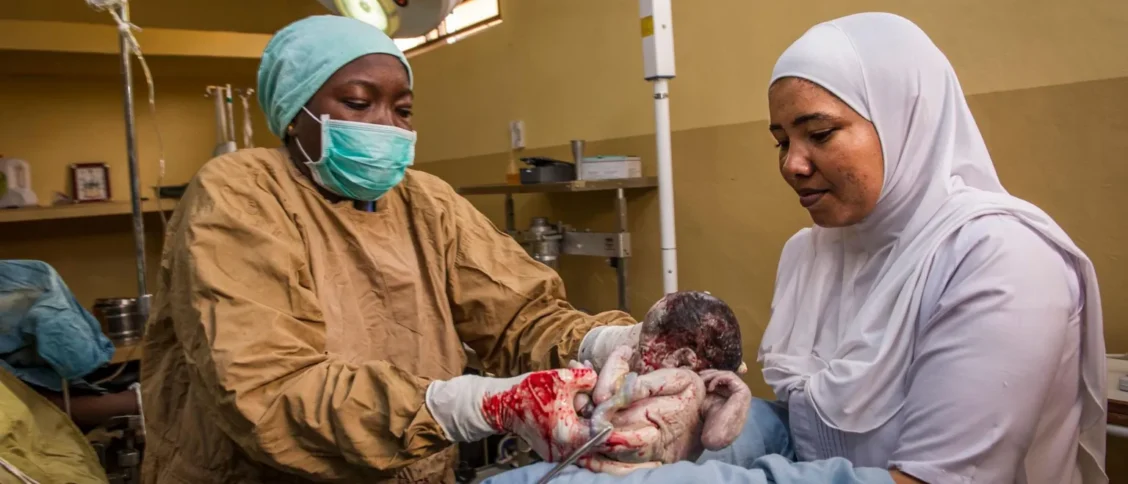

In Nigeria, childbirth too often becomes a death sentence.
According to 2023 UN figures, one in every 100 women in Nigeria dies during childbirth or shortly after. That grim statistic places the country at the top of a league table no nation wants to lead. Nigeria alone accounted for 29% of all maternal deaths worldwide last year, an estimated 75,000 women lost during what should be a moment of life and joy. That’s one Nigerian woman dying in childbirth every seven minutes.
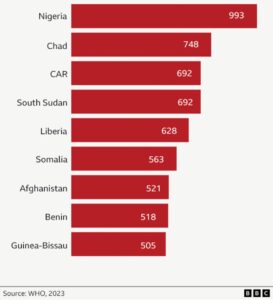
The heartbreak lies in the fact that many of these deaths are preventable.
Simple, treatable conditions such as postpartum hemorrhage, obstructed labour, hypertensive disorders, and complications from unsafe abortions remain the most common causes. But in a country with a chronically underfunded healthcare system and gaping inequalities, access to quality maternal care remains out of reach for millions.
“No woman deserves to die while birthing a child,” says Mabel Onwuemena, national coordinator of the Women of Purpose Development Foundation. Yet for many Nigerian women, particularly in remote and rural communities, death in childbirth has become a horrifyingly common fate.
According to a BBC article, Poor health infrastructure, a severe shortage of trained medical personnel, and the prohibitive cost of care have left Nigeria’s mothers dangerously exposed. Add to this cultural mistrust of modern medicine and the rising threat of insecurity in some regions, and the risk multiplies.
“Some women believe hospitals are a waste of time,” Onwuemena explains. “They rely on traditional birth attendants or home remedies. But when complications arise, that delay can be fatal.”
Even when women want to seek care, help is often out of reach. In remote areas, health centers may be miles away with no viable transport. And when they do get there, they frequently encounter ill-equipped facilities with limited staff, basic supplies, and no emergency backup.
The statistics are stark. Nigeria spends just 5% of its national budget on health, far below the 15% commitment it made in the 2001 African Union Abuja Declaration. In 2021, Nigeria had only 121,000 midwives for a population of over 218 million.
The World Health Organization estimates the country needs at least 700,000 more nurses and midwives to meet recommended ratios.
Fewer than half of births in Nigeria are overseen by skilled health professionals. That’s a direct contributor to the high mortality rate and a tragic failure of the system.
Dr. Nana Sandah-Abubakar, director of community health services at the National Primary Health Care Development Agency (NPHCDA), admits the problem is overwhelming. But she’s hopeful that change is coming.
In late 2023, the federal government launched the Maternal Mortality Reduction Innovation Initiative (Mamii), a targeted programme aimed at 172 high-risk local government areas across 33 states. Its pilot phase is already underway in six states.
“We’re identifying pregnant women house-to-house, tracking their antenatal care attendance, and linking them to the services they need,” Sandah-Abubakar says. Over 400,000 pregnant women have already been identified. The plan includes supporting local transport networks and pushing enrollment in affordable public health insurance schemes.
It’s a promising step, but one that must go the distance. Maternal deaths have fallen by 40% globally since 2000. In Nigeria, however, the decline is just 13%, a damning indication of how far the country lags behind.
UNICEF’s Martin Dohlsten says Mamii is a move in the right direction, but warns against short-term solutions.
“Programmes like Mamii are welcome,” he says. “But their success depends on sustained funding, effective implementation, and continuous monitoring. Without that, we risk making promises we can’t keep.”
The stakes couldn’t be higher. Every death in childbirth is a tragedy, a life lost, a family devastated. And until Nigeria backs its words with action and investment, its women will continue to pay the highest price for giving life.