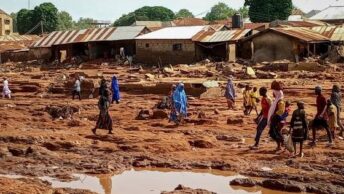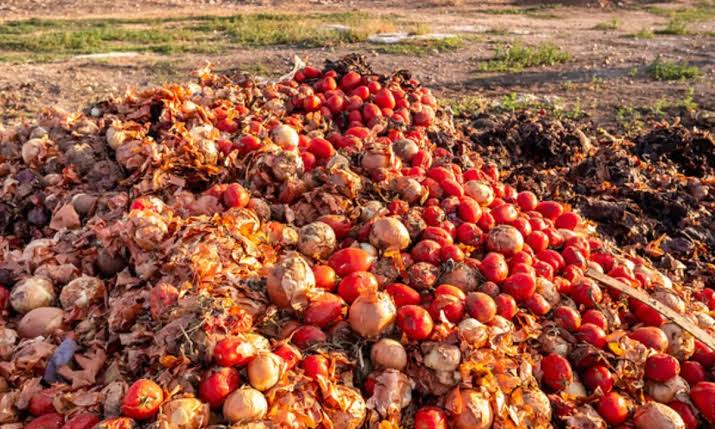

Nigeria is battling a malignant twin-crisis – lack and waste.
Despite its vast agricultural potential, Nigeria is grappling with a staggering paradox, producing food at scale while losing up to half of it before it reaches the market.
Experts estimate that between 30 and 50 percent of all agricultural produce is wasted annually, costing the country as much as $9 billion to $10 billion, particularly in perishable goods such as fruits, vegetables, and grains.
This alarming trend has triggered renewed concern among international and local stakeholders. The European Union, in partnership with the Nigerian government and the United Nations Industrial Development Organization (UNIDO), is calling for urgent action to curb food waste and promote sustainable consumption, warning that current patterns threaten both economic growth and environmental stability.
At the centre of the concern is Nigeria’s estimated 38 million tonnes of food waste annually, the highest in Africa. According to officials, this figure represents more than just lost food; it reflects wasted water, energy, labour, and investment, while also deepening food insecurity and accelerating climate change.
Speaking at a recent event in Abuja, Zissimos Vergos, Deputy Ambassador of the EU Delegation to Nigeria and ECOWAS, described the situation as a critical national and global issue. He warned that food waste contributes significantly to environmental degradation, accounting for up to 10 percent of global greenhouse gas emissions and nearly 40 percent of methane emissions worldwide.

UNIDO’s Country Representative, Philbert Johnson, emphasised the far-reaching implications of inefficient food systems. According to him, food is not merely a commodity but a cornerstone of economic stability, public health, and national security. When it is wasted, the ripple effects are felt across communities and sectors.
Meanwhile, Nigeria’s Minister of Environment, Balarabe Abbas Lawal, acknowledged the scale of the challenge, noting that food waste continues to undermine the country’s development goals. He revealed that the government has begun implementing targeted interventions, particularly in major markets, to reduce post-harvest losses and improve food management systems.
The urgency of the issue is further underscored by rising hunger levels. A recent report by the Nigerian government in collaboration with the Food and Agriculture Organization (FAO) projects that about 34.7 million Nigerians could face severe food shortages between June and August 2026.
Unfortunately,while millions face hunger, vast quantities of food are lost due to poor storage, weak infrastructure, and inefficient supply chains. Without significant investment in preservation technologies, transportation systems, and market access, the cycle is likely to persist.
As pressure mounts, stakeholders agree that tackling food waste is no longer optional. For Nigeria, reducing post-harvest losses could not only save billions of dollars but also strengthen food security, support farmers’ incomes, and ease the environmental burden.