

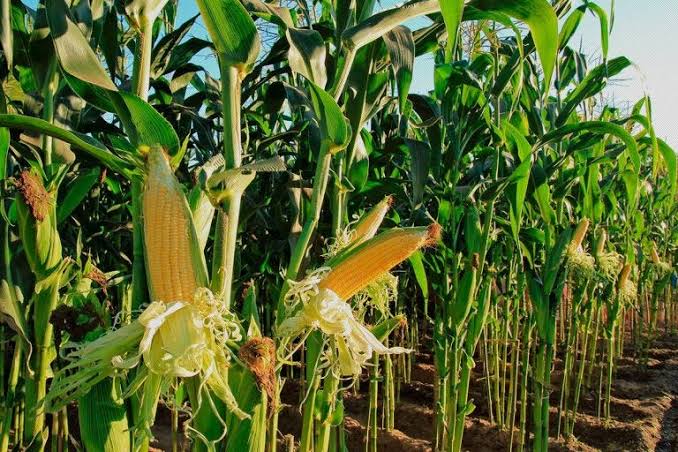

Nigeria remains the largest producer of maize in sub-Saharan Africa, harvesting more than 11 million metric tonnes annually. However, the country still faces a significant supply gap, with demand far exceeding domestic output and forcing reliance on imports to bridge the shortfall.
The Minister of State for Agriculture and Food Security, Aliyu Abdullahi, disclosed on Friday in Abuja that Nigeria requires no fewer than 25 million tonnes of maize annually to meet national consumption needs and strengthen food security.
Speaking at the Quarterly Citizens and Stakeholders’ Engagement meeting, Abdullahi said maize remains a critical staple in Nigeria’s food system and a key component of poultry feed. The crop is largely cultivated in northern states such as Kaduna, Taraba and Borno, where favourable climatic conditions support large-scale production.
Despite the country’s strong output, the minister noted that Nigeria still faces a deficit of about 4.5 million metric tonnes of maize each year, a gap that is often filled through imports.
Abdullahi said the Federal Government has intensified efforts to expand domestic production in order to reduce dependence on imported food and stabilise supply across the country.
“Our focus is on expanding local production so affordable and nutritious food becomes accessible to every Nigerian,” he said.
According to the minister, ongoing agricultural interventions are already beginning to influence the market. He noted that the prices of key food commodities have dropped significantly nationwide as government measures begin to take effect.
“Our efforts are paying off. Prices of major food commodities have dropped by about 50 per cent across the country,” Abdullahi said, adding that the government is also addressing the high cost of farm inputs to ensure farmers can sustain production and maintain an affordable food supply.
Meanwhile, a programme officer at the Open Forum on Agricultural Biotechnology in Africa in Nigeria, Abraham Isah, has called on northern state governors to promote the adoption of Tela maize seeds to boost productivity and improve food security.
Isah explained that Tela maize is a transgenic crop engineered to resist insects and withstand drought, making it particularly suitable for regions vulnerable to climate-related farming challenges.
According to him, the improved maize variety could help farmers cope with climate change while increasing yields across northern Nigeria, where maize remains a major staple crop.
“We are here to gather farmers’ experiences with planting transgenic crops, especially the resistant coffee beans and the Tela maize, and to understand how they have impacted lives and communities,” he said.
Although Nigeria’s agricultural sector is valued at more than $143 billion annually, experts note that the country still depends heavily on food imports, highlighting the urgent need for improved productivity, innovation and investment in the sector.










I like how you kept it informative without being too technical.
Thank you for being so generous with your knowledge.