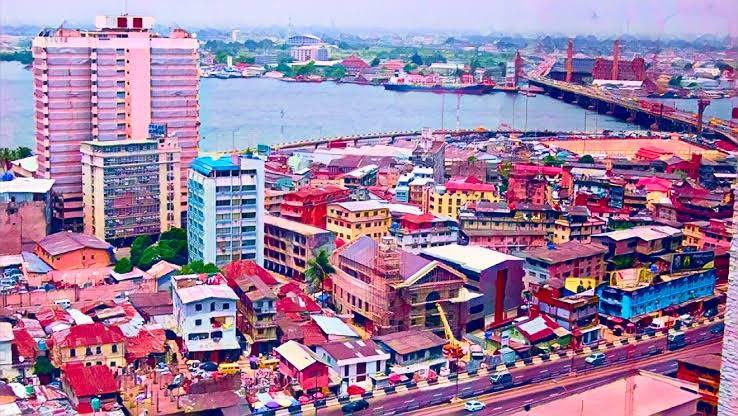

Lagos, Nigeria’s sprawling commercial hub and Africa’s most populous city, is facing a housing crisis that continues to tighten its grip on millions of residents.
A new report has revealed that more than 70 percent of Lagosians live as tenants, with an overwhelming 40 to 60 percent of their income swallowed up by rent.
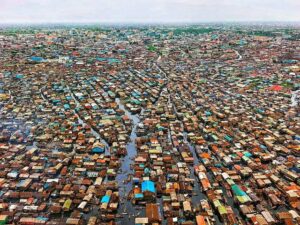
The State of Lagos Housing Market Report 2025, commissioned by the Roland Igbinoba Real Foundation for Housing and Urban Development (RIRFHUD), paints a troubling picture of deepening inequality in the city’s real estate sector. Now in its third edition, the biennial report draws from satellite imagery, market analytics, and field data to assess the housing trajectory of Nigeria’s most densely populated metropolis.
One of the most alarming revelations is the spike in the state’s housing deficit—from 2.95 million units in 2016 to an estimated 3.4 million in 2025. This 15 percent increase, the report argues, stems from a growing disconnect between the housing supply, largely driven by private developers targeting high-net-worth individuals and the actual demand for affordable housing.
Broader Housing Crisis
While property values and luxury short-let accommodations in affluent neighbourhoods such as Lekki, Ikoyi, and Victoria Island continue to rise, low-income and middle-class families are being squeezed out of the housing market altogether. Despite the country’s broader economic headwinds, rental pressure in these elite zones remains intense, as developers target wealthy clients and members of the Nigerian diaspora seeking investment properties.
Meanwhile, neighbourhoods with high population densities and acute housing needs like Ikorodu, Badagry, and Alimosho continue to see minimal development. The result is an ever-widening gap between luxury supply and affordable demand.
The report also revealed a troubling trend: despite Nigeria’s economic challenges, property prices in Lagos rose by 12 percent year-on-year. Yields on short-let and serviced apartments in prime areas surged even higher, climbing between 15 and 18 percent. However, this boom has come with rising vacancy rates, particularly on the mainland, as affordability continues to plague prospective tenants.
“The market is saturated with luxury apartments, but the middle class is being priced out,” one anonymous respondent told the researchers.
A Wider Discovery
Beyond affordability, the report identifies persistent infrastructure deficits in drainage systems, electricity, and transportation as key barriers to livability and investment in many residential zones. For lower-income residents, these issues make otherwise available housing options unattractive or outright unlivable.
Administrative and regulatory bottlenecks also feature heavily in the report. Developers cited delays in securing permits, high costs of documentation, and inefficient land titling processes as obstacles that add between 15 and 20 percent to total housing development costs.
“These bureaucratic hurdles are stalling private investment and slowing the pace of new housing delivery,” the report concluded.
Critical Demand
Meanwhile, at the report’s launch event in Victoria Island, stakeholders called for urgent reforms, including more effective public-private collaboration and the streamlining of regulatory processes. With a growing population and surging demand for affordable housing, Lagos must reform the system to encourage inclusive development or risk deepening inequality in one of the world’s fastest-growing cities.
The findings from this report are expected to shape both investment strategies and public housing policies for years to come.