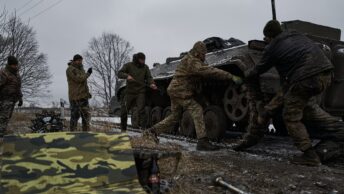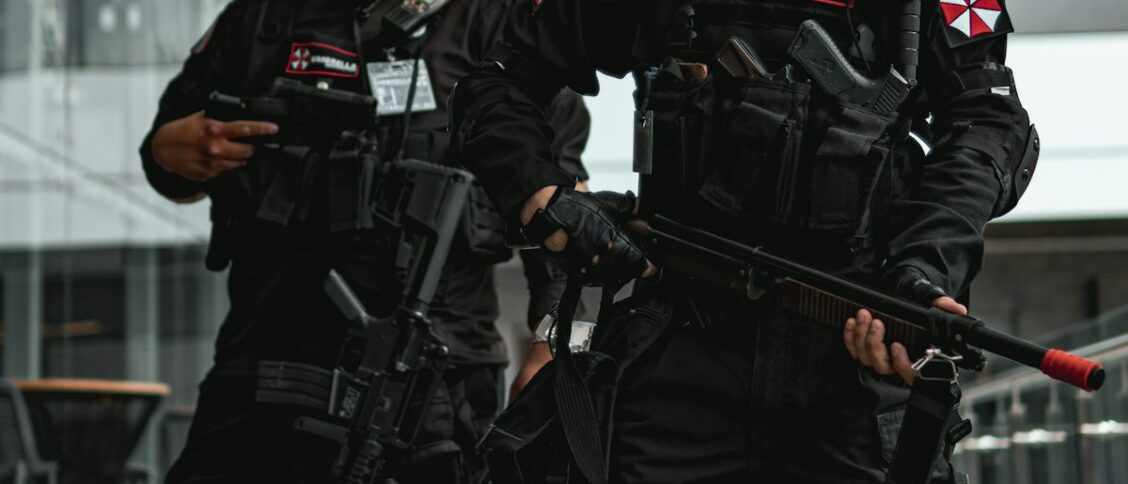

While many Nigerians think foreign mercenaries will put a kibosh on the rate of banditry in Nigeria, Nigeria’s president sees it differently.
President Bola Ahmed Tinubu recently issued a strong warning to African nations over the growing reliance on private military contractors in conflict zones, stressing that such practices erode national sovereignty, distort security operations, and weaken long-term stability on the continent.
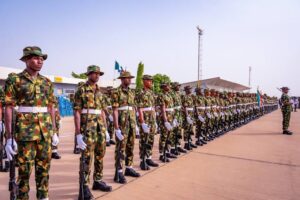
Speaking at the first plenary on Peace, Security, Governance and Multilateralism during the 7th African Union–European Union Summit in Luanda, Angola, Tinubu, represented by Vice President Kashim Shettima, said Africa must resist the urge to hand its wars to mercenaries whose motives and mandates often lack transparency.
“We stand resolutely against the use of private military and security companies in African conflicts, as their presence often complicates resolution efforts and undermines state sovereignty,” Tinubu declared.
He maintained that Nigeria’s stance aligns with its long history of leading peacekeeping missions under ECOWAS and the African Union. According to him, Africa’s biggest security threats: terrorism, insurgency, and transnational organised crime, require coordinated, state-led action rather than fragmented interventions by non-state actors.
Tinubu linked the rise of mercenary outfits in African conflicts to a broader global retreat from multilateralism, which he said has produced a “more fragile international security environment.” Despite this, he noted that the European Union remains one of the few partners still engaging Africa on the basis of mutual respect, shared interests, and continent-to-continent cooperation.
Reaffirming Nigeria’s commitment to regional peace and democratic stability, the President said the country is now “more prepared than ever” to deepen security collaboration with the EU and strengthen existing peace missions across the continent.
He cited Nigeria’s own security landscape to illustrate the consequences of regional instability, pointing out that porous borders and ungoverned spaces often feed terrorism, banditry and organised crime. In response, Tinubu said his administration has adopted a blend of kinetic and non-kinetic strategies, highlighting the Multinational Joint Task Force (MNJTF) in the Lake Chad Basin as a successful model of African-led security cooperation.
One of the key results of Nigeria’s counter-terrorism push, he revealed, is the surrender of more than 120,000 Boko Haram-affiliated individuals, including fighters and family members as of early 2025. This, he said, reflects progress driven by intelligence sharing, targeted military operations, and rehabilitation centre expansions.
Tinubu also pointed to the new Sea-Lift Agreement between the Nigerian Navy and the AU Standby Force as a milestone in strengthening Africa’s rapid deployment capacity for peacekeeping and humanitarian missions.
He commended the European Union’s commitment to stabilising the Sahel, a region weakened by coups, extremism, and climate-driven displacement, noting that Europe’s concerns about irregular migration are a direct consequence of insecurity in West and Central Africa.
It was favorably mentioned that Africa cannot build durable peace by outsourcing its battles. The continent must reinforce its institutions, deepen regional collaboration, and reclaim full control of its security priorities if it hopes to overcome today’s threats and prevent tomorrow’s crises.