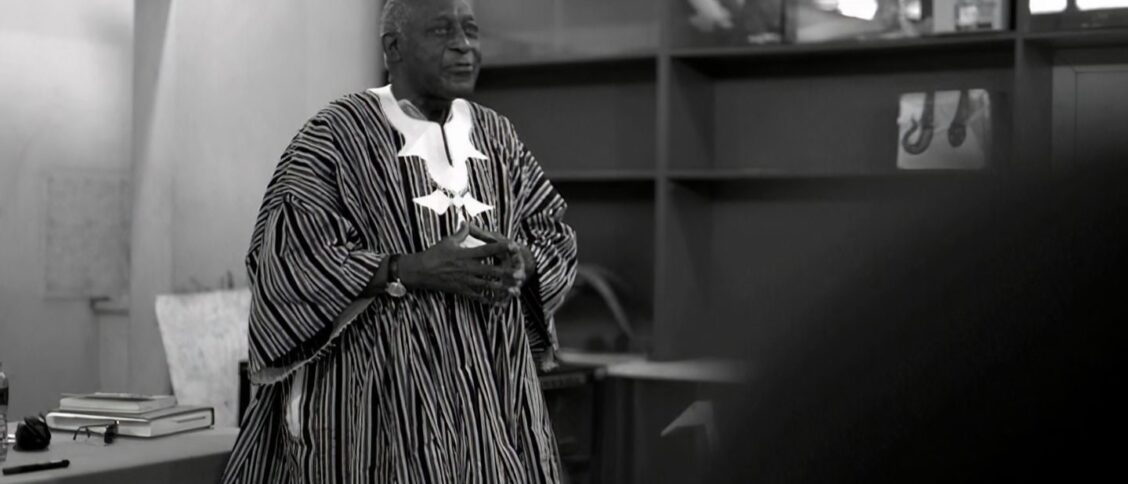

Kofi Awoonor, born on March 13, 1935, in the Gold Coast (now Ghana), was a poet whose works beautifully wove together the oral traditions of his Ewe people with contemporary and religious themes, reflecting the complexities of Africa during decolonization. He initially wrote under the name George Awoonor-Williams and later became a key figure in Ghana’s literary and political landscapes.
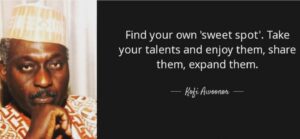
Awoonor’s literary journey began at the University of Ghana, where he published his first poetry collection, *Rediscovery*, in 1964. This work, like much of his poetry, was deeply influenced by African oral traditions, drawing on the rhythms, forms, and themes of Ewe folk songs. His ability to blend these traditional elements with modern themes earned him recognition as a significant African poet.
In addition to his literary achievements, Awoonor played a pivotal role in the cultural and political spheres of Ghana. He managed the Ghana Film Corporation and founded the Ghana Play House, contributing to the country’s cultural development. He also taught African literature at the University of Ghana, where he inspired a new generation of writers and thinkers.

Awoonor’s academic pursuits took him to England, where he studied literature at University College London and wrote radio plays for the BBC. His time in the United States during the early 1970s was marked by the publication of *This Earth, My Brother* and *My Blood*, further establishing his reputation as a leading African literary voice. While in the U.S., he also taught at Stony Brook University.
Returning to Ghana in 1975, Awoonor became head of the English department at the University of Cape Coast. However, his life took a dramatic turn when he was imprisoned without trial for allegedly aiding a soldier accused of plotting against the military government. This experience led to the writing of *The House by the Sea*, a powerful reflection on his time in jail.
Despite these challenges, Awoonor remained politically active and continued writing, shifting his focus towards non-fiction. His diplomatic career included serving as Ghana’s ambassador to Brazil, Cuba, and later as the country’s Permanent Representative to the United Nations, where he chaired the committee against apartheid.
Tragically, Awoonor’s life was cut short on September 21, 2013, when he was killed during a terrorist attack at the Westgate shopping mall in Nairobi, Kenya. He was in Nairobi to participate in the Storymoja Hay Festival, a literary event where he was scheduled to perform. His death was a significant loss to the literary world and to Ghana, where he had been a prominent cultural figure.
Awoonor’s legacy lives on through his profound contributions to literature and his unwavering commitment to African cultural and political issues. His works remain a testament to the resilience of the human spirit and the enduring power of storytelling. His funeral, in accordance with his wishes, was a solemn occasion without mourning, and his remains were laid to rest in his hometown of Weta in the Volta Region of Ghana.
Here are some of his Poems –
The Cathedral
On this dirty patch
a tree once stood
shedding incense on the infant corn;
its boughs stretched across a heaven
brightened by the last fires of a tribe.
They sent surveyors and builders
who cut that tree
planting in its place
a huge senseless cathedral of doom.
…
Found
In the east, the day breaks; do not
say we have started too early;
For we shall cross many hills yet
Before we grow old; here
the land is surpassing in beauty.
Mao Tse Tung 1934
I look out the bars upon the Castle
the crust caked row of age
in a corner my friendly spider
crouches for the unwary gnats
of my days.
So much there is we must atone.
There are spires of faith
in the invisible claws of spiders
in the flight and curve of gulls.
These know, I swear,
the contours of the rolling Saharas
and the destitute oceans of our history.
We sit, debating the charity of our captors.
…
Had Death Not Had Me in Tears
Had death not had me in tears
I would have seen the barges
on life’s stream sail.
I would have heard sorrow songs
in groves where the road was lost
long
where men foot prints mix with other men foot prints
By the road I wait
‘death is better, death is better’
came the song
I am by the roadside
looking for the road
death is better, death is much better
Had death not had me in tears
I would have seen the barges
I would have found the road
and heard the sorrow songs.
The land wreathes in rhythm
with your soul, caressed by history
and cruel geography
landscape ineffable yet screaming
eloquent resonant like the drums
of after harvests.
We pile rocks on terracing love
Carry the pithy cloth
to cover the hearths of our mother.
Come now, you lucky ones
come to the festival of corn and lamb
to the finest feast of this land
come, now,
your lovers have unfurled
their cloths
their thighs glistening like golden knives
ready for the plunging,
for the plentiful loving time.
To whom shall I turn
to what shall I tell my woes ?
My kinsmen, the desert tree
denied us sustenance
long before the drought.
To whom shall I turn
to whom shall I tell my woes?
Some say tell the mother goat
she too is my kinswoman
elemental sister of your clan
But I cannot tell the mother goat
for she is not here.
….
Rediscovery
When our tears are dry on the shore
and the fishermen carry their nets home
and the seagulls return to bird island
and the laughter of the children recedes at night,
there shall still linger here the communion we forged,
the feast of oneness which we partook of.
There shall still be the eternal gateman
Who will close the cemetery doors
And send the late mourners away.
It cannot be the music we heard that night
That still lingers in the chambers of memory.
It is the new chorus of our forgotten comrades
And the halleluyahs of our second selves.
….
Across A NEW Dawn
Sometimes, we read the
lines in the green leaf
run our fingers over the
smooth of the precious wood
from our ancient trees;
Sometimes, even the sunset
puzzles, as we look
for the lines that propel the clouds,
the colour scheme
with the multiple designs
that the first artist put together
There is dancing in the streets again
the laughter of children rings
through the house
On the seaside, the ruins recent
from the latest storms
remind of ancestral wealth
pillaged purloined pawned
by an unthinking grandfather
who lived the life of a lord
and drove coming generations to
despair and ruin
But who says our time is up
that the box maker and the digger
are in conference
or that the preachers have aired their robes
and the choir and the drummers
are in rehearsal?
No; where the worm eats
a grain grows.
the consultant deities
have measured the time
with long winded
arguments of eternity
And death, when he comes
to the door with his own
inimitable calling card
shall find a homestead
resurrected with laughter and dance
and the festival of the meat
of the young lamb and the red porridge
of the new corn
We are the celebrants
whose fields were
overrun by rogues
and other bad men who
interrupted our dance
with obscene songs and bad gestures
Someone said an ailing fish
swam up our lagoon
seeking a place to lay its load
in consonance with the Original Plan
Master, if you can be the oarsman
for our boat
please do it, do it.
I asked you before
once upon a shore
at home, where the
seafront has narrowed
to the brief space of childhood
We welcome the travelers
come home on the new boat
fresh from the upright tree
Rest in greatness Kofi!
Read more of his Poems here