
For decades, the world has waged war on malaria by targeting its unwitting accomplice—the mosquito. But what if we could disarm the disease at its source instead of killing the messenger?
A team of researchers at Harvard University believes we can. And their groundbreaking approach may change the way we fight one of humanity’s deadliest diseases.
Each year, malaria kills nearly 600,000 people, most of them children under five. The parasite is transmitted by female mosquitoes when they feed on blood. Current strategies focus heavily on insecticides, sprayed in homes or embedded in bed nets, to kill mosquitoes before they spread the disease.
But there’s a growing problem: mosquitoes are evolving resistance to insecticides, rendering traditional methods less effective. Now, scientists are turning to a new solution: rather than killing mosquitoes, cure them of malaria.
“We haven’t really tried to directly kill parasites in the mosquito before this, because we were just killing the mosquito,” says Dr. Alexandra Probst, lead researcher on the project. “But that approach is no longer cutting it.”
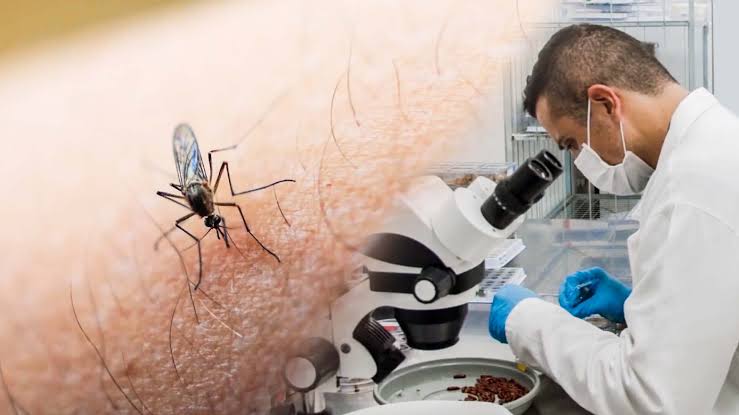
Instead, her team focused on what happens after the mosquito bites – specifically, how the malaria parasite behaves inside the insect. Using a library of potential compounds, they tested how the malaria parasite responded to 22 candidate drugs in infected blood meals.
The result? two powerful drug compounds that, when absorbed through the mosquitoes’ legs, killed 100% of the malaria parasites inside them.
These drugs were applied to materials similar to bed nets in laboratory settings. The mosquitoes didn’t have to be killed—the parasites inside them were neutralized. That means even if the mosquito survives, it can no longer spread the disease.
A Bed Net Breakthrough
For years, bed nets have been a cornerstone of malaria prevention, offering both physical protection and a dose of insecticide to any mosquito that lands on them. But in many regions, insecticide resistance has dulled their effectiveness.
The Harvard team’s vision is to combine traditional insecticides with this new drug cocktail. The idea is simple: if the insecticide fails to kill the mosquito, the drug will still stop malaria in its tracks.
Hopefully it works.