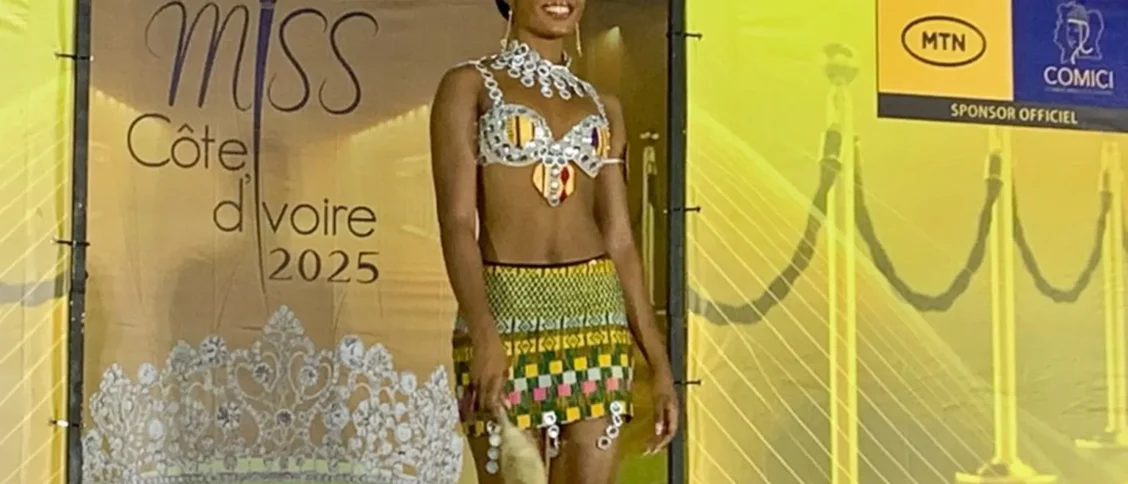

The organisers of Ivory Coast top beauty pageant have banned wigs, weaves, and extensions at the preliminary stages sparking conversations that go far beyond the catwalk.
For the first time in over sixty years, contestants vying for the Miss Ivory Coast crown are being required to appear with their natural hair—be it braided or straightened—ushering in what many see as a quiet revolution against long-held Western beauty ideals.
Spearheaded by Victor Yapobi, president of the Miss Ivory Coast organising committee (COMICI), the plan is intended to celebrate what he calls “raw beauty” a step that not only turns heads but challenges the deeply entrenched reliance on hair enhancements in pageant culture.
“We want to truly showcase the natural beauty of these young women,” Yapobi told the BBC, affirming that beauty, in its most authentic form, should be homegrown.
Though previous pageants have tiptoed around the issue of artificial aesthetics, only two winners in the event’s history—including Marlène-Kany Kouassi in 2022—have donned their natural hair while wearing the crown. Her defiant choice was rare, courageous, and, in hindsight, a harbinger of things to come.
Now, the ban is official—and its ripple effects are being felt in salons, universities, and social media platforms across the country. With 13 regional competitions and two diaspora contests taking place, the impact is widespread.
Not all contestants were thrilled at first. “I’m a wigs fan. I love wigs… I didn’t expect this rule,” said 24-year-old Astrid Menekou, a contestant and make-up artist. But like many others, she grew into her natural look and began embracing a beauty she previously tucked away.
At the preliminary event in Daloa, 21-year-old contestant Emmanuella Dali, who has always preferred her natural hair, described the experience as empowering. “This rule gives me more pride as a woman—an African woman.”
However, the decision is not without critics. Hairdressers and salon owners fear the policy could hurt their business, especially with wigs and weaves forming a significant part of Ivory Coast’s $300 million hair industry. “This rule is not good for us,” said Ange Sea, a stylist in Daloa. “We make more money with wigs and weaves. This will change everything.”
Beyond economic concerns, the cultural implications run deeper. For decades, wigs were seen as symbols of elegance and professionalism. In media, business, and public service, natural hair often took a backseat to sleek extensions and chemically treated styles. Florence Edwige Nanga, a trichologist in Abidjan, notes that many women still feel pressured to conform to artificial beauty standards. “Turn on the TV, and almost every female journalist is in a wig,” she said.
But times are changing. With global movements celebrating Afro hair textures gaining traction, and black women increasingly rejecting the notion that beauty must be borrowed from Eurocentric ideals, the Miss Ivory Coast competition is joining a global conversation.
This year’s edition has also relaxed other requirements: the minimum height has been lowered to 1.67 meters, the age limit extended to 28, and the entry fee reduced—all in an effort to broaden access and reflect a more inclusive vision of beauty.