
Sperm are the only human cells that can survive outside the body…
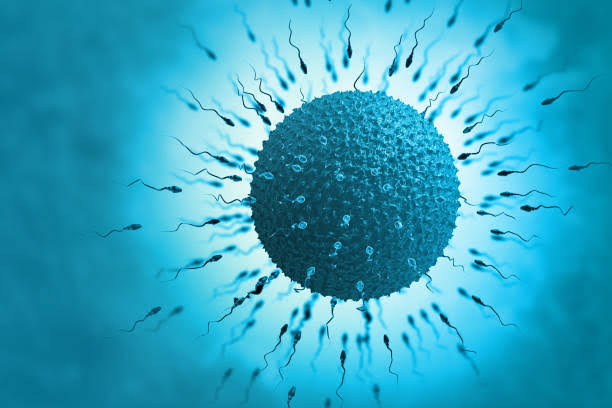
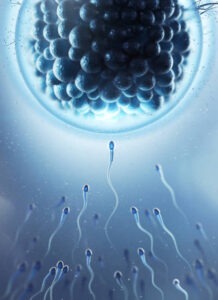
With every heartbeat, a man can produce around 1,000 sperm – and during intercourse, more than 50 million of these microscopic swimmers set off on the long journey to fertilise an egg. Yet, only a few make it to their final destination, and just one manages to penetrate the egg.
Despite being known to science for nearly 350 years, the epic voyage of sperm and the details of their biology remain partly shrouded in mystery.
“How does a sperm swim? How does it find the egg? How does it fertilise the egg?” asks Sarah Martins da Silva, a clinical reader in diabetes endocrinology and reproductive biology at the University of Dundee. Many of these fundamental questions are still debated.
Using cutting-edge tools, scientists are now tracking sperm from their formation in the testes to the moment of fertilisation. These advances are shedding new light on everything from how sperm move to the drastic transformations they undergo inside the female body.
One central question that baffled researchers for centuries is deceptively simple: what exactly is a sperm cell?
“The sperm is incredibly well-packaged,” says Adam Watkins, associate professor in reproductive and developmental physiology at Nottingham University. “We typically thought of the sperm as a bag of DNA on a tail. But as we’ve started to realise, it’s quite a complex cell – there’s a lot of [other] genetic information in there.”
The journey of sperm science began in 1677, when Dutch microbiologist Antoni van Leeuwenhoek peered through one of his homemade microscopes and described “semen animals.” By 1683, he concluded that life didn’t begin in the egg as once thought, but from what he called an “animalcule” in the male seed.
Healthy sperm that swim around the female reproductive system correctly are actually rare. Many get lost or trapped in the biological maze and never approach the egg. For those that do make it to the fallopian tubes, researchers believe chemical signals released by the egg may guide them. One emerging theory suggests that sperm might use taste receptors to “taste” their way to the egg.
But even locating the egg isn’t the final hurdle.
The egg is protected by three layers: the corona radiata (a ring of cells), the zona pellucida (a jelly-like protein barrier), and the egg’s plasma membrane. Sperm rely on enzymes stored in their acrosome — a cap-like structure on their head — to break down these defenses. However, scientists still don’t fully understand what triggers the release of these enzymes.
Once the enzymes begin their work, the sperm uses a spike on its head and a whip-like tail to burrow through the barriers. Only when one sperm successfully connects with the egg membrane is it engulfed and fertilisation completed.
As researchers continue to uncover the intricacies of fertilisation, they are also raising alarms about a growing concern: the global decline in sperm health.
Although men may produce close to a trillion sperm over a lifetime, sperm counts the number of sperm present in a typical sample are dropping around the world. Even more troubling, the rate of this decline appears to be accelerating.
Learnt something?