
Listen, the 2024 Edo and Ondo governorship elections were not just a contest of ideas, they were a battle of financial muscle. With billions of naira pouring into campaigns, political parties pulled out all the stops to secure voter loyalty. But beneath the rallies and media blitz, a troubling pattern emerged: one where money often spoke louder than the will of the people.
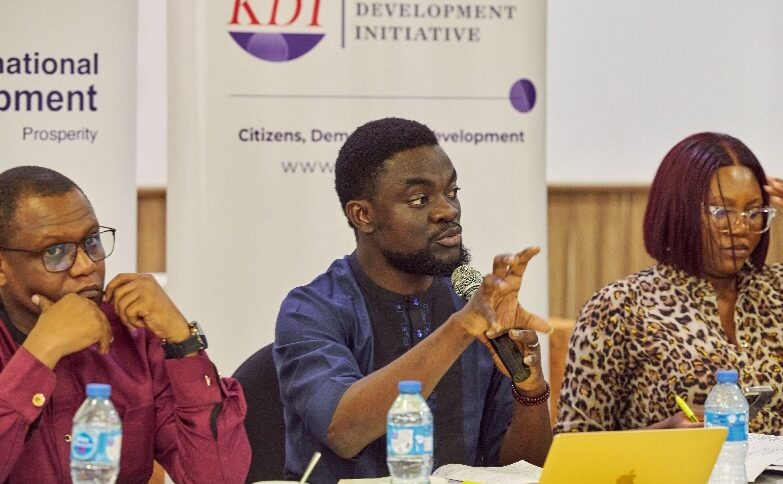
A new report by the Kimpact Development Initiative (KDI) dubbed ‘PoliMoney‘ reveals the staggering cost of political ambition in these two states. The findings show that while laws are in place to regulate campaign spending, political actors continue to exploit loopholes, making money a defining factor in who wins and who fades into obscurity.
Cash vs. Strategy: How Parties Spent Their Way Through the Election
In Edo, political parties went all-in. More than N3.17 billion was spent on massive rallies and media campaigns, making it the most expensive category of election expenditure. The Labour Party (LP), eager to make a mark, funneled N1.6 billion into media advertising, choosing to dominate airwaves rather than engage communities directly. But despite the heavy spending, the returns were disappointing. For every vote LP secured, it spent an eye-watering N102,054.58, making it the most expensive campaign in both states.
Ondo’s approach was more local. Political parties spent significantly less on large rallies, about N461 million and instead focused on banners, posters, and billboards to reach voters. This more measured strategy worked in favor of the All Progressives Congress (APC), which recorded the most efficient campaign, spending just N7,238.98 for every vote it earned. While APC’s spending was modest compared to other parties, the results showed that it was not just about how much money was spent—but how wisely it was used.
Election Day: When the Real Money Flows
Beyond the official campaigns, what happened on Election Day raised even bigger concerns. The report found that in many cases, more money was spent in the final hours of voting than during the entire campaign period. This sudden surge suggests a deliberate push to influence voter decisions through direct financial inducements.
In Ondo, the late flow of cash played a critical role. Candidates who had been quiet through much of the campaign period suddenly ramped up spending, using money as a last-minute tool to sway undecided voters. It’s a familiar story—one that reflects how the power of cash can tilt the scales on the day votes are cast.
This pattern of heavy Election Day spending raises questions about the fairness of the process. For many voters, these last-minute financial incentives were hard to ignore, creating a system where loyalty is bought, not earned.
The Price of Power Is Rising
Over the past 12 years, the cost of running for office in Edo and Ondo has soared. Campaign spending in Edo increased by an astonishing 1,923%, while Ondo saw a 369% rise. These figures paint a bleak picture for candidates without deep pockets, participating in elections is becoming increasingly out of reach for those who cannot match the financial power of the leading parties.
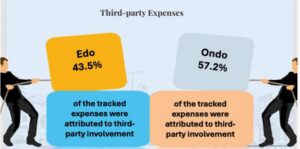
The rising cost of elections also means that candidates often rely on unregulated sources of money to stay competitive. Despite legal provisions that prohibit third-party funding, anonymous donors and shadow networks continue to pour money into campaigns under the radar. This practice, though illegal, has become a lifeline for candidates trying to outspend their rivals.
Who Spends the Most Doesn’t Always Win
The report reveals a surprising truth—spending big doesn’t always guarantee victory. While money plays a major role, other factors like candidate appeal, party structure, and local dynamics still matter. In fact, an analysis of previous elections shows that while campaign finance accounts for about 53% of electoral outcomes, the other 47% depends on factors that money alone cannot buy.
The People’s Democratic Party (PDP) found this out the hard way. Despite spending heavily in both states, their ability to convert financial investment into actual votes was weak. Meanwhile, APC’s more frugal and targeted approach in Ondo proved that sometimes, spending smarter not bigger makes all the difference.
Can Democracy Survive the Money Race?
The report calls for urgent reforms to curb the influence of money in Nigeria’s elections. Among the proposed solutions are stricter financial regulations, real-time monitoring of campaign funds, and harsher penalties for those caught engaging in vote buying. Without these measures, future elections risk being decided by the highest bidder rather than the will of the people.
For now, the 2024 Edo and Ondo elections offer a stark reminder that the cost of seeking power in Nigeria is rising and with it, the danger that elections may no longer reflect the people’s voice but the weight of the wealthiest candidates’ wallets.