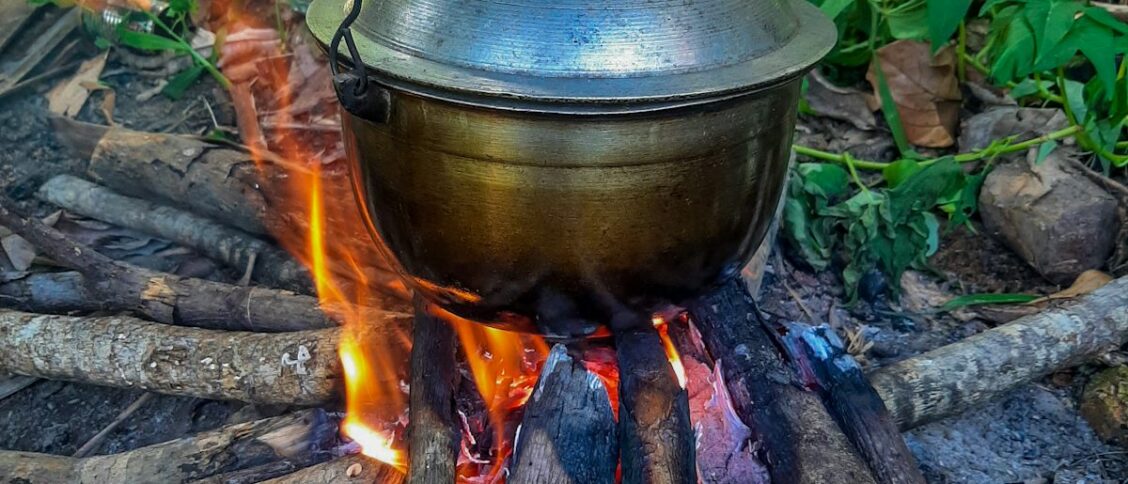

Despite a decade of policy pledges, rising domestic gas production, and over $500 million in private investment, an estimated 20 million Nigerian households, representing a vast portion of the population remain dependent on firewood and charcoal for daily cooking. This persistent reliance highlights a critical failure in Nigeria’s clean energy transition, stalled by severe affordability barriers and fractured last-mile distribution.
In rural and peri-urban areas, where poverty rates are high and infrastructure is sparse, liquefied petroleum gas (LPG) remains out of reach for millions.
The economic hurdle is stark: a standard 12.5kg gas cylinder now costs about N80,000 more than the national minimum wage while refills range from N12,500 to N15,000.
“You cannot use LPG without a cylinder, yet a standard 12.5kg steel cylinder now sells for about N80,000. That is beyond the reach of millions of low-income households,” said Damilola Owolabi-Osinusi, Managing Director of Selai Gas. She identifies cylinder acquisition as the single biggest barrier to adoption.
For many families, the choice is existential. “When households compare gas with firewood or charcoal, gas loses out. Their priority is to cook and eat, not the long-term health implications of smoke inhalation,” Owolabi-Osinusi added.
Environmental Toll: Deforestation and Rising Emissions
The environmental cost of this reliance is severe and escalating. In 2020 alone, Nigeria lost 97,800 hectares of natural forest, an area equivalent to 377 square miles, resulting in nearly 60 million tonnes of CO₂ emissions. Recent data from Global Forest Watch is equally alarming, reporting 1,603 deforestation alerts across 20 hectares in just one week in late December 2025.
While Nigeria contributes only 0.36% of global CO₂ emissions due to limited industrialization, its domestic emissions have nearly quadrupled since 1990. The widespread use of biomass for cooking accounts for a significant portion of this rise, producing not only CO₂ but also black carbon, a potent short-lived climate pollutant responsible for about a quarter of global emissions from such sources.
Government targets to increase LPG consumption to 5–6 million metric tonnes annually have been repeatedly pushed back, now aiming for 2030. Current consumption stands at roughly 1.5 million tonnes, up from 250,000 tonnes a decade ago, progress that remains critically insufficient.
Compounding the problem is an aging and unsafe cylinder stock. Of an estimated 4 million LPG cylinders in circulation, nearly 1.8 million have exceeded their recommended lifespan of 10–15 years, posing serious safety risks.
Energy experts like Owolabi-Osinusi argue that without directly addressing affordability, Nigeria’s clean cooking initiatives will continue to falter. Recommendations include targeted subsidies for cylinder acquisition, tax waivers for local manufacturers, and investments in decentralized distribution networks.
“Without that first step, without the equipment, there can be no transition to clean cooking,” Owolabi-Osinusi emphasized.
As Nigeria’s population surges toward 230 million, the dual crises of household energy poverty and environmental degradation are converging. The nation’s vast gas reserves offer a clear path forward, but only if the economics of clean cooking can be solved for the millions for whom a cylinder remains a luxury far out of reach.