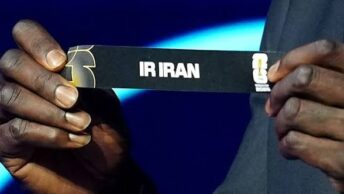

FIFA will stage a high-profile World Cup draw ceremony on December 5th, bringing together global celebrities and sports legends in Washington to determine the groups for the 2026 tournament in the United States, Canada, and Mexico.
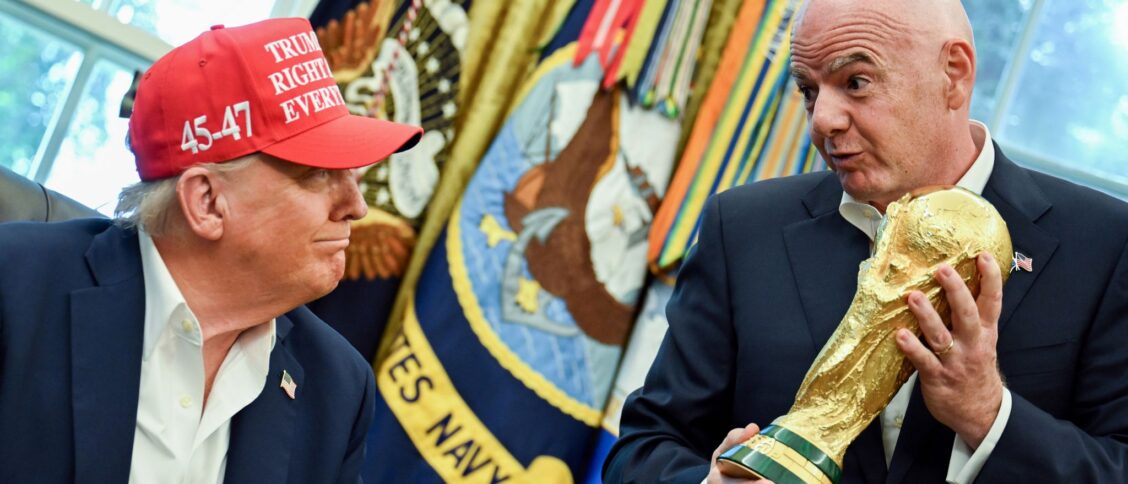
Hosted by supermodel Heidi Klum, comedian Kevin Hart, and actor Danny Ramirez, the event will begin at 17:00 GMT (12:00 local) with live performances from Andrea Bocelli, Robbie Williams, and Nicole Scherzinger. Speeches are expected from FIFA President Gianni Infantino and U.S. President Donald Trump.
The draw itself will be conducted by former England defender Rio Ferdinand, alongside broadcaster Samantha Johnson and sporting icons including Tom Brady, Wayne Gretzky, Aaron Judge, and Shaquille O’Neal.
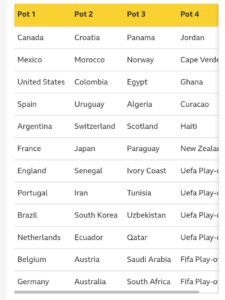
Beyond the spectacle, the draw introduces a new format. The 48 teams have been seeded into four pots based on FIFA rankings, with hosts Mexico, Canada, and the U.S. automatically placed in Pot 1.
For the first time, the top four ranked teams: Spain, Argentina, France, and England will be strategically seeded across different quadrants of the knockout bracket, provided they win their groups. This aims to prevent clashes between football’s heavyweights until the semi-finals or final.
The draw could produce formidable groups depending on which teams emerge from the six playoff paths, which include notable European sides like Italy, Denmark, Wales, and Ukraine. These playoff qualifiers will be placed in Pot 4, setting the stage for possible “groups of death.”
FIFA has confirmed the use of computerized assistance to manage the complex draw logistics, although officials acknowledge that technology, as seen during UEFA’s 2021 draw glitches, can sometimes falter.
After the 90-minute ceremony concludes with a performance of “YMCA” by the Village People, fans will still await key details: venues and kickoff times for most groups will be announced 24 hours later in a separate broadcast on December 6th. Only groups containing the host nations already have confirmed stadiums.
The 2026 tournament will be the largest in World Cup history, featuring 48 teams, and FIFA’s new seeding strategy aims to maximize excitement and competitive integrity through to the final.