

Why is there so much fuss about migrating to Canada?
Anyways, Canada’s tourism board, Destination Canada, is making a determined push to attract more international visitors.
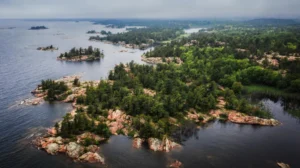
Despite its breathtaking landscapes, cultural richness, and abundant recreational opportunities, Canada’s tourism numbers have yet to return to pre-pandemic levels.
There is a plan
The campaign, “A World of Opportunity,” wants to boost annual tourism revenue to $160 billion by 2030. Tour guides like Jack Rivers are helping bring indigenous history and the natural beauty of regions like Ontario’s Manitoulin Island to tourists, highlighting the cultural depth Canada has to offer.
The country is known for spectacular sites, from Niagara Falls to the Rocky Mountains, but Canada’s tourism sector faces notable challenges. A key obstacle is a national shortage of tourism workers. This issue impacts not only major attractions but also smaller organizations like Wiikwemkoong Tourism, an indigenous-led tourism group where Rivers works. Staffing shortfalls have made it difficult for many operators to provide consistent services, with jobs that often demand weekend work and long hours.
In addition to staffing issues, Canada has been hit by an unusually intense season of wildfires, impacting areas popular with tourists, such as Jasper in Alberta. Jasper, a gateway to the Rockies, suffered major infrastructure damage from a wildfire that destroyed about a third of its buildings, including a well-loved hotel that has been hosting visitors since the 1960s. The local tourism industry is trying to rebuild, but the recovery process is expected to take time.
Recall
The tension between Canada and China is another complication. Diplomatic relations soured after Canada detained a Huawei executive in 2018, and China subsequently detained two Canadians. Though the three individuals were released in 2021, Canada is still not on China’s approved list for travel, impacting the flow of Chinese tourists—a crucial market pre-pandemic. The situation is further complicated by flight routes, as North American airlines can no longer pass through Russian airspace, making trips between Canada and Asia longer and costlier.
However, to compensate, Canada is intensifying efforts in other markets, particularly Europe and the United States, while also building its reputation as a sustainable tourism destination. Canadian Tourism Minister Soraya Martinez Ferrada emphasizes that, despite challenges, there are still countless beautiful regions for travelers to explore. The goal is for visitors to stay longer and spend more, immersing themselves in Canada’s diverse experiences rather than rushing through major tourist hotspots.
Destination Canada has set ambitious goals to raise Canada’s international profile. By 2030, they hope Canada will become the world’s seventh most-visited country. Reaching this target, however, will require not only effective marketing but also structural changes to address the ongoing worker shortage in the tourism sector. Martinez Ferrada believes that promoting tourism careers could be a solution, encouraging more Canadians to enter the field and build the skills necessary for its success.
With sustainability as a priority, Canada’s tourism strategy also looks to minimize environmental impact. The tourism industry is collaborating with local communities to create more eco-friendly experiences, which appeal to international visitors interested in environmental preservation. This commitment to sustainability could be a significant draw, particularly for travelers from Europe, where eco-tourism is increasingly popular.
Indigenous tourism is central to this new wave of Canadian tourism. Wiikwemkoong Tourism, for example, offers visitors a glimpse into indigenous culture, which provides a unique, authentic experience that’s different from other tourism options. Guides like Jack Rivers make indigenous culture accessible, narrating histories and explaining the spiritual significance of the landscapes they traverse, an experience not found elsewhere.
While Canada’s tourism industry is managing numerous hurdles, including staffing and geopolitical tensions, many operators are optimistic. Lodge owners, such as Karyn Decore of Maligne Lodge in Jasper, are determined to rebuild and continue offering hospitality in these iconic settings.
Decore and others are focused on recovery and hope to have their facilities fully operational for future peak seasons, despite the disruptions from the wildfires.
For more details, read the full article