
Captain Ibrahim Traoré, Burkina Faso’s 36-year-old military ruler, has become an unlikely phenomenon, hailed as a messianic figure by some and a dangerous populist by others.
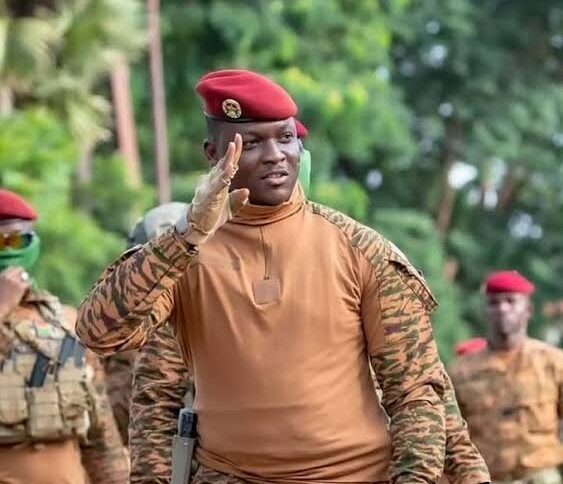
Seizing power in a 2022 coup, Traoré has rejected the status quo of French neocolonial influence and shifted his nation’s alliances toward Russia, all while presenting himself as a pan-Africanist torchbearer in the spirit of Thomas Sankara, Burkina Faso’s slain Marxist revolutionary hero. Donning military fatigues and a red beret, Traoré has successfully channeled nostalgia for Sankara’s defiance and self-reliance, echoing calls for African sovereignty and dignity.
“Stop behaving like puppets who dance every time the imperialists pull the strings,” he famously told African leaders at the 2023 Russia-Africa summit—a speech amplified by Russian state media and viral social media campaigns. These messages, combined with AI-generated videos of international celebrities purportedly praising him, have helped burnish Traoré’s image across the continent and among members of the African diaspora.
Analysts say his growing appeal taps into a broader generational discontent. “He is young in a country with a young population, and he knows the art of politics,” said Rinaldo Depagne of the International Crisis Group. With a median age of just 17.7, many Burkinabés see him not just as a military leader, but as a symbol of a new Africa unshackled from colonial legacies and kleptocratic elites.
Traoré’s economic policies reflect a leftist and nationalist agenda. His regime created a state-owned mining company and mandated that foreign firms—including Russian miner Nordgold—give up a 15% stake and invest in local capacity. The junta has also nationalised gold mines, built the country’s first gold refinery, and established national gold reserves.
These policies have drawn ire from Western mining firms, notably Australia-based Sarama Resources, which filed arbitration proceedings after losing its license.
Supporters hail these moves as revolutionary, aimed at reclaiming national wealth. Detractors see them as authoritarian overreach and a ploy for populist acclaim. Western leaders are wary. French President Emmanuel Macron denounced Traoré’s regime as part of a “baroque alliance” between fake pan-Africanists and neo-imperialists like Russia and China. US military officials, meanwhile, have questioned whether Burkina Faso’s gold reserves are serving national interests or funding Russian-backed military protection for the junta.
Despite the noise, Traoré’s government has received a surprisingly optimistic economic assessment from the IMF and World Bank. They noted progress in revenue collection, curbing public sector costs, and boosting social spending. Poverty, they reported, has marginally declined. Yet, the country’s core crisis—the jihadist insurgency plaguing Burkina Faso for over a decade—remains unresolved, spreading into neighbouring states like Benin and exacerbating ethnic tensions. It’s a delicate balance.
Human rights concerns have also mounted. Critics, journalists, and civil society leaders have faced repression. Some, including magistrates and medics, have reportedly been forced to serve on the front lines against militants.
Nevertheless, the captain remains immensely popular, particularly in urban centres and online. He is often portrayed as the embodiment of a continent’s frustration with broken democracies and rigged elections. “Democracy has failed to give hope to the youth,” said Ghanaian security analyst Prof. Kwesi Aning. “Traoré is offering an alternative.”
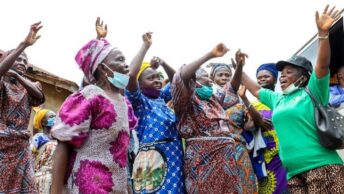
He has become a symbol of defiance. At international events, such as the 2025 inauguration of Ghana’s president, Traoré drew the loudest cheers—military fatigues, holstered gun, and all—upstaging older, visibly ailing leaders clinging to power through manipulated elections.
But history offers cautionary tales. Ghana’s Jerry Rawlings, once dubbed “Junior Jesus,” enjoyed similar reverence in his early days but left a legacy marred by corruption and authoritarianism. Analysts warn Traoré could fall into the same trap unless he shifts from charisma to institution-building and peaceful governance.
Traoré’s challenge now lies in translating revolutionary rhetoric into durable reform. As his image rises globally—celebrated in rallies from Ouagadougou to London—his next moves will determine whether he becomes a true Sankara successor or simply another strongman cloaked in revolutionary garb.