
For decades, artificial intelligence has been Hollywood’s favorite villain, often depicted as a soulless force threatening humanity. Now, the film industry finds itself facing a real-world AI antagonist, not as a futuristic nightmare but as an existential crisis reshaping storytelling, creativity, and livelihoods.
Yes! AI has seeped into Hollywood’s creative processes, offering filmmakers new tools while sparking an intense ethical and legal battle. A BBC report reveals that major film companies are leveraging publicly available data to build AI models. However, this data includes copyrighted material, leaving many creators feeling exploited.
For instance, top tech companies like OpenAI, Google to mention a few, are facing multiple lawsuits from writers, actors, and news organizations, alleging that their intellectual property was stolen to train AI systems without consent. Meanwhile, major studios like Paramount, Disney, and Universal, which hold extensive copyright portfolios, have been urged to take legal action. So far, none have stepped forward.
Yet, some within the industry are seeking a middle ground. Bryn Mooser, co-founder of Moonvalley, created the AI generator tool Marey with a unique approach—paying filmmakers for their content.
“We’ve all fought very hard for copyright laws, and nobody wants to see their work stolen for someone else’s profit,” Mooser states, explaining the need for ethical AI use in filmmaking.
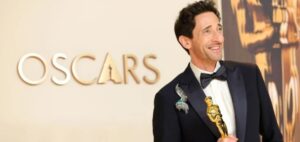
Despite ongoing controversy, AI is already shaping major productions. The Oscar-nominated Emilia Pérez and The Brutalist integrated AI to modify voices. Adrian Brody, in The Brutalist, used AI to perfect his Hungarian accent, a move that did not disqualify him from winning Best Actor at the Academy Awards. AI has also been employed to de-age actors like Tom Hanks and Harrison Ford, pushing the boundaries of cinematic realism.
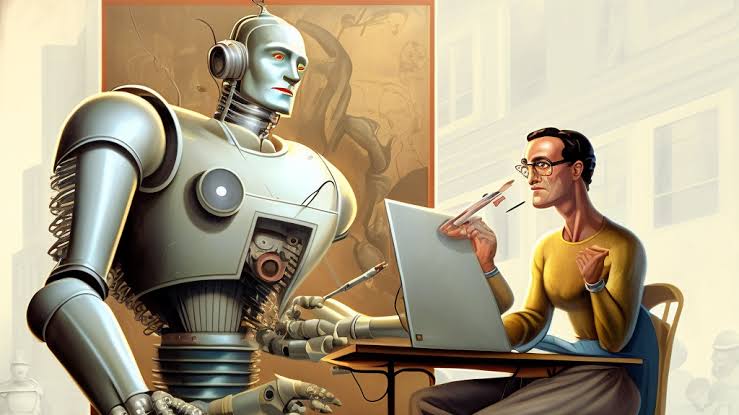
Generative AI is a double-edged sword; it is capable of revolutionizing production while unsettling industry professionals. This technology allows computers to learn and generate content at an unprecedented pace. Some argue it democratizes filmmaking, reducing costs and enabling creative experiments. Others see it as an existential threat, replacing jobs and diminishing human craftsmanship.
Screenwriters, animators, and voice actors have expressed mounting fears over AI-generated scripts, synthetic voices, and digital actors that could make their roles obsolete. The 2023 Hollywood strikes highlighted these anxieties, as unions demanded protections against AI encroachment.
In the short term, AI is being used as a supplementary tool, fine-tuning performances rather than replacing actors altogether. But the long-term implications remain uncertain. Will AI drive innovation while respecting artistic integrity, or will it become a tool for cost-cutting, sidelining creatives?
The industry stands at a crossroads. Regulatory measures, ethical AI models, and legal frameworks must evolve alongside technology. Some hope for a future where AI serves as an enabler rather than an eraser of human creativity. Others worry that without clear safeguards, Hollywood could become an automated assembly line.
The battle between innovation and exploitation is far from over. AI’s role in filmmaking is inevitable, but the question remains—will Hollywood harness its potential responsibly, or will it lose its soul to the very technology it once feared?