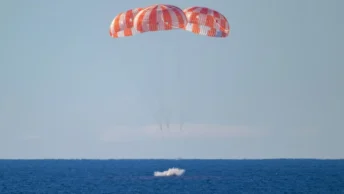

History repeats itself, this time in an unequalled fashion, raising the bar for future attempts as well.
More than half a century after Apollo 11 stamped humanity’s first steps on the Moon, a new generation of explorers is venturing even farther into space.
The Artemis II mission, led by NASA, is now well underway, with astronauts aboard the Orion spacecraft advancing toward the far side of the Moon in what is being described as a defining moment for modern space exploration.
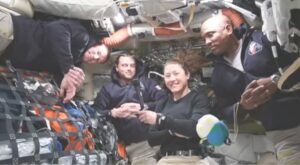
Unlike the Cold War-era rivalry between the United States and Soviet Union that drove the Apollo missions, Artemis II represents a new era, one defined by international collaboration and long-term ambitions beyond a single landing.
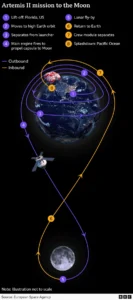
The crew has successfully completed a critical engine burn and is now on course for a lunar flyby expected on April 6. Over the course of the 10-day mission, they are set to travel farther from Earth than any humans in history, gathering data that will shape future lunar landings.
“Humanity has once again shown what we are capable of,” said Jeremy Hansen, one of the mission’s astronauts, reflecting on the milestone moment after the manoeuvre.
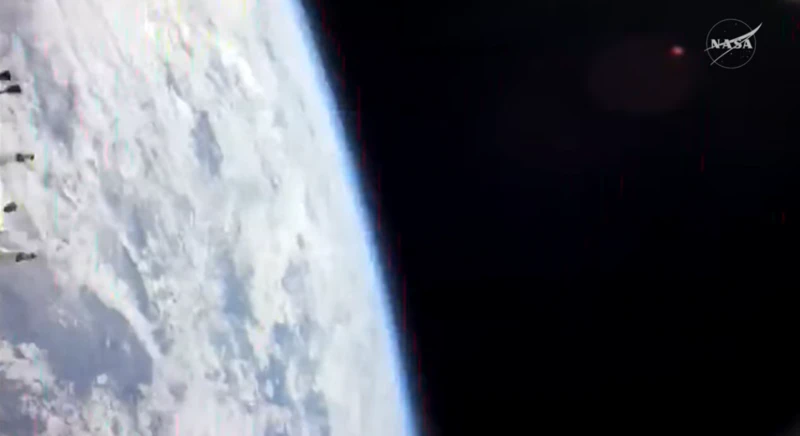
From orbit, mission commander Reid Wiseman described the view of Earth as “spectacular,” noting the rare sight of the planet “from pole to pole” during a livestream from space.
NASA officials say the mission is progressing smoothly. “Our crew is healthy and our spacecraft is performing really well,” said Lori Glaze, who oversees Artemis development and operations, emphasising that the mission remains a test flight designed to gather as much data as possible.
A key highlight of the journey will come as the crew witnesses a rare solar eclipse from space, an event seen by only a handful of astronauts since the 1960s. During the flyby, they will also observe the Sun’s outer atmosphere, known as the solar corona, offering valuable scientific insights.
Beyond the science, the BBC days the mission is also symbolic. Former astronaut Naoko Yamazaki noted that Artemis II reflects a shift from competition to cooperation in space exploration.

The inclusion of Hansen, a Canadian, alongside American crew members shows a growing international partnership aimed at building sustainable infrastructure on the Moon.
That long-term vision is central to NASA’s goals. Artemis II is a stepping stone toward returning humans to the lunar surface, potentially as early as 2028 and eventually establishing a permanent presence on the Moon.
As the spacecraft continues its journey, the mission is already redefining what is possible not just in terms of distance, but in how nations come together to explore the final frontier.