
Step by step, Artificial intelligence is getting ten steps ahead;changing how humans should see the world.
Of utmost importance is its potential to revolutionize healthcare. A recent study has demonstrated AI’s ability to predict the risk of breast cancer years before diagnosis. Conducted by researchers from the Norwegian Institute of Public Health (FHI), the University of California, and the University of Washington, this breakthrough could transform early detection and prevention strategies for one of the most common cancers among women.
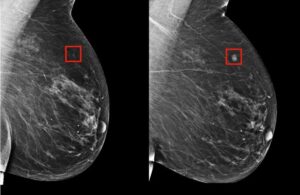
The study, published in the Journal of the American Medical Association Network, analyzed the mammograms of 116,495 women who participated in Norway’s breast cancer detection program between 2004 and 2018. Of these women, 1,607 eventually developed breast cancer. Using a commercially available AI algorithm, the researchers were able to identify women with an elevated risk of developing breast cancer four to six years before diagnosis.
Solveig Hofvind, who heads the detection program and the AI project, highlighted the precision of the technology.
“We noted that the breast which developed cancer had an AI score about twice as high as the other breast,” she said.
The AI’s ability to predict not only the likelihood of cancer but also which breast was at risk spotlights its potential to personalize detection programs.
The study further shifts the focus from reactive diagnosis to proactive prediction. By identifying at-risk populations early, healthcare providers can design more personalized screening schedules, reduce costs, and target resources more effectively. “We’re focused more on the prediction rather than diagnosis, and being proactive rather than reactive,” the researchers explained.
Advancing Equity in Healthcare
Breast cancer is the most common cancer among women globally, with 670,000 deaths reported in 2022, according to the World Health Organization. Early detection is crucial to improving survival rates, and AI’s predictive capabilities could be a game-changer in reducing the disease’s impact.
Beyond its predictive accuracy, researchers are also working to address health disparities and inequities. Many patients, particularly in underserved areas, lack access to comprehensive healthcare systems. AI models are being designed to account for these disparities, ensuring that advancements benefit all populations, not just those in well-resourced settings.
The Norwegian detection program is already scaling its AI initiatives. A new project launched last year involves 140,000 women and it is intended to compare AI’s diagnostic capabilities to those of radiologists. The goal is not to replace human expertise but to complement it, leveraging AI to enhance radiologists’ efficiency and accuracy.
Transforming Healthcare Economics
FHI noted that integrating AI into cancer detection programs could significantly reduce healthcare costs by prioritizing high-risk individuals for closer monitoring. This approach could alleviate the burden on healthcare systems while improving patient outcomes through earlier interventions.
The Road Ahead
While this breakthrough is promising, it’s just the beginning. Researchers are focused on refining AI models to improve their accuracy and ensure they can be applied across diverse populations. This includes developing algorithms that adapt to varying health system capacities and address unique patient needs.
The implications of AI in breast cancer detection are profound. By predicting when and if a woman might develop breast cancer, this technology has the potential to save countless lives, offering a proactive and equitable solution to one of the most pressing health challenges of our time.
As Hofvind puts it: The study shows that the AI algorithms already available on the market can be used to develop more personalized detection programs.
The future of cancer care is here, and it’s powered by AI.