

A lot of young people across the world are grappling with rising anxiety, emotional strain and cognitive fatigue. A new global report has spotlighted a surprising countertrend: African youths are leading the world in mental resilience and overall mind health.
The 2025 Global Mind Health report by Sapien Labs reveals that while 41 per cent of internet-enabled young adults aged 18–34 worldwide face what researchers describe as a “mind health crisis,” several sub-Saharan African countries are outperforming their global peers.
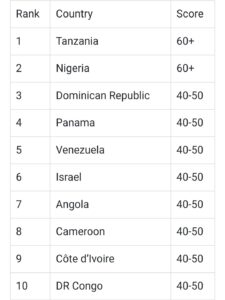
Drawing on data from nearly one million people across 84 countries, the study used the Mind Health Quotient (MHQ) an assessment tool measuring cognitive, emotional, social and physical capacities to evaluate global trends. The findings show that Ghana ranks first globally in youth mental well-being, followed closely by Nigeria, Kenya, Zimbabwe and Tanzania. The top five spots are entirely African.
The report highlights a dramatic generational shift. In the early 2000s, young adults enjoyed the strongest mental well-being of any age group. Today, that pattern has reversed. Young people are now four times more likely than those over 55 to experience mental health challenges severe enough to impair daily functioning.
“This mind health crisis appears to be a progressive slide from generation to generation and goes far beyond rising rates of depression and anxiety,” said Dr Tara Thiagarajan, founder and chief scientist of Sapien Labs and lead author of the report.
According to her, the challenges extend beyond mood disorders to include diminished focus, weakened emotional control and strained interpersonal relationships capacities essential for navigating work and life.
The strong performance of African countries, particularly in sub-Saharan Africa, suggests the presence of protective social and cultural factors.
Young adults in the region reported the highest levels of spirituality globally, later adoption of smartphones during childhood and stronger family bonds compared to peers in wealthier regions. Tanzania, for instance, ranks highest worldwide in spirituality measures and has one of the oldest average ages for smartphone adoption.
The data suggests a possible inverse relationship between national wealth and youth mind health outcomes. Countries such as the United States, Canada, parts of Europe, Japan and Australia ranked near the bottom for youth mental well-being.
Despite Africa’s comparatively strong performance, the generational gap persists everywhere: older adults consistently report significantly stronger mind health outcomes than younger populations.
Sapien Labs identified four primary contributors to the global youth mental health decline:
– Early smartphone adoption during childhood
– Increased consumption of ultra-processed foods
– Weakened family bonds
-.Diminished spirituality
Together, these factors account for a substantial portion of the mental health challenges reflected in MHQ scores. The report notes that smartphones and ultra-processed diets, combined with shifting social and cultural dynamics, are reshaping young people’s cognitive and emotional landscapes.
Previous research by Sapien Labs indicates that this generational divide began before 2020 but widened sharply during the COVID-19 pandemic, when young adults’ mental well-being deteriorated significantly while older generations experienced relatively minor declines. Five years on, the gap remains largely unchanged.
While Africa currently holds an advantage in youth mental resilience, researchers warn that rapid urbanisation, digital expansion and lifestyle shifts could erode these strengths if not carefully managed.
Dr Thiagarajan urged policymakers to recognise the economic and social implications of a generation entering the workforce with compromised mental capacity. Protecting cultural and social buffers, including family cohesion and spiritual engagement may prove as important as technological and economic progress.